
Gym Marketing Strategies: A Yearly Plan by Club Stage
Gym marketing strategies for a group with several clubs work best as a yearly plan built by club stage: presale, ramping, mature and soft clubs each get one job, one mix and one scoreboard in joins per club per week.
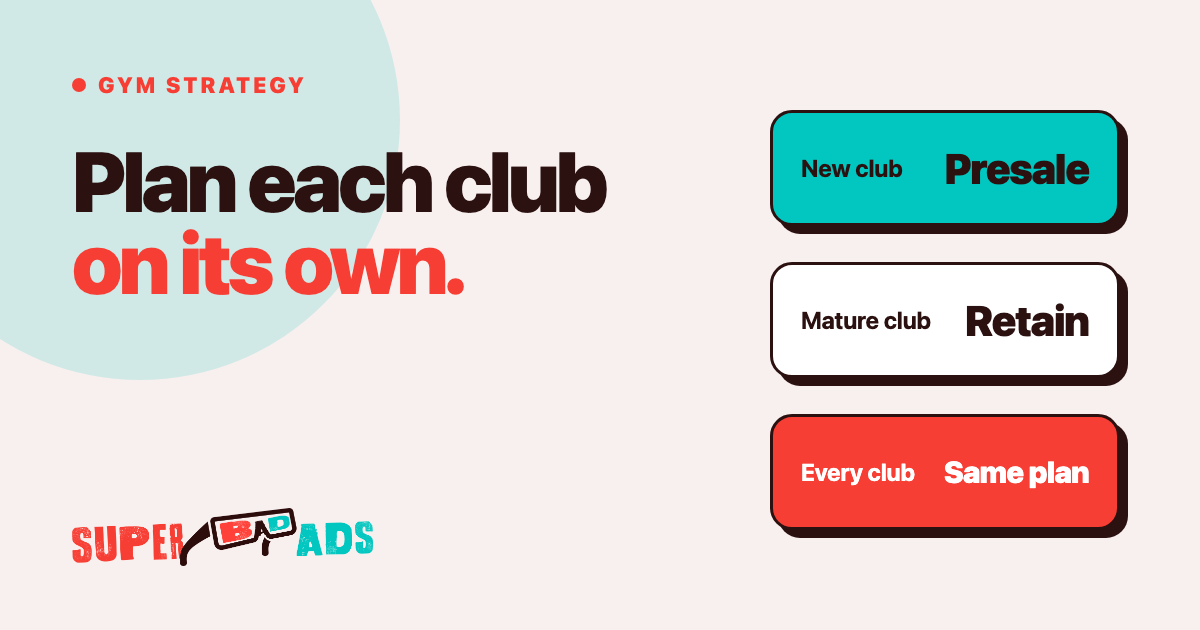
Gym marketing strategies for a group with several clubs work best as a yearly plan built by club stage. Sort every club into presale, ramping, mature or soft; give each stage one job and one marketing mix; split acquisition and retention by stage; review the plan each quarter against written move, hold and cut rules; and score every club in joins per club per week, counted in the membership system rather than in the ad platforms.
Most published marketing strategies for gyms assume a single club, and a single plan for the whole group rarely works, because a club that opens in March and a club that has been full for five years need different things from the same budget. This guide is written for the marketing lead at a gym group who has to turn next year's budget into a gym marketing plan that the CEO and CFO can approve, and who then has to defend that plan club by club at every quarterly review.
Why does one gym marketing strategy not fit every club in a group?
A single gym marketing strategy spread evenly across every club tends to overfund the clubs that are already full and underfund the clubs that still need members. When that happens, the central team pays for leads that a full club cannot absorb, while a new club with open capacity misses its first-year membership targets.
Demand across the fitness industry is not the constraint. The Health & Fitness Association reports that "81 million Americans belonged to a gym, studio, or other fitness facilities in 2025, marking an all-time high," and describes it as "a 5.2% increase from 2024" (industry data). Although the fitness market is growing nationally, each club still competes for members inside its own neighborhood, against its own nearby fitness centers, with its own staff and its own capacity. Because the gap between clubs is local, the plan has to be local as well. Boutique brands face the same local math; our guide to fitness studio marketing covers the studio version.
The central team should own the framework, which covers the brand, the offers, the creative, the tracking and the scoreboard, while each club's plan follows its stage. Our guide to gym marketing explains how that division of work runs from week to week; this post covers the yearly plan that sits above it.
How should a gym group sort its clubs into stages?
Sort every club into one of four stages before you set a budget, because the stage decides the job, the marketing mix and the number on which each club is judged. Agree on each club's stage with the regional and club managers, so that the plan matches what each team can realistically handle at the front desk and on the gym floor.
| Stage | How to tell | Job | Strategy mix | Scoreboard focus |
|---|---|---|---|---|
| Presale | Not yet open; construction or fit-out under way | Build the founding list | Local paid social, a founding offer, a presale page and follow-up | Presale list size and cost per lead |
| Ramping | Open, below its membership target | Buy joins | Paid social and Google Ads with a clear intro offer, fast lead follow-up | Joins per club per week and cost per new member |
| Mature | At or near its membership target | Protect members and fill spare class or floor time | Referrals, win-back, retention offers and smaller always-on paid media | Net members, cancellations and joins per week |
| Soft | Missing its join targets for several months | Diagnose before you fund | A review of pricing, staff, follow-up and reviews before new spend | Lead follow-up rate, cost per new member and joins per week |
Clubs move between stages over the year. A ramping club becomes mature when it holds its membership target, and a mature club can turn soft when cancellations rise or a new competitor opens nearby, which is why every club should be sorted again at each quarterly review.
How should the strategy change for a new club?
A new club's strategy starts well before the doors open, and its first job is attracting new members onto a presale list. Build that list with a founding offer that rewards an early commitment and with paid social aimed at the neighborhood around the club, then plan the opening week so that every lead on the list receives a call, a tour slot or a class booking. Our guide on how to market a new location opening sets out the presale timeline in more detail.
How should a group split acquisition and retention by stage?
Every club needs both acquisition and retention, but the split between them should follow the club's stage. Record the split for each stage as a group decision rather than borrowing a benchmark from another brand, because your prices, contracts and capacity are your own, and a benchmark from a different business model will mislead the budget conversation.
Ramping clubs: most of the budget goes to acquisition, since these clubs need joins, so paid advertising, intro offers and fast follow-up receive the money.
Mature clubs: more of the budget moves to retention, which means funding a gym referral program, win-back marketing campaigns for former members and front desk follow-up for members who stop visiting, because a full club does not stay full without that work.
Soft clubs: hold extra spend until you know why the club is behind, because paid ads cannot fix a front desk that is unable to follow up on the leads it already receives.
For more acquisition tactics by channel, our guide on how to get more gym members covers the options in detail.
How do you review gym marketing strategies each quarter?
Review gym marketing strategies every quarter against rules that were recorded at the start of the year, so that the review becomes a decision about evidence rather than a debate about which club manager argues most convincingly. A simple and effective set of rules looks like this:
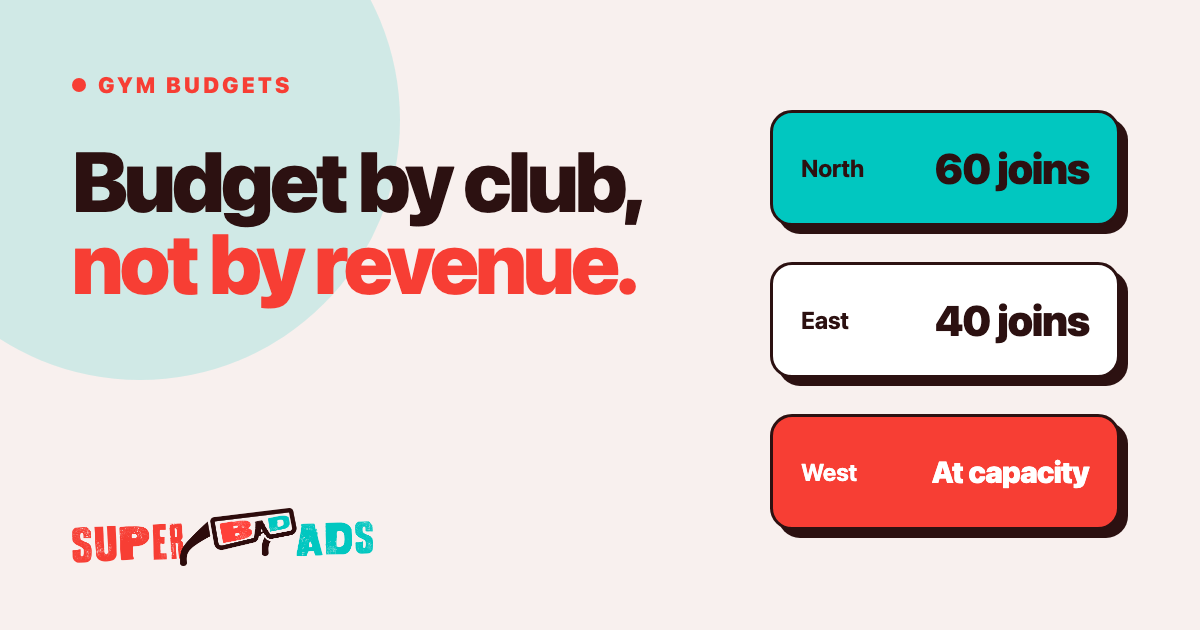
- Move: shift budget toward ramping clubs that convert leads into joins at or below your target cost per new member, since those clubs can absorb more demand.
- Hold: keep budget flat at mature clubs that hold their membership target, and at any club where the front desk is still catching up on lead follow-up.
- Cut: reduce new spend at soft clubs until the review finds the cause, and cut any channel that produces leads but no joins in the membership system.
The total budget is a separate decision from its allocation. For setting the overall number, see our guide on how much should a gym spend on marketing; the quarterly review then decides where that number goes club by club.
Local SEO belongs in the mature and soft club mix, because it is inexpensive, it strengthens each club's online presence and each club owns its own listing. Google's guidance states that "relevance is how well a Business Profile matches what someone is searching for," and that "more reviews and positive ratings can help your business's local ranking." A soft club with few recent reviews often gains more visibility in local search results from a steady review habit at the front desk than from additional ad spend.
Which channels belong in fitness marketing strategies for a group?
Fitness marketing strategies for a group usually combine four channels, and the stage table above decides how much weight each channel receives at each club. Paid social on Meta's social media platforms carries most presale and ramping demand, because it reaches people near a club who are not yet searching. Google Ads captures people who are already searching for a gym nearby, which makes it valuable for ramping clubs. Local SEO and the Google Business Profile support every club at a low cost, and organic social media posts from each club's own coaches and members keep the brand familiar to current members between campaigns.
Every gym owner and marketing lead should judge each channel by the same standard: the joins it produces per club, rather than its clicks or its reported conversion rate inside the platform.
How do you score gym marketing strategies in joins per club per week?
Score every club in joins per club per week, counted in your membership system, next to the spend for that club. Ad platforms report their own conversions, and those figures are usually higher than the joins the membership system records, so when the board sees platform numbers that do not tie to member counts, the marketing plan loses credibility with the people who approve it.
Whether your clubs run Club Automation, ABC or another membership system, that system is the source of truth, and the group report should show the stricter number: joins per club per week and cost per new member for each club. When a club's leads do not become joins, the first place to look is the front desk follow-up, and only after that should the ads be blamed.
This is the scoreboard we built for an 8-location California fitness operator, which went from 0 of 8 to 8 of 8 locations with per-location attribution, with cost per lead down 25% by month 3.
Where to start
Super Bad Ads is the paid media partner for multi-location operators, including gym and fitness groups. We run Meta and Google for every club and report joins per club every week, counted in your membership system, not in the ad platform. See how we work as a gym marketing agency and as a paid media agency.
We test cheap, representative creative from your own clubs, and we report results that the people who approve the budget can trust, including flat-spend comparisons and quarter-over-quarter progress per club. For one multi-location gym group, new online members rose 259%. For your group, the first step this week is to sort every club into a stage and record the scoreboard number that each club will be judged on.
FAQ
What is the best marketing strategy for a gym group with several clubs?
The best marketing strategy for a gym group with several clubs is a yearly plan built by club stage. Each club is sorted into presale, ramping, mature or soft, each stage receives its own job and marketing mix, and every club is judged on joins per club per week from the membership system.
How should a gym group split marketing between new member acquisition and retention?
A gym group should split marketing between acquisition and retention by club stage. Ramping clubs put most of their budget into acquisition, while mature clubs move more of it into referrals, win-back and retention, and the split should be recorded as a group decision rather than copied from another brand's benchmark.
How often should a gym group review its marketing strategy?
A gym group should review its marketing strategy every quarter, using move, hold and cut rules agreed at the start of the year. At each review, the team sorts clubs into stages again, shifts budget toward clubs that convert leads into joins, and holds new spend at soft clubs until the cause is found.
How do you measure gym marketing strategies across every club?
Gym marketing strategies are best measured in joins per club per week and cost per new member per club, counted in the membership system rather than in the ad platforms. This scoreboard is stricter than platform reporting, and it is the one that the CEO, the CFO and every club manager can check.
Plan by club, score by club
Gym marketing strategies for a group come down to a plan built by club stage, agreed rules for the quarterly review and one scoreboard in joins per club per week. For help running paid media for every club against that plan, with results counted in your membership system, Get Started.
Find out what your ad spend actually books.
We instrument the whole funnel — lead to booked to showed to revenue — and buy media against the number that matters. No calendar invites, no sales-call bait. Just the build.
Get Started →