
Gym Marketing Strategy for Every Club in the Group
Gym marketing for a multi-club group is a system rather than a list of ideas: central brand, creative and measurement, local paid media and search around every club, a front desk that follows up quickly, and one scoreboard of joins per club per week from the membership system.
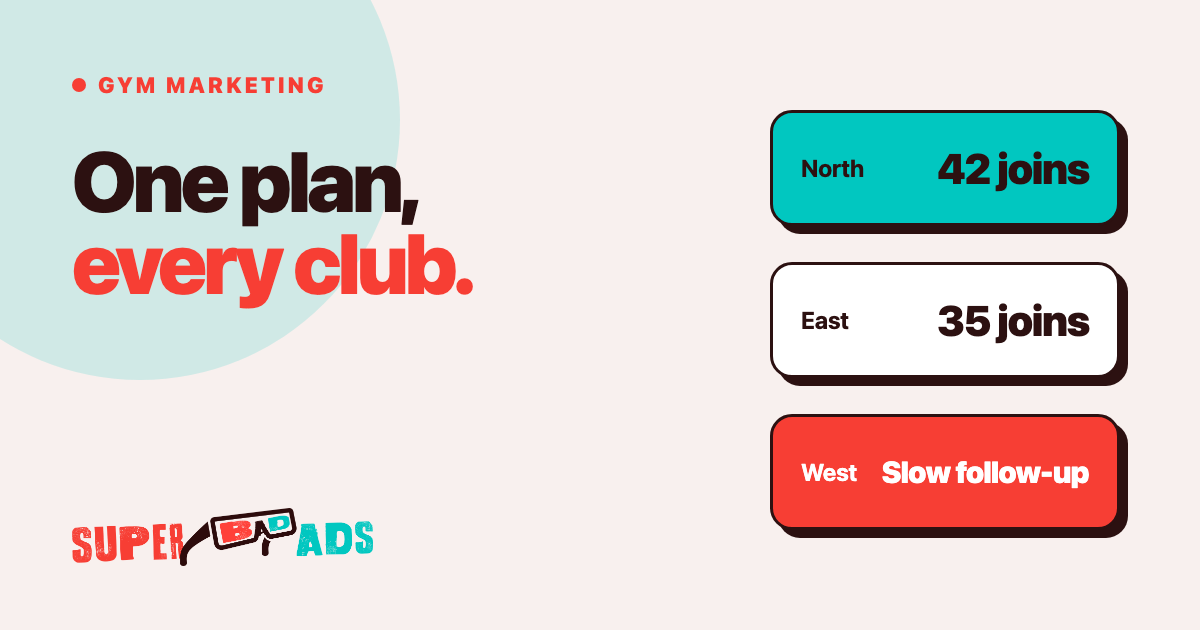
Gym marketing for a group with several clubs works best as a system rather than a list of ideas. The central team owns the brand, the creative testing, the offer framework and the measurement; each club receives local paid media, an accurate search presence and offers sized to its open capacity; and the front desk follows up on every inquiry quickly. The whole plan is then judged by one number that the membership system already records: joins per club per week.
That's the difference between the advice most directors find and the plan they actually need. Most published guides are written for gym owners running a single independent gym, so they offer ten or twenty tactics and assume the owner can watch the results from the front desk. A marketing lead responsible for eight or thirty clubs, with a team of one to three people, needs a structure that decides who does what, a calendar the board can follow, and a scoreboard that shows club by club whether the investment produced new members.
What should be run centrally and what per club?
A multi-club plan begins with a clear division of responsibility. A small central team cannot manage daily posts and local events for every location without losing quality, and individual clubs cannot each build their own creative, tracking and agency relationships without fragmenting the brand.
Run centrally: the brand standards, the creative testing program, the offer framework (which intro offers and trial passes exist, and the rules for using them), the measurement model, the budget allocation across clubs, and the management of any agency or vendor. Central control over measurement matters most, because every club must define a lead, a booked tour and a join in exactly the same way. Without one definition, the group can't compare clubs, and every monthly review turns into a debate about whose numbers are correct.
Run per club: the radius targeting around each address, the Google Business Profile for that location, local offers and community events within the central framework, and a budget that reflects each club's open capacity. A club that is close to its membership ceiling needs less acquisition spend than a newer club with room on the floor and in its classes, so the central team moves money toward the clubs that can absorb new members. Our guide to how much a gym should spend on marketing shows how to set that budget club by club.
This separation keeps club managers focused on tours, service and follow-up, while the central team concentrates on the decisions that affect the whole group. It also gives the board a single, consistent view of performance across every location, which is the foundation for the rest of the plan.
Which channels do the work, and what is each one for?
Effective marketing for gyms relies on a small number of digital marketing channels, each with one clear job. The aim is not to be present everywhere; it's to know what each channel contributes to new members at each club.
- Meta ads for local demand: Meta campaigns targeted to each club's radius put an intro offer or free trial pass in front of the club's target audience: nearby residents who aren't searching yet. They create the demand that the other channels later capture.
- Google Ads for people already searching: search campaigns reach prospects who type "gym near me" or a class type into Google, which makes them the highest-intent traffic in most gym advertising budgets.
- Google Business Profile and local search for every club: accurate hours, photos and reviews for each location, supported by local SEO for multiple locations, keep every club visible when people compare options nearby. Proximity remains the main reason people choose a gym, so this channel protects the demand the paid campaigns create.
- Referral programs: a structured referral program turns existing members into a source of prospects who already know someone at the club. It formalizes the word of mouth that already drives many joins.
- Retention and win-back: clubs that host events and fitness challenges keep members engaged, and campaigns for lapsed members reach people who already know the facility. Every member retained protects net growth over the long term, because each cancellation offsets a new join.
For a detailed, ordered acquisition plan built on these channels, see our guide on how to get more gym members. The purpose of this section is narrower: to confirm that each channel has one job, one owner and one measure in the group's scoreboard.
What does a gym marketing calendar look like?
A yearly calendar lets the marketing lead present a proactive gym marketing strategy to the owner and the board, rather than reacting month by month. Fitness has a clear seasonal pattern, and the calendar should follow it.
December and January: January is the most important joining period of the year for most gyms. Many people decide to join before the holidays end, so a December presale captures them before competitors launch their New Year campaigns. The central team prepares the offer and creative in November, and each club's budget reflects its capacity for the January surge.
Spring and summer: demand usually softens after the first quarter, and messaging shifts toward outdoor goals, summer routines and shorter commitments. This is a good period to test new intro offers, such as a short gym membership or a free trial, on a few clubs before rolling the winners out across the group.
New club openings: a new location needs its own presale ramp well before opening day, with founding-member offers, tours of the site and outreach to local businesses in the surrounding neighborhoods. A club that opens with a list of presale members starts with momentum and revenue instead of an empty floor.
Quieter months: the slower parts of the year are the right time for creative testing and retention work, because the group can learn what resonates without risking the peak season.
How should creative work for a gym group?
Gym groups are often tempted to fund one expensive brand shoot that resembles a national sportswear campaign. For a multi-club operator, a cost effective approach usually performs better: that budget belongs in media, because prospects want to see the actual clubs, equipment, coaches and members they would join.
Across the fitness industry, the most effective fitness marketing creative is low-cost and representative: short videos from real clubs, coaches explaining their fitness classes, members sharing success stories about the fitness goals they reached in their first month, and simple offer graphics. The group produces many of these and tests them as small bets across several clubs at once. The winners are chosen by joins per club, not by likes or comments, and the budget follows them. This approach also reduces creative fatigue, because the team can introduce new material every few weeks without requesting a large production budget from finance. It works for large clubs and for boutique studios alike; our guide to fitness studio marketing covers the studio version of the same principle.
How do you measure gym marketing across every club?
The most common frustration for a fitness marketing director is that the advertising numbers don't tie to the membership system. The platforms report leads and conversions by their own rules, the membership system reports joins by its rules, and the two rarely agree. The solution is to build the scoreboard from the membership system itself, whether that's Mindbody, Club Automation or ABC, and to treat the platform reports as supporting detail.
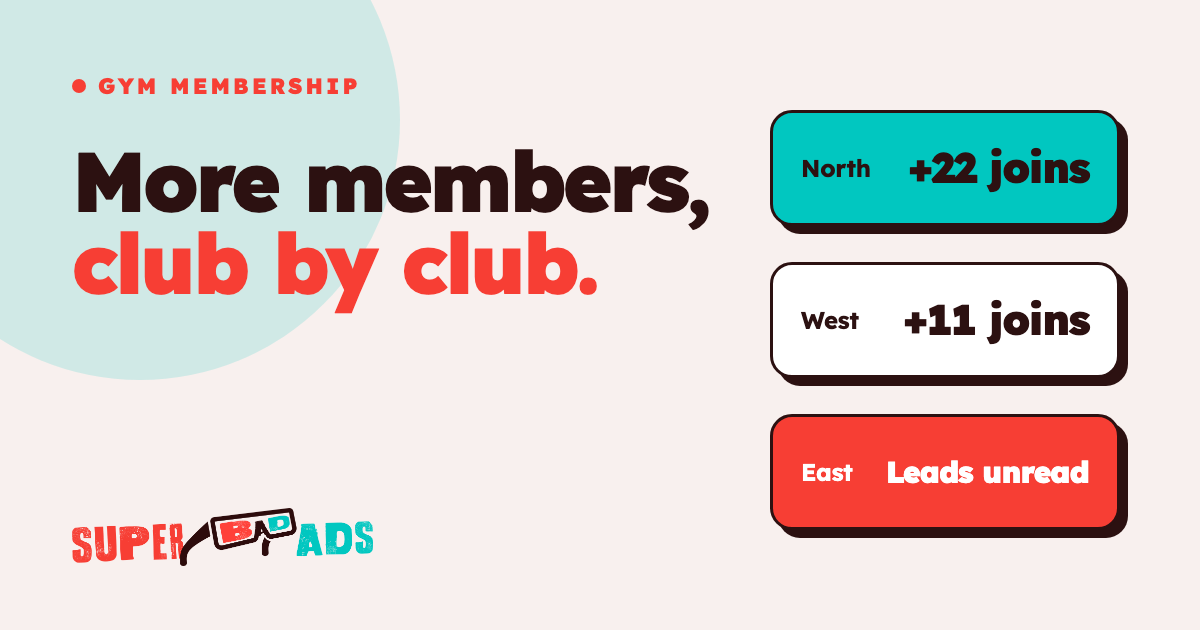
The scoreboard tracks, for every club and every week: leads, booked tours or trials, joins, and the cost per new member calculated from actual spend and actual joins. This standard is stricter than the platform numbers, which is exactly why the owner and the board can trust it.
Response time to each inquiry should appear on the same scoreboard. A lead becomes a member only after someone at the front desk contacts the prospect, books a tour and closes the sale, so the time it takes to respond to each inquiry is a marketing metric. If inquiries wait until the next day, even the most efficient campaign will underperform, and adding budget won't fix the problem.
Measured this way, results become comparable and defensible. An 8-location California fitness operator went from 0 of 8 to 8 of 8 locations with per-location attribution and reduced its cost per lead by 25% by month three. In an agency switch, a multi-location gym operator moved paid-search return from 0.15x to 1.62x by month three on flat spend, which is the kind of incremental proof a board expects to see.
Where to start
Super Bad Ads is the paid media agency for multi-club gym and fitness groups. We run Meta and Google around every club, test many low-cost creative ideas instead of one expensive shoot, and report new members per club every week from your membership system.
A marketing lead rebuilding the gym marketing plan for next year should begin with the scoreboard. Agree on one definition of a lead, a tour and a join, report them per club per week from the membership system, and measure front desk follow-up alongside them. As a gym marketing agency, we audit each current marketing campaign before any switch and run alongside the incumbent, so you keep what's already working, and you retain ownership of every account and pixel. Our multi-location marketing agency services are designed for lean marketing teams that report to an owner or a board.
FAQ
What is the best gym marketing strategy for a multi-club group?
The best strategy separates central work from club-level work. The central team owns the brand, creative testing, offers and measurement, while each club receives local paid media, an accurate Google Business Profile and a budget sized to its capacity. Every decision is then judged by joins per club per week.
Which channel works best for gym marketing?
No single channel works alone. Meta creates local demand, Google Ads captures people who are already searching, local search keeps each club visible, and referrals and retention protect net growth. The right mix differs by club, which is why the scoreboard should show results per club rather than one blended figure.
How do you attribute a central campaign to a local club?
Each campaign targets a specific club's radius and sends prospects to a page or form tagged with that club. The lead, the tour and the join are then recorded against the same club in the membership system, so the cost per new member can be calculated club by club.
How often should a gym group review its marketing?
Review the scoreboard weekly and the budget allocation monthly. Weekly reviews catch follow-up problems and creative fatigue early, while monthly reviews move spend toward the clubs with open capacity and away from those that are already full.
A gym marketing plan that the board can trust starts with one scoreboard, a clear split between central and club work, and a calendar built around the January peak. To put that system in place across every club in the group, Get Started.
Find out what your ad spend actually books.
We instrument the whole funnel — lead to booked to showed to revenue — and buy media against the number that matters. No calendar invites, no sales-call bait. Just the build.
Get Started →