
Dental Advertising: Where Each Practice's Budget Goes
For a dental group, advertising works as a buying plan per practice: every paid channel gets one job, the budget follows open chair time, claims stay inside the dental advertising rules, and every channel is judged in booked new patients per practice.
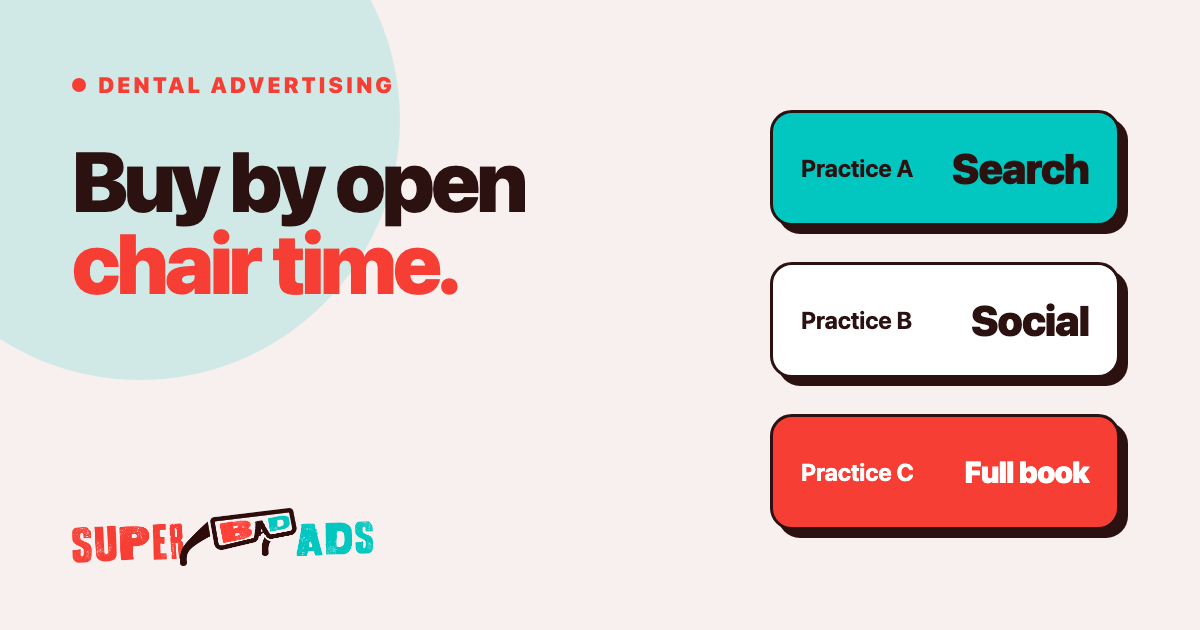
Dental advertising for a group with several practices works when you buy it practice by practice rather than channel by channel. Each paid channel should have one job, each practice should receive only the channels its open chair time calls for, and the budget should follow that open chair time instead of an even split. Every claim should stay inside the dental advertising rules, and every channel and vendor should be judged by booked new patients per practice, counted in your practice management system.
Most guides to advertising for dentists are written for one doctor with one office, so they list ways to attract new patients without saying which practice should get each channel or how anyone will know it worked. An owner with 8 or 30 practices has a harder problem, because three vendors each send a report that claims the same new patients while some practices still have empty hygiene columns. This guide gives that owner a way to decide which paid ads to buy, where the money goes and how the results are checked each week.
What job should each dental advertising channel do?
Each channel in a dental advertising plan should have one job, a rule for which practices get it, and a way to count it in the practice management system. The table below is a one-page version the partners and the CFO can read.
| Channel | Its one job | Which practices get it | How you count it |
|---|---|---|---|
| Paid search (Google Ads) | Catch prospective patients who are looking for dental care on Google Search now | Every practice with open chair time, sized by how much | Booked new patients from search calls and online bookings, per practice |
| Google Business Profile and Maps | Win the local dental choice when a potential patient compares nearby practices | Every practice, always, at no media cost | Calls and direction requests per practice, then booked new patients |
| Paid social (Meta: Facebook and Instagram) | Build demand and build trust around practices with room, using your own doctors and teams | Practices with the most open chair time and new practices | Booked new patients per practice from the offer or landing page |
| Offline (mail, radio, outdoor) | Announce a new practice or reach a dense market where many practices share one area | New practices and dense markets, only when each piece can be counted | A unique phone number or offer code per practice, checked against bookings |
Paid search usually earns the first dollar because search engines reach patients who already want an appointment, while dental social media marketing reaches nearby adults before they search, and our comparison of google ads vs facebook ads covers how the two divide that work. Offline dental ads still have a place at an opening, but a mailer that can't be tied to a phone number or a code at one practice can't earn a share of next quarter's budget. Word of mouth and referrals from existing patients stay valuable at every practice, and they work best when the front desk records them as a source so that the paid channels aren't credited for them.
Which practices should get advertising first?
The practices with the most open chair time should get new dental practice advertising first, and a practice with a full book should get almost none. An even split looks fair on a spreadsheet, yet it pays for clicks at practices that can't seat another new patient this month while it starves the ones with open hygiene time.
Each month should start with one number per practice, which is open chair time over the next four to six weeks, taken from the schedule. The practices are then ranked by that number and funded from the top. A new practice or one that added a hygienist moves up the list, while a practice with a long wait for new patient exams moves down until the gap closes. Services with open doctor time, such as cosmetic dentistry or implants at one practice, can receive their own campaign when the schedule shows room for them.
For the yearly view, with goals per practice, a calendar and a monthly partner review, our guide to dental marketing strategies covers that structure in detail.
How should a dental group buy paid search and paid social by practice?
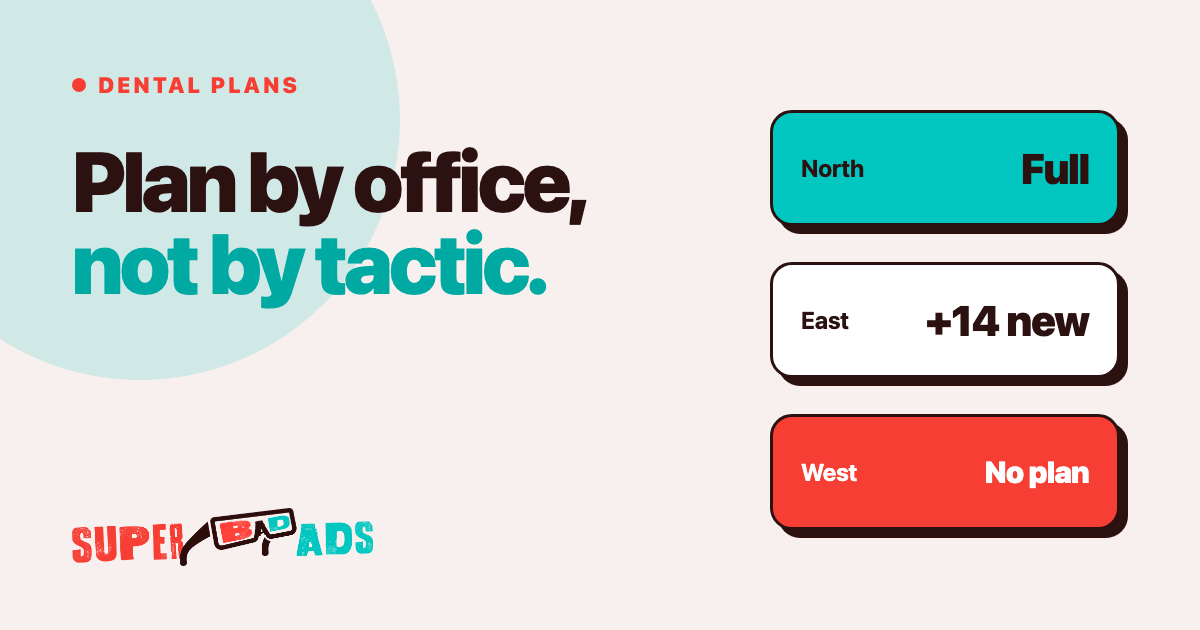
A dental group should buy paid search and paid social in one shared account structure, with a separate campaign, budget and target area for each practice. One account keeps the brand, the offers and the reporting consistent, while separate campaigns stop a busy practice from spending money that was meant for a practice with open chairs.
Google says that "Google Ads location targeting allows your ads to appear in the geographic locations that you select," so each practice's area should follow the streets its patients drive from, not a round radius that overlaps the next practice. Where two practices share a neighborhood, give the overlap to the practice with more open time, so the group doesn't bid against itself for the same search. For the full search build, including keywords by service, call handling and landing pages per practice, see our guide to google ads for dentists.
Paid social follows the same rule, so each practice with room receives its own campaign, aimed at the area around that practice, with creative that shows the real doctors, hygienists and front desk team rather than stock photos. A dental group doesn't need a national brand campaign, because short phone videos from your own operatories look more like the practice a patient will walk into, and that familiarity helps build trust over the long term.
Patients compare practices on Maps before they call, and Google says that "when a customer searches for a business or place near their location, they'll find local results on Google Maps and Search," and that "more reviews and positive ratings can help your business's local ranking." Every practice's profile should be complete, and the front desk should ask satisfied patients for reviews, so that paid clicks land on a listing that wins the comparison.
What rules apply to dental ads?
Dental ads must be truthful and must not create expectations about results, and those rules apply to every channel in your dental office advertising, including social media. The American Dental Association's Code of Ethics states that "no dentist shall advertise or solicit patients in any form of communication, including via social media, in a manner that is false or misleading in any material respect." Its advisory opinions add that statements should be avoided when they are likely "to create an unjustified expectation about results the dentist can achieve."
In practice, that rules out ad copy that promises a treatment outcome, claims one practice is better than other dentists without proof, or uses a patient's photo or testimonial without written permission and the disclosures your state requires. Each state board also writes its own advertising rules, so check with your counsel or compliance lead before a new offer, a testimonial or a specialty claim goes into any campaign.
How do you judge dental advertising vendors in new patients per practice?
Every dental advertising channel and every vendor should be judged with one weekly scoreboard per practice, built from the practice management system rather than from each vendor's report. When each vendor counts conversions its own way, the totals add up to more new patients than the schedule shows, which is why owners say they think the agency is bad but can't prove it.
Four numbers per practice are enough for the weekly review:
- Booked new patients per practice: first visits scheduled in the practice management system, by source where the front desk records it.
- Cost per new patient: each practice's paid media spend divided by its booked new patients.
- Answered calls: the share of calls from ads that a person answered, because an unanswered call wastes the click that produced it.
- Open chair time: the number that decides where next month's budget goes.
We count booked appointments in your practice management system and report them next to spend, so no patient record needs to leave the practice. These numbers will be lower than the platforms' own reports, and our post on why your booking system and ad platform disagree explains the gap. Stricter numbers are the ones the partners can trust when they decide which vendor keeps the contract.
Where to start
Super Bad Ads is the paid media partner for multi-location operators, including dental groups. We run Google and Meta for every practice and report booked new patients per practice every week, counted in your practice management system, not in the ad platform, and stricter than the platforms' own numbers. See how we work as a dental marketing agency and as a paid media agency.
We test cheap, representative creative from your own practices as many small bets, and we let you switch safely, with an audit first, an overlap with your current agency, and every account and pixel owned by you. Outside dental, for a 30+ location grooming brand, cost per new client fell 34.3% against a static-only baseline. The first step for your group is one page per practice that lists its open chair time, its channels and its budget.
FAQ
What is the most effective form of dental advertising for a group with several practices?
The most effective form of dental advertising for a group is usually paid search, because it reaches patients who are looking for a dentist now. It works best with a complete Google Business Profile at every practice and paid social for practices with the most open chair time, all judged in booked new patients per practice.
How much should a dental group spend on advertising per practice?
A dental group should set advertising spend per practice by open chair time rather than by an equal split. Practices with open hygiene and doctor time get funded first, practices with long waits get little new spend, and the split is reviewed every month against booked new patients from the practice management system.
Can a dentist use patient testimonials in ads?
A dentist can often use patient testimonials in ads, but the rules depend on the state dental board and the ADA Code's ban on false or misleading claims. The practice should obtain the patient's written permission, avoid promising results, add the disclosures the state requires and review the state board's advertising rules before the ad runs.
How should a dental group measure advertising results?
A dental group should measure advertising results with one weekly scoreboard per practice taken from the practice management system: booked new patients, cost per new patient, answered calls and open chair time. These numbers are stricter than ad platform reports and show which channels and vendors deserve next month's budget.
One plan per practice
Dental advertising for a group comes down to one job per channel, one plan per practice, a budget that follows open chair time and one weekly scoreboard the partners can trust. For help running paid media for every practice, with new patients counted in your practice management system, Get Started.
Find out what your ad spend actually books.
We instrument the whole funnel — lead to booked to showed to revenue — and buy media against the number that matters. No calendar invites, no sales-call bait. Just the build.
Get Started →