
Gym Lead Generation: A Lead System for Every Club
Gym lead generation for a group with several clubs works as a system: the right lead sources for each club, one offer per source, a written follow-up path to a booked tour, and a weekly score in joins per club from the membership system.
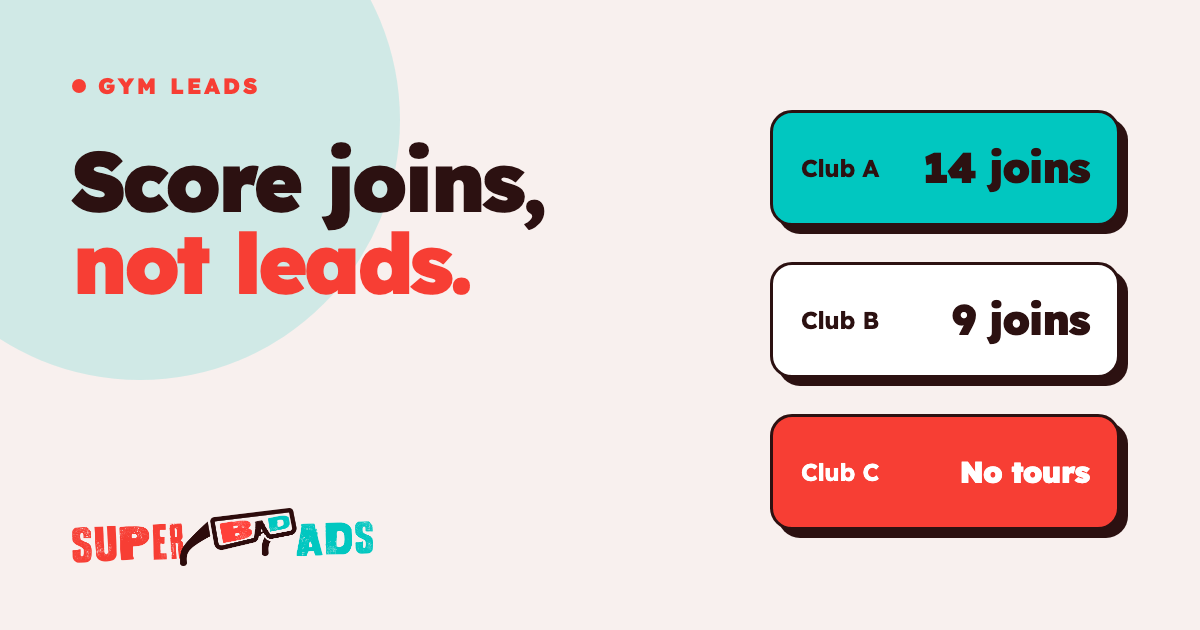
Gym lead generation for a group with several clubs works best as one system rather than a list of tactics: each club runs the lead sources that suit its neighborhood, each source makes one clear offer that asks for a tour or a first visit, every lead follows a written path to a booked tour and a join, and every source is judged on joins per club per week, counted in the membership system instead of in cost per lead.
That last rule is where most gym groups go wrong, because an agency report can show cost per lead falling while club managers describe the leads as junk and joins stay flat, which leaves the marketing lead unable to show the CEO which sources produce members.
Why do more leads not always mean more joins?
Additional leads don't produce additional joins when the leads are poorly qualified, reach the wrong club or wait too long for a reply, and because each failure occurs club by club, an inexpensive lead that never books a tour ultimately costs more per join than an expensive lead that does.
Demand is rarely the limiting factor for a club, since the Health & Fitness Association reports that "81 million Americans belonged to a gym, studio, or other fitness facilities in 2025," which it calls "an all-time high and a 5.2% increase from 2024" (industry data). Because potential customers are already looking for a gym, the gap between a club that fills and a club that stalls usually sits in the local offer, the follow-up and the front desk. Fitness lead generation for a group therefore works best when the central team owns the system while each club owns its follow-up.
Which lead sources should each club run?
Each club should operate a small set of lead sources with a defined job for each, and the mix should reflect the club's situation rather than a group-wide template that treats every local business identically. A new club with spare capacity needs paid ads working every week, whereas a full, established club may get most of its gym leads from existing members, referrals and walk-ins, and a gym referral program turns those members into a lead source you can count per club. Our guide to gym marketing explains which channels belong to the central team.
| Lead source | Its job | What to check each week | Where the join is counted |
|---|---|---|---|
| Paid social lead forms on Facebook and Instagram | Reach nearby people who aren't searching yet | Share of leads that book a tour, by club | Membership system, matched to the lead record |
| Paid search (Google Ads, including lead form assets) | Capture leads from people searching for a gym nearby | Tours and joins per club, not clicks or form fills | Membership system |
| Landing pages per club | Turn ad traffic into a tour booking | Bookings per club page | Booking or membership system |
| Referrals from existing members | Bring in friends of current members | Referred leads that join, by club | Membership system, with a referral source field |
| Walk-ins and Google Business Profile | Convert people who find the club locally | Walk-in tours logged at the desk | Membership system, with the source recorded at the desk |
Paid search deserves its own lead capture option because a searcher who is ready to act may not want to load a landing page on a phone. Google's help page on lead form assets explains that "lead forms help you generate leads by letting people submit their information in a form directly in your ad." The contact information those forms collect still needs to reach the right club's front desk quickly, so routing matters as much as the ads.
What offer should a gym lead form make?
A gym lead form should present one specific offer that requests the next genuine step, such as a tour, a first workout or an introductory personal training session, and lead generation for gyms works best when the ad, the form, the calls to action and the confirmation message all name the same club and the same step.
Each source should keep its offer until the joins data supports a change, because a group that rotates offers often can't tell what moved the results. Short videos filmed at each club with genuine coaches and members frequently outperform polished brand footage in local targeting, and our guide on how to get more gym members covers the order of acquisition work.
What should happen after a gym lead comes in?
After a gym lead comes in, it should move along a written path with a named owner at each step, in which the lead is routed to the appropriate club, receives a prompt first reply and books a tour, while every step records a status in the CRM so the group can identify where leads stall.
Meta describes the same goal in its own guidance, which aims to "nurture and manage leads by streamlining follow up and connecting your CRM or lead management system of choice." For a gym group, that connection moves a lead from the social media platforms to the club's front desk before interest fades, and it lets the central team add text and email marketing for leads who didn't book. Our guide to speed to lead covers first-reply time per location in detail.
How do you balance lead quality and lead volume?
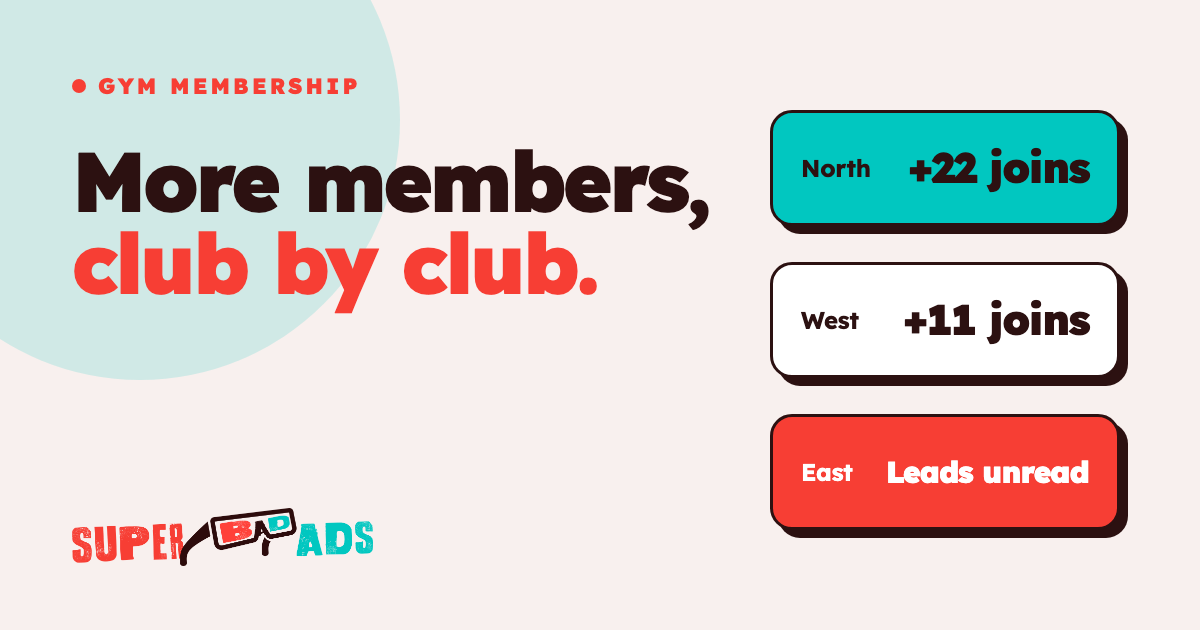
A gym group balances lead quality and lead volume by judging every campaign on cost per join instead of cost per lead, because instant forms with prefilled details produce many inexpensive leads from people who tapped without reading.
The same Meta for Business page tells advertisers to "Maximize lead quality," and for a fitness business the practical response is one qualifying question, such as which club the person wants to visit, together with a higher-intent form type wherever junk leads are a known problem. A campaign that delivers fewer leads at a higher cost per lead but more tours per club is the stronger investment over the long term, and the weekly report should make that clear to the budget owners. For campaigns to feed these lead sources, see our list of fitness marketing ideas.
How do you score gym lead generation in joins per club per week?
Gym lead generation should be scored in joins per club per week, by lead source, counted in the membership system and placed next to the spend for that club, because Club Automation, ABC, Mindbody or a similar system records the join, the club and the date in a format the board and the club managers can both verify.
Ad platforms count their own conversions, and those counts usually exceed the joins the membership system records, because the platforms credit leads that never visit a club. If your team has wondered why your booking system and ad platform disagree, that gap is the reason to report the stricter number. A weekly scoreboard of leads, tours, joins and cost per join for each club indicates whether an underperforming club requires better follow-up or better advertising.
For an 8-location California fitness operator, locations with per-location attribution went from 0 of 8 to 8 of 8, and cost per lead fell 25% by month 3.
Where to start
Super Bad Ads is the paid media partner for multi-location operators, including gym and fitness groups. We run Meta and Google for every club, follow each lead source through to the join, and report joins per club every week, counted in your membership system and reported stricter than the platform numbers. See how we work as a gym marketing agency and as a paid media agency.
We test cheap, representative creative from your own clubs and show the people who approve the budget flat-spend comparisons and quarter-over-quarter progress for each club. For a multi-location gym group, new online members rose 259%. A useful first step is to compare last month's joins by club and source in the membership system with what the ad platforms reported. To set the spend behind those leads, see how much should a gym spend on marketing.
FAQ
What is gym lead generation?
Gym lead generation is the process of attracting prospective members who are interested in joining a gym and guiding them through a tour and a first visit to a membership, and for a group with several clubs it covers the lead sources each club runs, the offer, the follow-up path and a weekly count of joins per club.
Which lead sources work best for a gym group with several clubs?
The lead sources that work best for a gym group depend on each club's situation and capacity, since paid social lead forms and paid search typically carry new or ramping clubs, while referrals, walk-ins and Google Business Profile matter more at established clubs.
How should a gym follow up with new leads?
A gym should follow up with new leads through a written path with a named owner at each step, in which the lead is routed to the right club, receives a fast reply, books a tour and gets a follow-up after the visit, with every step recorded in the CRM so stalled leads are visible.
How should a gym group measure lead generation results?
A gym group should measure lead generation results in joins per club per week, by lead source, counted in the membership system and set against spend, because cost per lead alone can hide junk leads that never book a tour at any club.
Build the system, then score it
Gym lead generation for a group comes down to the right sources for each club, one clear offer per source, a written follow-up path to the tour and one scoreboard in joins per club per week. For help running paid media for every club against that system, with results counted in your membership system, Get Started.
Find out what your ad spend actually books.
We instrument the whole funnel — lead to booked to showed to revenue — and buy media against the number that matters. No calendar invites, no sales-call bait. Just the build.
Get Started →