
Speed to Lead: Answer Every Lead at Every Location
Speed to lead is the time between a new lead reaching your business and the first real reply. For an operator with many locations, it should be measured per location and read next to booked first visits every week.
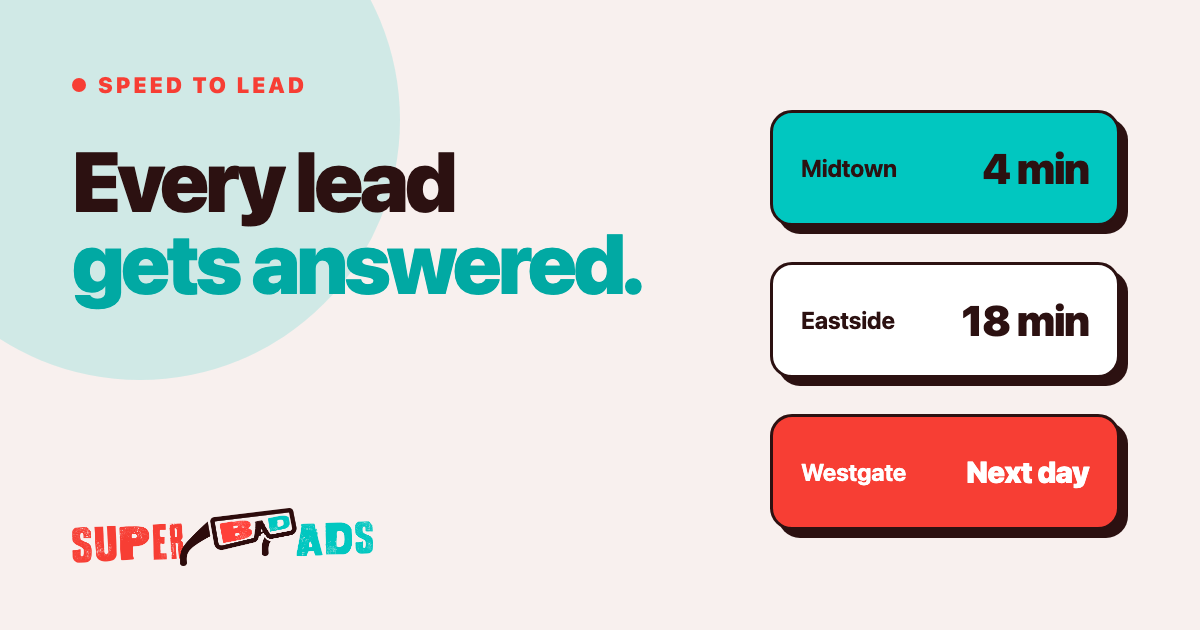
Speed to lead is the time between a new lead reaching your business and the first real reply from someone on your team. For an operator with many locations, that number should be measured per location, because each front desk has its own staff, its own rush hours and its own habits with web forms and missed calls.
However, speed alone is not the objective, because a fast reply that books nothing does not help the business. For that reason, speed to lead belongs on the same weekly report as booked first visits per location. Read together, the two numbers help show whether the ads or the follow-up is the weak link.
What does speed to lead mean for a business with many locations?
Most articles about speed to lead are written for B2B sales, where sales teams and a dedicated sales rep wait at their desks for each inbound lead. A gym, salon or barbershop brand works differently: the people who answer new leads are front desk staff who also check in members, answer the phone and handle the walk-in traffic in front of them.
For that reason, the speed to lead meaning for an operator is location-specific. A single average across the brand hides the problem, because one location that replies within minutes can mask another that leaves web forms untouched until the next morning. The useful question is how long a lead waits at each location after a person has expressed interest, and which manager needs help with staffing, lead routing or process.
Where do leads come from, and where do they land?
Leads reach a multi-location business through several paths: web forms on the site, Meta lead ads, Google lead form assets and a phone call to a specific location. Record the lead source for each one, because different lead types often need different handling. Where each lead lands decides how fast anyone can answer it, so the handoff from the ad channel to the front desk is the first thing to check.
Google lead forms are a common gap. According to Google Ads Help, you can only download leads from the last 30 days, and Google Ads stores leads for 60 days. Google also supports sending leads to a CRM by webhook or Zapier. If leads wait in the ad account for a manual export, the front desk may not see them in time.
Phone calls are equally important for appointment-based brands. With call reporting in Google Ads, you can see call duration and call start time for calls from your ads, and you can count calls of a specified duration as conversions. That helps separate real conversations from wrong numbers, and call start times show when calls arrive, so you can compare call volume with each location's staffing. Getting these handoffs right is the foundation of any multi location marketing plan.
Who should answer each lead: the front desk or a central team?
The right answer depends on the hour of the day and on how busy each location is. A simple rule for each part of the day keeps leads from falling between two teams:
- Business hours: the local front desk usually answers best, because the staff know the schedule and can book an open slot during the first conversation.
- Peak hours: when the desk is busy with members and walk-ins, a small central team can take the overflow, answer basic questions and hand the booking to the location.
- After hours: an automated lead acknowledgment by text can confirm that the inquiry arrived and ask for a good time to call. The opening shift or the central team then calls these leads first the next morning.
Write the rule down, decide who should respond to a lead in each part of the day, name an owner for lead follow up, and review it when a location changes its hours or staffing. Fixing a slow response time overnight is a practical way to improve speed to lead, and it is worth checking first when operators ask how to get more gym members without raising ad spend.
How do you measure speed to lead per location?
Ad platforms report how many leads they delivered, but they can't report when your team replied or whether the person booked. Lead response time must come from your own systems, ideally in real time: the time a lead was created in the CRM or booking system, and the time of the first call, text or email that a staff member sent. Calculating lead response time is then a simple subtraction for every lead, grouped by location.
Your booking or membership system, whether that's Mindbody, Zenoti, Booker or Club Automation, holds the outcome: the converted lead, recorded as a booked first visit. Pair those two sources by location and you have a measure the owner and the team can both check. Set a target your team can hold during business hours and review it every week; the right target depends on staffing and lead volume, so start from your current numbers rather than an industry rule.
This is also why counts rarely match between systems. If you've wondered why your booking system and ad platform disagree, the follow-up step is part of the answer: the platform counts the lead, but your team is the one that turns it into a booked visit.
Which speed to lead metrics belong on the weekly report?
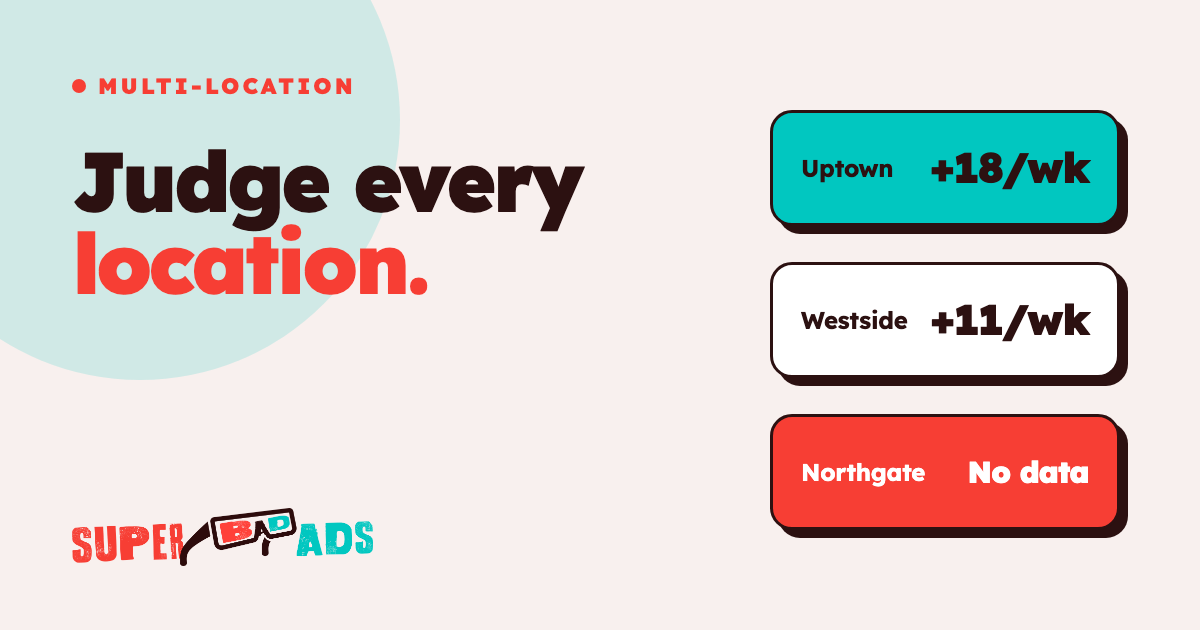
The weekly report should be short, strict and readable per location, so the owners can see how each front desk turns interest into first visits. These speed to lead metrics cover the full path from lead to booking:
| Metric | What it shows | Where it comes from |
|---|---|---|
| First-reply time | How long a lead waits for the first real reply, per location | CRM or booking system timestamps and call records |
| Missed calls | Calls that nobody answered during business hours | The location's phone system |
| Booked percentage | The share of leads that booked a first visit | Booking or membership system |
| Booked first visits | New clients or members scheduled to come in | Booking or membership system |
| Cost per new client | Ad spend for each booked first visit | Ad spend divided by booked first visits |
Read the rows together, because faster responses only matter when they turn into bookings. A location with a fast first reply but a low booked percentage may need help with the conversation itself, while a location with a strong booked percentage but slow replies probably needs more coverage at the desk.
Is it the ads or the follow-up?
Many owners suspect that their agency is underperforming but cannot prove it. Speed to lead per location, read next to booked percentage, helps separate an ads problem from a follow-up problem before anyone changes the budget.
If a location replies quickly and still books few first visits, the problem is more likely the ads, the offer or the audience. If a location leaves leads waiting for hours and books few visits, the follow-up needs attention first, and new creative is unlikely to fix it alone. Understanding what is marketing attribution in a physical business means tracing each result back to the location that produced it.
Per-location measurement makes that diagnosis possible. For example, an 8-location California fitness operator went from 0 of 8 to 8 of 8 locations with per-location attribution, and cost per lead fell 25% by month 3. That result came from measuring every location, not from faster replies alone, and it let the team see which locations needed support.
Where to start
Super Bad Ads is the paid media partner for multi-location operators. We run Meta and Google for every location and report booked first visits per location every week, so a slow follow-up is visible next to the ads that paid for the lead.
When it is unclear where leads are being lost, an outside review is a practical first step. A paid media audit reviews whether your tracking connects to the booking system and where each location's leads are waiting. When you want a paid media agency that measures success in booked visits rather than clicks, that's the work we do.
FAQ
What is a good speed to lead for a location with a busy front desk?
A good speed to lead is a target your staff can hold during peak shifts, measured from your own timestamps. Start with one week of current data for each location, set a target close to your best location's result, and review it every week alongside booked first visits.
Should a central team or each location answer new leads?
Many operators use both. The local front desk answers during normal hours because it controls the schedule, and a central team covers overflow and after-hours callbacks. What matters is a written rule for each hour and a clean handoff back to the location for the booking.
Does speed to lead matter for leads that arrive after hours?
Speed to lead remains important for leads that arrive outside business hours. An automatic text can confirm that the inquiry arrived and ask for a convenient time to call, which keeps the conversation open until the location reopens. The opening shift or the central team should then call those leads first on the following morning.
How is speed to lead different from lead response time?
The two terms mean nearly the same thing: the gap between a person sending their details and your team's first real reply. Operators often use speed to lead for the target and lead response time for the measured result, reported per location every week.
Start by measuring one week of first-reply time and booked percentage at every location, then fix the slowest location first. When you're ready for paid media that answers to your booking system, Get Started.
Find out what your ad spend actually books.
We instrument the whole funnel — lead to booked to showed to revenue — and buy media against the number that matters. No calendar invites, no sales-call bait. Just the build.
Get Started →