
What Is Marketing Attribution? How Operators Tie Bookings to Ads
Marketing attribution is how you connect a booked customer back to the ad, search, or post that earned them. For multi-location operators, it's the difference between setting budgets by evidence and setting them by gut.
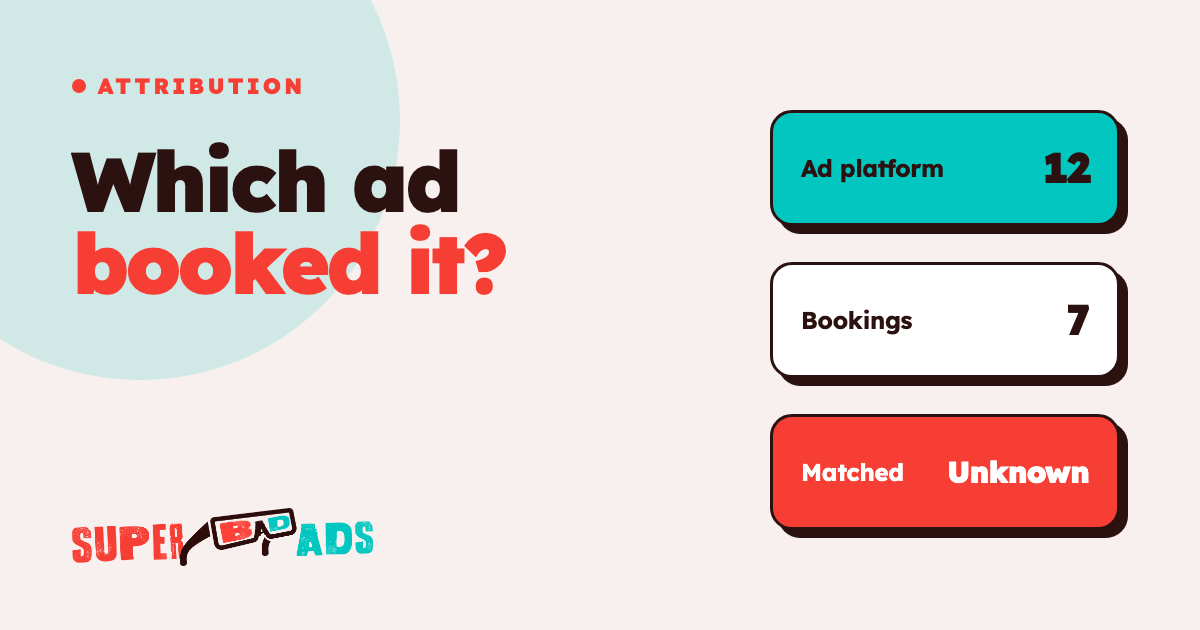
Marketing attribution is the practice of connecting a customer back to the marketing that produced them. A new member joins, a patient books, a client shows up for a facial, and attribution answers one question: which ad, search, or post earned that customer, and at which location?
That's the whole definition. The hard part is that most businesses never actually connect those two ends. The ad platform knows about the click. Your booking system knows about the appointment. Nothing in between knows they're the same person.
Why does marketing attribution matter for a multi-location business?
Because budgets follow whatever numbers you trust, and most operators don't trust any of them.
If you run five gyms or twelve med spas, you're making the same decision every month: where does the next dollar go? Without attribution, that decision gets made on blended averages. The platform says the account produced a certain number of "conversions." Nobody can tell you which locations those conversions belong to, or whether any of them became paying customers.
So the busy location looks like it's working, the quiet one looks like it isn't, and the budget moves on gut feel. Sometimes the gut is right. Often the quiet location is actually the efficient one, and the busy one is spending to win customers it would have gotten anyway.
Attribution fixes that by giving every location its own cost per booked customer. Once you have that number, the budget conversation gets short.
How does marketing attribution actually work?
At a basic level, every attribution setup does three things:
- Captures where the visitor came from. Click IDs, UTM parameters, and call-tracking numbers record the source the moment someone arrives.
- Carries that source to the conversion. When the visitor books, calls, or fills out a form, the source travels with them into your CRM or booking system.
- Sends the result back. The booked appointment, and ideally the revenue, gets reported back to the ad platform so its bidding learns what a real customer looks like.
Step three is the one most businesses skip. And it's the one that matters most, because ad platforms optimize toward whatever signal you give them. Give them form fills and they'll find you more form fills. Give them booked, showed-up customers and they'll find you more of those.
What are the main marketing attribution models?
An attribution model is the rule for splitting credit when a customer touched more than one thing before booking. The common ones:
- Last-click. The final touch before conversion gets all the credit. Simple, and it overrates branded search and retargeting.
- First-touch. The first touch gets all the credit. Useful for judging what introduces you to new people, blind to everything after.
- Linear. Every touch gets equal credit. Fair-sounding, but it treats a glance at a display ad the same as the search that led to the booking.
- Time-decay. Touches closer to the conversion get more credit. Reasonable for longer decision cycles.
- Data-driven. The platform uses your own conversion data to estimate each touch's contribution. Google Ads now defaults to it, but it only works as well as the conversions you feed it.
Here's the operator's honest take: the model matters far less than the plumbing. A perfect data-driven model running on bad conversion data gives you confident, wrong answers. A plain last-click model running on real booked appointments, split by location, will tell you more than most dashboards ever have.
Why is attribution so hard for appointment-based businesses?
Appointment businesses break naive tracking in predictable ways.
- The conversion happens off the website. People call. They walk in. They book through a scheduling app that lives on another domain. A pixel on your site never sees any of it.
- The customer is won per location. Most ad accounts report one number across every location, so even good data arrives blended.
- The booking system and the ad platform don't talk. Your scheduler or practice-management software holds the truth about who booked and who showed. The ad platform never hears about it.
- Privacy changes thinned out browser tracking. Cookie limits and app-tracking opt-outs mean a growing share of conversions never get matched back to a click on the browser side alone.
That's why the numbers never match. The ad platform says one thing, the booking system says another, and the operator is left refereeing. We walked through what that looks like for one vertical in why multi-location dental groups should measure before they advertise.
What does good attribution look like for a multi-location operator?
It doesn't need to be fancy. It needs to be honest and per location. In practice:
- Every location has its own tracking: its own call numbers, its own booking source, its own reporting line.
- Booked appointments, not form fills, are the primary conversion sent back to Google and Meta, usually through server-side or offline conversion uploads.
- Your CRM holds the source for every customer, so you can answer "where did this customer come from?" without opening four tools.
- Reports show cost per booked customer by location and by channel, not impressions and click-through rates.
If you want a picture of the tools behind that, our breakdown of the MarTech stack for multi-location operators covers how the pieces fit, and what a real measurement audit looks like shows how to find where your current setup leaks.
Where should you start?
Start with the measurement, then the media. Before adding spend, make sure you can answer one question for each location: what did a booked customer cost last month? If you can't answer it, more budget just buys more guessing.
That's how we work at Super Bad Ads. We tie your ads to your booking system first, then run paid media for multi-location operators against numbers both sides trust. If that sounds like the problem you have, Get Started.
FAQ
Is marketing attribution the same as conversion tracking?
Not quite. Conversion tracking records that something happened, like a form fill or a booking. Attribution decides which marketing gets credit for it. You need conversion tracking first; attribution is built on top of it. Bad conversion tracking makes every attribution model wrong.
Which attribution model should a small multi-location business use?
Use whatever your ad platform defaults to, usually data-driven, and spend your energy on the inputs instead. Send real booked appointments back to the platform and split reporting by location. Clean inputs on a simple model beat a sophisticated model running on form fills.
Can you attribute phone calls and walk-ins?
Phone calls, yes. Per-location call tracking ties a call back to the ad or listing that drove it. Walk-ins are harder. The practical approach is to ask at booking or check-in, record the answer in your CRM, and compare location trends against spend over time.
How long does it take to set up attribution properly?
For most multi-location operators, the core wiring takes a few weeks: tracking per location, a CRM connection to the booking system, and conversions flowing back to the ad platforms. The first trustworthy month of data follows after that. It's a one-time build, not an ongoing project.
Find out what your ad spend actually books.
We instrument the whole funnel — lead to booked to showed to revenue — and buy media against the number that matters. No calendar invites, no sales-call bait. Just the build.
Get Started →