
Multi-Location Marketing That Grows Every Location
Multi location marketing isn't one campaign copied across every zip code. It's a per-location operating system: a central brand, local execution, and a weekly scoreboard tied to your booking system, so you can tell your CEO which locations marketing is working at.
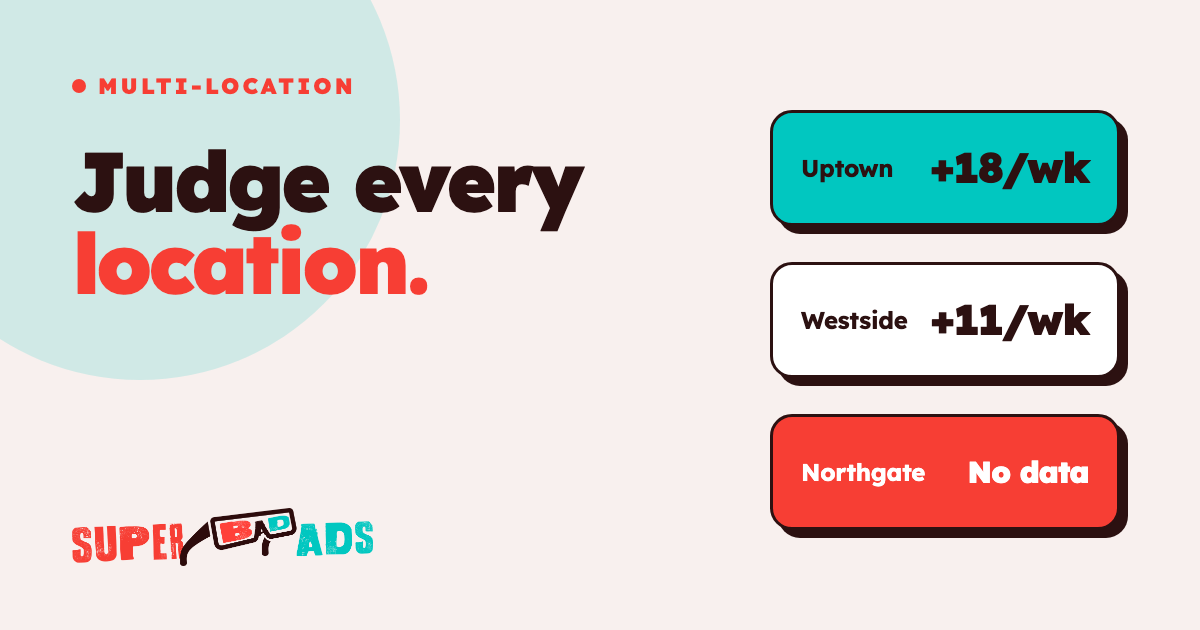
Multi location marketing isn't one corporate ad running in forty zip codes. Think of it as a per-location operating system. You keep one central brand, let each team execute locally, and judge every location on its own new clients with a weekly scoreboard.
Most multi location brands skip that last part, even though the scoreboard is what an owner, CEO, or CFO evaluates first. Budget season usually ends with one question from the board: "Which locations is marketing working at?" With blended reporting, nobody can answer it, because three strong locations carry the average and hide the differences between individual locations.
What should you run centrally, and what should stay local?
Centralize everything and your marketing campaigns look generic across local markets. Localize everything and your tracking breaks, your brand messaging drifts, and nobody can compare one location to another. Draw a clear line between the two:
| Run it centrally | Run it locally | | :--- | :--- | | Brand guidelines: brand identity, tone of voice, core offers, and approved marketing materials. | Front desk follow-up: calls, texts, and rebooking for new leads. | | Ad accounts, tracking, and social media management: one business account and one set of pixels, owned by the company. | Community: neighborhood partnerships and in-studio events. | | Budget: the central team moves dollars between locations based on demand. | Local content: staff photos and short videos of the space and the team. |
When a local manager boosts posts on a personal card, the company loses that data and can't retarget those potential customers elsewhere in the network. Keep the advertising accounts centralized, and let each team supply the local material you need to promote each location locally.
How should you split the budget across locations?
An even split is the most common budgeting mistake, because it sends money to locations that can't use it and starves the ones that can. Allocate by demand, capacity, and stage instead:
- New opening: front-load spend to build brand awareness and fill founding memberships.
- Mature location: spend enough to replace normal churn, not more.
- Struggling location: diagnose the problem before adding money. Determine whether demand is low or whether leads arrive and fail to book.
Review the previous eight weeks of new clients, cost per new client, and available capacity for each location. Locations with open capacity and an efficient cost per new client earn additional spend first, while a studio with a waitlist needs less advertising until capacity opens.
That discipline turns a multi location marketing strategy into a budget your CFO will approve, and it's how we run paid media for multi-location operators.
What should you measure at each location, every week?
Ad platforms report the conversions they believe they caused, while your booking system records the clients who arrived. When the two disagree, rely on the booking system.
The conversion event is a booked appointment or a membership join, not a click. If your booking system (Zenoti, Booker, Mariana Tek, Mindbody) doesn't record a new client, the lead doesn't count. This standard is stricter than the platform numbers, and it's what the people who approve the budget expect.
The scoreboard needs three inputs. The first is new client records from the booking system, exported weekly or in real time with the location attached. The second is the source of each booking, from UTM parameters or call tracking. The third is media spend by location. Track these metrics weekly:
| Metric | What it tells you | | :--- | :--- | | New clients per location per week | First-time clients from your booking system, by location. | | Cost per new client | Media spend for that location divided by its new clients. | | Booked percentage | Share of leads that become a confirmed appointment. | | Intro-to-member rate | Share of intro offer buyers who join as members. | | Lead follow-up speed | How long the front desk takes to contact a new lead. |
Watch the intro-to-member rate closely, because most multi location marketing reports leave it out. If 30 people buy an intro offer and two become members, the ads are working and the follow-up isn't. A per-location scoreboard reveals that in week one, while you can still improve the customer experience at the front desk.
Which channels do the work for each location?
Good multi location business marketing gives each channel one job, and the strongest location marketing strategies coordinate all of them.
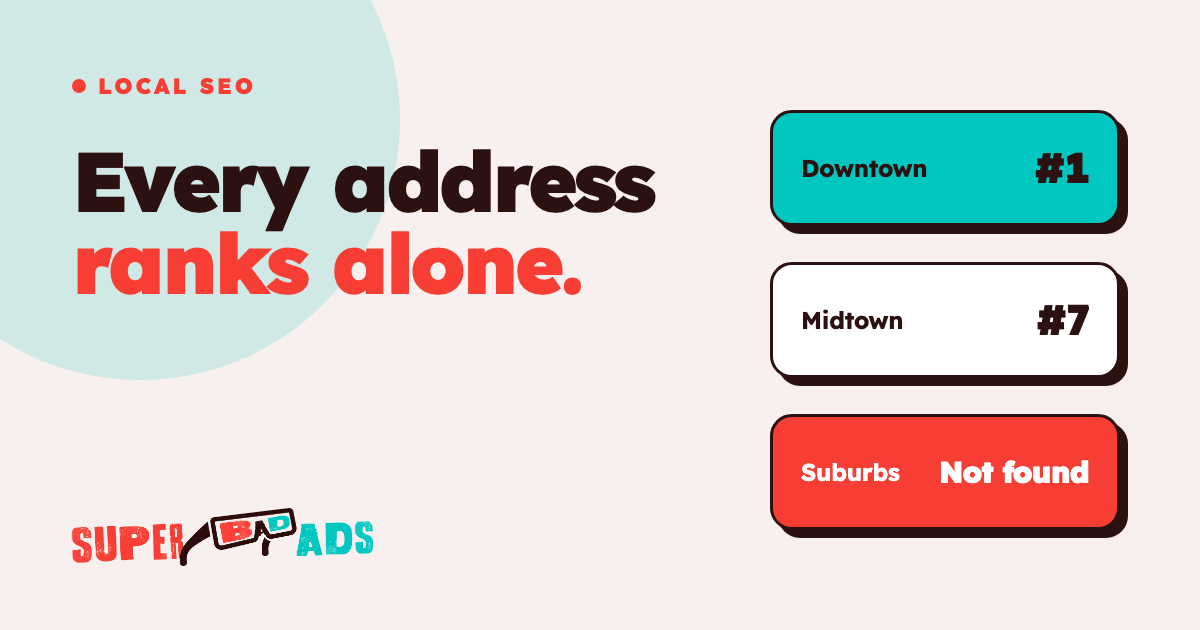
Search and Google Business Profile capture demand. When local customers search for what you offer, the nearest location needs to rank in local search results and appear in the map pack. Start with local SEO for multiple locations and our Google Business Profile guide for multi-location operators.
Meta and social media marketing create demand. Local ads place an intro offer in front of local audiences before they search, and geo-targeting keeps every dollar tied to a specific address.
Reviews and location pages convert interest. Recent reviews increase the share of searchers who book, and a dedicated page for each location gives ads a relevant destination.
Give each location its own campaign budget, geo-target, and location specific landing pages, or at minimum a consistent naming convention. That structure lets you attribute spend to individual locations and complete the weekly scoreboard.
How do you keep the brand consistent without one-size-fits-all creative?
One operator summarized the point directly: "We are not Nike." Maintaining brand consistency across 30 locations doesn't require an expensive brand shoot, and polished national brand creative often looks like stock footage to your target audience.
Use inexpensive, representative creative instead: real staff, real rooms, and short phone videos. Keep the brand guidelines central so every piece supports the overall brand. Then treat creative as a portfolio of small bets, evaluate each one on booked first-time clients, and retire the rest. A 30+ location grooming brand that adopted this approach cut cost per new client by 34.3% against its static-only baseline.
What do you show the owner or CFO?
We wrote this section for you to forward. The people who approve the budget want proof that marketing is incremental, meaning the new clients would not have arrived without the spend. Provide three things:
- Cost per new client by location, from the booking system, next to each location's margin.
- Flat-spend comparisons that show more new clients on the same total budget.
- Quarter-over-quarter progress, location by location, not one blended number.
When the stakes justify it, add a hold-out test: reduce spend in one comparable location for a defined period and compare its trend with the others. A multi-location gym operator that held spend flat and rebuilt its measurement went from 0.15x to 1.62x paid-search ROAS by month three. You can review more results in our case studies. That's the conversation that moves multi-location marketing from a cost center to a line the board defends.
Common multi location marketing mistakes
- Blended reporting, which conceals the locations that are losing money.
- Trusting platform numbers over the booking system.
- Rogue local ad accounts, which fragment data and tracking.
- A hard cut between agencies. Start with an audit, overlap with the incumbent for a quarter, and confirm the company owns every account and pixel. Our paid media and setup audit begins with who owns what today.
Multi location marketing FAQ
How should a brand manage franchisees who want to run their own ads? Give franchisees local input inside a central framework. Keep ad accounts, pixels, and brand standards central so the data stays in one place, and show each franchisee their own location's numbers every week. That balance keeps multi location marketing consistent without removing local relevance.
Can a small team run multi location digital marketing for 20 locations? Yes, provided the infrastructure is centralized and the reporting is organized per location. A marketing team of one to three people can manage the accounts, the budget, and the weekly scoreboard, while local managers own follow-up and content capture.
Where to start this week
Select five locations and complete the scoreboard above for the last four weeks. If your booking system supplies those numbers, you already have a multi location marketing system. If it doesn't, close that gap before changing any budget, because that's where we begin with every operator. Get Started.
Find out what your ad spend actually books.
We instrument the whole funnel — lead to booked to showed to revenue — and buy media against the number that matters. No calendar invites, no sales-call bait. Just the build.
Get Started →