
Google Ads vs Facebook Ads: Which One Books More Appointments?
Google Ads catches people who are already searching. Facebook and Instagram ads reach people before they search. For appointment-based businesses with several locations, the right split depends on demand at each address, and on whether you can measure booked customers from both.
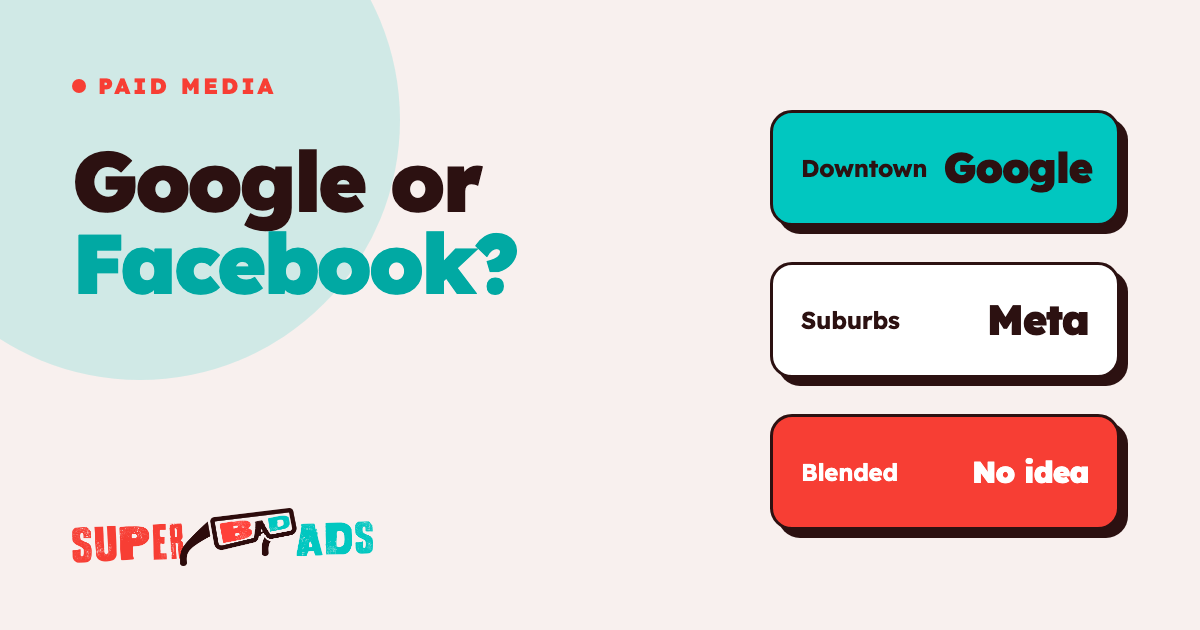
The google ads vs facebook ads question isn't an either-or choice for most appointment-based businesses. Google Ads captures demand: people typing "dentist near me" or "lash extensions [city]" right now. Facebook and Instagram ads create demand: they reach people who match your best customers before they ever search.
If search demand at a location is strong, Google usually books customers faster. If search demand is thin or the market is new, Meta builds it. Most multi-location operators need both, split differently per location.
Whether you frame it as google ads vs facebook ads for local businesses or facebook ads vs google ads, the way to decide is the same: measure booked appointments from each channel, at each location, and move budget toward the lower cost per booked customer.
How Google Ads Works for Local Businesses
Google Ads shows your ad when someone searches. You bid on keywords, and Google matches them to searches with clear intent.
Where it wins:
- High-intent searches. Someone searching "botox near me" on a Thursday night wants an appointment.
- Established categories with steady search volume, like dental, physical therapy, and fitness.
- Locations in dense markets where people search before they book.
Where it struggles:
- New concepts nobody searches for yet.
- Small markets where search volume can't support the budget.
- Categories where costs per click are high and conversion tracking is weak, so the bidding algorithm optimizes toward form fills instead of booked customers.
How Facebook and Instagram Ads Work for Local Businesses
Meta ads show in the feed, Stories, and Reels. They reach people who fit an audience: a location radius, interests, and lookalikes of your existing customers.
Where it wins:
- Visual services: med spa results, salon work, studio classes, transformations.
- Intro offers and new-location launches, where you need people to learn you exist.
- Markets with low search volume, because Meta doesn't wait for someone to search.
Where it struggles:
- Lower intent. A scroller isn't looking to book, so the offer and the follow-up do more work.
- Tracking. Since iOS privacy changes, browser-only tracking misses a large share of conversions. Without server-side tracking through the Conversions API, Meta optimizes on partial data.
For format choices once you're on Meta, see the paid social ad formats that book appointments, and for budget planning, what Instagram ads cost multi-location operators.
Google Ads vs Facebook Ads: Side by Side
Here's the google ads vs facebook ads comparison in short form.
- Intent: Google catches people already looking. Meta reaches people before they look.
- Speed to bookings: Google is usually faster where search demand exists. Meta takes testing to find the creative and offer that work.
- Creative load: Google runs on text and landing pages. Meta needs a steady supply of images and video.
- Best for new locations: Meta, to build awareness in the radius. Add Google as local searches grow.
- Best for mature locations: Google for the steady demand, Meta to fill open slots and promote new services.
- Tracking needs: both need booked-appointment data fed back to them. Neither works well optimizing on clicks.
The Multi-Location Question: Which Channel at Which Address?
This is where the google ads vs facebook ads decision gets local, and where blended reporting hurts. An account that reports one cost per lead across all locations can't tell you that Google books cheaply at your downtown location while Meta does better in the suburbs.
Set the split per location:
- Check search demand per address. If local searches for your service are steady, start with Google there.
- Check the location's stage. New or underperforming locations usually need Meta to build awareness first.
- Measure cost per booked appointment per location, per channel. Not cost per click, not cost per lead. Booked customers, tied to the location.
- Move budget monthly toward the channel and location with the lower cost per booked customer, while keeping enough spend in each channel to keep learning.
Why Tracking Decides the Winner
Most google ads vs facebook ads debates are tracking problems. Each platform reports its own conversions, credits itself, and your booking system shows a different number.
Before you judge either channel, connect them to the same source of truth:
- Server-side tracking: Google Enhanced Conversions and Meta's Conversions API.
- Your booking system feeding your CRM, so each booked appointment carries its source and location.
- Booked appointments sent back to both platforms so their bidding optimizes toward real customers.
That's the work a paid media agency should do before it touches your budget, and it's what we look at first in a real measurement audit.
So, Google Ads or Facebook Ads?
People often ask about google ads or facebook ads for small business as if there's one right answer. There isn't. If you have to start with one: start with Google Ads at locations with steady local search, and Meta at locations that are new or in low-search markets. Then let per-location booked-appointment data make the next call, not the platform dashboards.
If you want to see which channel is booking customers at each of your locations, Get Started.
Find out what your ad spend actually books.
We instrument the whole funnel — lead to booked to showed to revenue — and buy media against the number that matters. No calendar invites, no sales-call bait. Just the build.
Get Started →