
12 Fitness Marketing Ideas That Work at Every Location
The best fitness marketing ideas for a gym group are the ones every location can run and the membership system can measure. Here are 12, ranked and tagged central or local, with the number to watch for each.
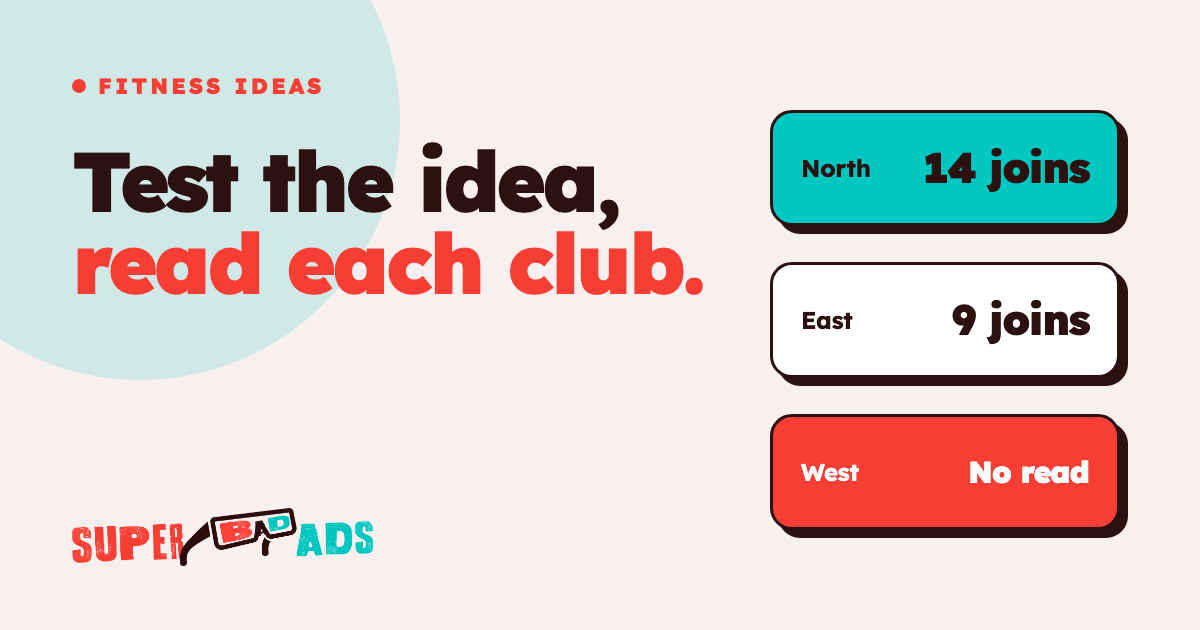
The best fitness marketing ideas for a gym group are the ones that every location can run and that the membership system can measure. For a group with 8 or 40 clubs and studios, that means a short list, ranked, with each idea assigned to the central team or to the location, and judged by one number: joins per location per week.
Most lists of fitness business marketing ideas are written for a single studio and offer 30 or 50 tactics with no way to tell which ones worked, which is a poor fit for fitness brands that answer to owners or a board. This guide gives a marketing lead 12 ideas that hold up across large-format clubs, boutique studios and pilates rooms in one group, explains who should own each one, and shows how to read the results per location before you expand anything.
Which fitness marketing ideas should a gym group run first?
Start with the ideas that capture demand you already have, then add the ones that build new demand around each location. The table ranks all 12 marketing ideas for fitness centers and can be forwarded to the CEO or the owners without edits, so the whole group can see where its marketing efforts go.
| Rank | Idea | Who runs it | What it needs | Number to watch |
|---|---|---|---|---|
| 1 | Intro offer set by location capacity | Central | Membership system capacity data | Joins per location |
| 2 | Google search ads for each location | Central | Location targeting, budget | Cost per join |
| 3 | Meta ads per location radius with club-floor creative | Central | Phone video from each club | Cost per join |
| 4 | Google Business Profile for each location, with reviews | Central | Accurate details, review requests | Calls and direction requests |
| 5 | Same-day front desk follow-up | Local | One script, training | Lead-to-join rate |
| 6 | Member referral with a front desk ask | Local | One script | Referral joins |
| 7 | January and summer pushes planned by capacity | Central | Seasonal calendar | Joins per location |
| 8 | New location presale | Central | Presale setup in the membership system | Presale joins |
| 9 | Win-back of lapsed members | Local | Past-member list | Returning joins |
| 10 | Corporate and community partnerships | Local | Outreach near each club | Partner joins |
| 11 | Trial class for boutique and pilates formats | Local | Open class spots | Trial-to-join rate |
| 12 | Local events and challenges | Local | Floor space, staff time | Event joins |
Which ideas should the central team run?
The central team owns the budget, the ad accounts, the brand standards and the measurement. These ideas need consistency across every location, so they're run from the center and reported per location. Good fitness center marketing starts with a clear target audience for each club and a digital marketing plan that every location can follow.
Intro offer set by location capacity: Run intro offers where there's room to sell, not everywhere at once. Your membership system shows which clubs have open floor time or empty class spots, so the offer should run hardest at those locations and pause at clubs near capacity. The market is large enough to support this approach: the Health & Fitness Association reports that 81 million Americans belonged to a gym, studio or other fitness facility in 2025, while more than 100 million people used a fitness facility during the year. The gap between people who use a facility and people who belong to one is the audience an intro offer is built for.
Google search ads for each location: Search ads capture people who are already looking for a gym near them. Google Ads location targeting allows your ads to appear in the geographic locations that you select, so each club can have its own campaign and its own radius without nearby locations competing for the same searches. This is one of the fitness advertising ideas with the clearest link to joins, because the searcher has already decided to act and is often comparing gym membership options near home or work.
Meta ads per location radius with club-floor creative: Meta reaches people near each club who aren't searching yet. A gym group isn't Nike, and it doesn't need a studio shoot: short phone videos of real coaches and real classes, filmed at each location, can compete with polished footage and cost far less to replace. Treat each video as a small bet in a larger marketing campaign, keep the ones that produce booked first visits, and retire the rest. The same footage can also serve as social media posts for each club, which helps build trust with people who haven't visited yet.
Google Business Profile for each location, with reviews: Google Business Profile Help states that local results are mainly based on relevance, distance and popularity. The central team should keep each profile's name, address, hours and booking link accurate, and the local team should ask satisfied members for reviews. Accurate profiles strengthen each club's online presence and make paid campaigns work better, because people who see an ad often check the listing before they visit a fitness center.
January and summer pushes planned by capacity: The central team should own the seasonal calendar and plan each push by location. A club that fills every January needs less budget than a club that still has open capacity in February, and the membership system shows which is which.
New location presale: A new club should open with members, not an empty floor. Set up the presale in the membership system before the launch, so every presale join is counted from the first day. The steps to market a new location opening apply here as well.
Which ideas should each location run?
Local teams own the in-person work that turns interest into a membership. The central team creates the demand, and the club staff complete the sale and build the community that keeps members.
Same-day front desk follow-up: Every inquiry should get a response on the day it arrives. A lead from a paid campaign has no value if nobody calls back, and prospects who wait often join somewhere else.
Member referral with a front desk ask: Give the front desk one short script for asking current gym members to bring a friend. Referral programs work best when the ask is consistent at every location, and referred prospects already trust the club, which gives them a head start over cold leads.
Win-back of lapsed members: Former members already know the facility and the staff. A personal call from a coach they know tends to work better than an automated email, and the membership system can tell you who left and when.
Corporate and community partnerships: Each club manager can build relationships with local businesses, employers and community groups nearby, which the central team can't do from another city. A trial class for employees of neighboring businesses is a simple starting offer.
Trial class for boutique and pilates formats: Boutique and pilates customers usually want to experience the room and the instructor before they commit, so a single trial class fits these formats better than a discounted month. The guide to fitness studio marketing covers boutique formats in more depth.
Local events and challenges: Community events and fitness challenges keep current members engaged and bring curious neighbors through the door. They also produce real footage that the central team can reuse in ads.
If your group needs a full plan rather than a list of ideas, our guide to gym marketing shows how to divide the work between the center and each club, and the guide on how to get more gym members follows a prospect from the first ad to the first visit.
Why does the front desk decide whether an idea works?
Marketing creates the opportunity, but the front desk converts it into a member. When an inquiry is handled slowly or inconsistently, even the strongest fitness marketing ideas will look like failures in the report.
Three rules protect every idea on this list. First, respond to every inquiry on the same day. Second, use one script across all locations, so every prospect hears the same offer and the same next step. Third, book every prospect directly into the membership system. When prospects are recorded on paper or in a separate spreadsheet, their joins can't be traced to the idea that produced them, and the central team can't identify which locations need support.
How do you tell which idea worked at each location?
Test each new idea at a few matched locations first, and compare them with similar clubs that didn't run it. Matching by size, format and market keeps the comparison fair, and testing one or two ideas at a time keeps the results readable.
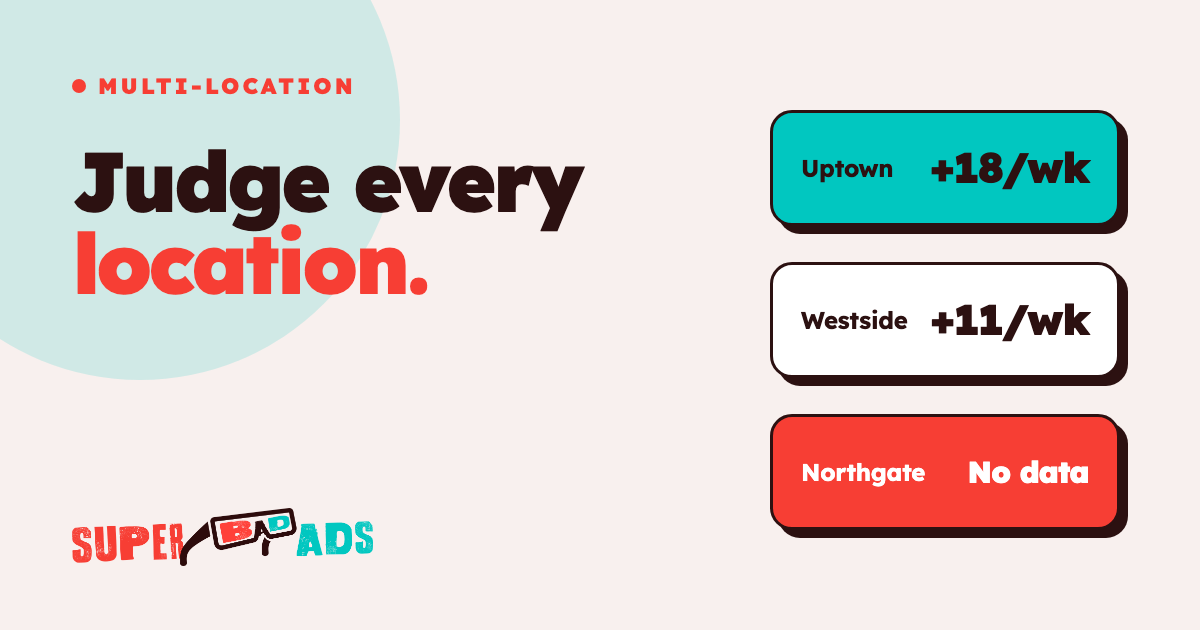
The scoreboard is joins per location per week, pulled from the membership system. That count is stricter than the platform numbers, because Meta and Google count leads and clicks while the membership system counts the people who actually joined. For one 8-location California fitness operator, per-location attribution went from 0 of 8 locations to 8 of 8, and cost per lead fell 25% by month 3.
When the ad platform and the membership system report different numbers, investigate the gap before you expand an idea. Our guide on why your booking system and ad platform disagree explains the most common causes.
Where to start
Super Bad Ads is the paid media partner for multi-location fitness groups and the gym owners who run them. We run Meta and Google for every location and report joins per location every week against your membership system, stricter than the platform numbers. One multi-location gym group we work with saw a 259% increase in new online members.
If you're evaluating a gym marketing agency, start with an outside check: a paid media and setup audit shows where tracking breaks, which locations the current ads actually help and what to keep. You can also see how we work as a paid media agency for marketing teams of one to three people. Before you pick ideas, settle the budget: our guide on how much should a gym spend on marketing gives the per-club math.
FAQ
Which fitness marketing ideas are the least expensive to test? In the fitness industry, club-floor video on Meta, front desk referral asks and local partnerships cost the least to test. Each one needs staff time more than budget, and each can be measured in joins per location within a few weeks, which makes them good first tests for a group.
Is it better for boutique studios and large-format clubs in one group to run the same ideas? In most groups, the formats need different ideas. Large-format clubs tend to respond to intro offers and search ads, while boutique and pilates studios usually convert better with a trial class and community events. The central team should keep one measurement system and adjust the ideas to each format.
How many fitness marketing ideas should a group test at one time? A group should test one or two ideas at a time, each at a set of matched locations. When several ideas change at once, the membership system can't show which one produced the joins, and the group ends up expanding tactics that did not work.
When should a gym group begin planning its January push? Begin in the autumn, so that creative, budgets and front desk schedules are ready before the new year. Planning by location capacity lets the central team put more budget behind clubs that have room to grow, which matters for any fitness business with uneven demand across its locations.
Pick three ideas from this list, run them at matched locations and read joins per location per week before you roll them out across the group. When you're ready for paid media that answers to your membership system at every location, Get Started.
Find out what your ad spend actually books.
We instrument the whole funnel — lead to booked to showed to revenue — and buy media against the number that matters. No calendar invites, no sales-call bait. Just the build.
Get Started →