
Retail Marketing Strategies That Work in Every Store
For a chain with many stores, the retail marketing strategies that pay are local ads, local search and a disciplined sales floor, run from the center and measured as new customers per store per week from the POS.
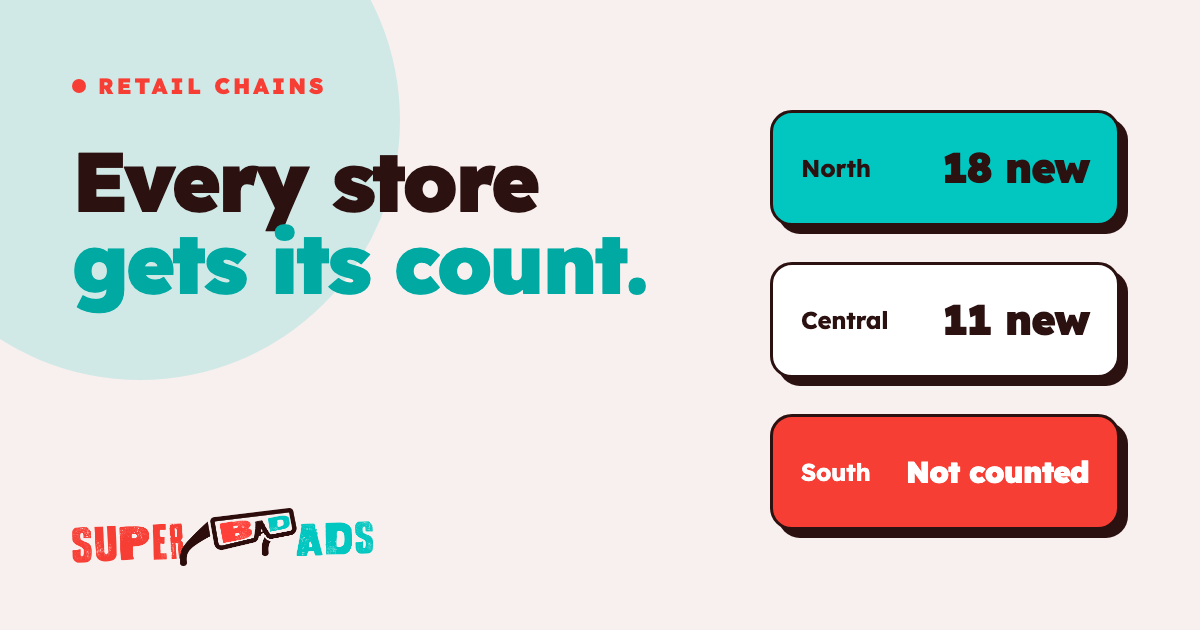
For a specialty retail chain, effective retail marketing strategies include local advertising for each physical store, an accurate Google Business Profile for each location and a sales floor that follows up with every potential customer who doesn't buy on the first visit. Each of these is managed centrally and evaluated by a single number from the POS: new customers per store per week.
That emphasis on brick and mortar stores is justified. According to the U.S. Census Bureau, e-commerce sales in the second quarter of 2026 accounted for 17.1 percent of total sales, so most retail spending still happens offline.
Most retail store marketing strategies are written for a single shop or an online store. This guide addresses multi-location retail marketing for chains with 6 to 40 locations, such as eyewear, mattress, furniture, jewelry, bridal, hearing and tailoring retailers, where a consultation or fitting is often part of the sale.
What should a store chain measure before it picks a strategy?
Before selecting any retail marketing strategy, decide how success will be measured. For a chain, a reliable measure is new customers per store per week, drawn from the POS customer list or the loyalty program rather than from the advertising platforms.
Start by checking what the POS reports today. In many chains, cashiers skip the customer profile during busy periods, so some new buyers never reach the customer list, and the cost per new customer can't be calculated with confidence. A POS-based scoreboard is also stricter than the platform numbers, because it counts people who actually became customers rather than clicks or estimated visits.
How should a chain run local ads for every store?
Operate one central ad account with a separate campaign for each retail store. Google Ads Help explains that location targeting allows your ads to appear in the geographic locations that you select, and that radius targeting requires setting a radius of at least 1 km around any given location. A radius around each store concentrates spending on the local market that can reasonably visit, and it prevents neighboring stores from competing for the same searches. Meta campaigns should follow the same structure, with one audience per store.
Creative does not require a national production budget. A specialty chain isn't Nike, and its target audience often responds better to genuine staff on a real sales floor than to studio footage. Short videos of a manager or fitter explaining a product are inexpensive, and they keep marketing materials consistent across multiple channels. Treat each video as a small bet, retain the versions that produce new customers and reallocate budget toward them.
Why does Google Business Profile matter for each store?
When a shopper needs a hearing test or new glasses, the search usually happens on a phone. Google Business Profile Help states that local results are mainly based on relevance, distance and popularity. A chain can't change a store's distance from the shopper, but it can control the relevance and reputation of every profile.
The central team should maintain accurate hours, holiday hours, services and appointment links with consistent branding. Store managers should request reviews and respond to them, because those replies shape the customer experience before the first visit. Our guide to local SEO for multiple locations explains how to manage local search across a chain.
How do appointments and fittings change retail marketing?
In eyewear, hearing, bridal and tailoring, a consultation is often the real beginning of the sale, so the goal is booked appointments, not just foot traffic. Our guide to jewelry store advertising applies the same booked-appointment approach to multi-store jewelers, and our guide to hearing aid marketing applies it to hearing care chains.
Advertisements should direct shoppers to a booking page for the nearest store, and every booking should receive a confirmation and a reminder. The sales floor also needs a follow-up routine for shoppers who leave without buying, because a personal message about the item they examined often brings them back. These steps protect conversion rates on appointments the ads already paid for, and they suit customer preferences for personal service in considered purchases.
Which seasonal and new store strategies work across a chain?
Seasonal promotions should be planned store by store, since inventory, store display space and capacity differ across a chain. When a few stores hold surplus stock of an item, their radius campaigns can feature it while other stores promote something else. Our Black Friday marketing ideas apply this approach to the holiday season, and the same discipline can help boost sales throughout the year.
A new store requires its own plan: build awareness in its radius before opening, publish its Google Business Profile early and record every first customer in the POS. The steps to market a new location opening apply to retail openings as well. Afterward, the customer list supports brand loyalty through service reminders and new-collection announcements, which connect online and offline marketing.
How do you report results per store to the owners?
Owners and CFOs expect to see growth tied to spending, store by store. A four-line weekly report covers most of what they need and can be forwarded without edits.
| Report line | What it shows | Source |
|---|---|---|
| New customers per store | First-time buyers at each store this week | POS customer list or loyalty program |
| Cost per new customer | Local media spend divided by new customers | Ad platforms and POS |
| Appointments booked | Consultations or fittings booked from local ads | Booking tool |
| Close rate on appointments | Share of appointments that ended in a purchase | Store records |
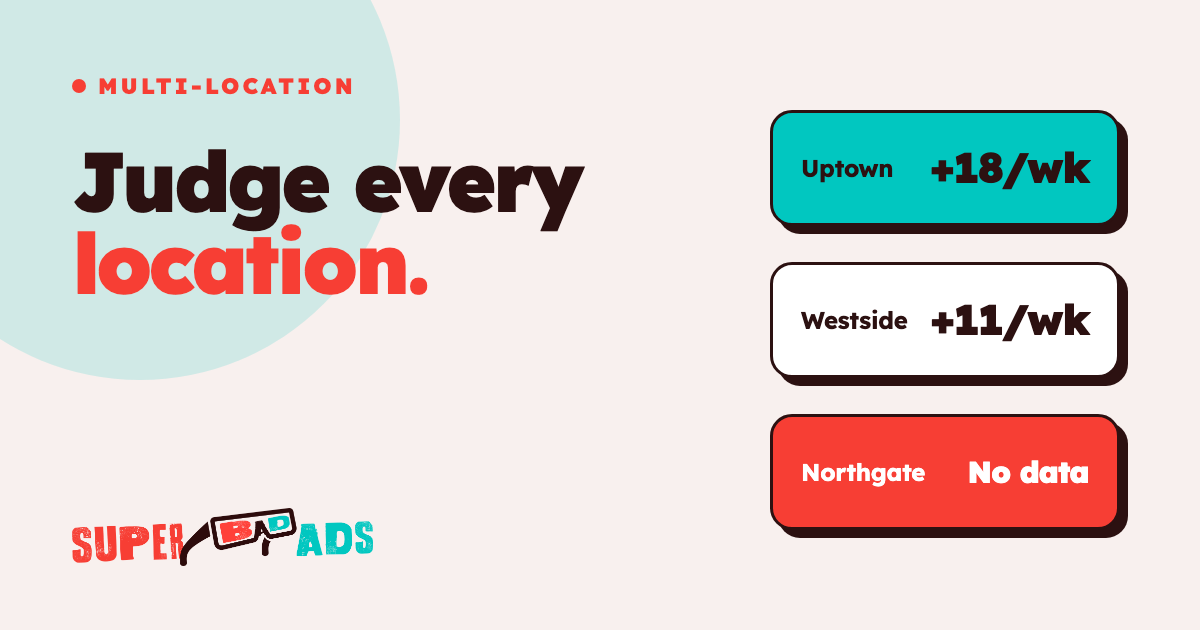
The table also identifies where to act. A store that books many appointments but adds few customers has a sales floor problem, while a store with few bookings needs better ads or a stronger profile. Our guide to multi location marketing applies the same discipline to other channels, which is how marketing strategies for retail stores stay focused on driving sales.
Where to start
Super Bad Ads is the paid media partner for multi-location operators, including specialty retail chains. We run Meta and Google for every store and report new customers per store every week, starting with an audit of what your POS reports. Outside retail, a multi-location barbershop we work with cut cost per booking by 56%.
If you're comparing a retail marketing agency, begin with an outside check: a paid media and setup audit shows what the POS records, where tracking breaks and which stores the current ads actually help. You can also review how we work as a paid media agency for marketing teams of one to three people.
FAQ
Is it better for every store in a chain to run the same ads? The brand and the offer can remain consistent, but each store should have its own targeting and, where possible, its own staff and storefront in the creative. Local ads that show the actual store set accurate expectations and generally earn more trust than a single national version.
How much should a retail chain spend on local ads for each store? Plan each store's budget according to its goals and capacity rather than one flat amount. A store with open appointment slots can use more spending than a store that is already busy, and the weekly new-customer report shows which is which.
How can a retail chain measure foot traffic from its ads? Begin with the POS rather than the advertising platforms. Compare new customers per store against local media spending over time, and test changes at a few matched stores first. Platform store-visit estimates can help, but the POS count is stricter.
What retail marketing strategies work best for a specialty chain with appointments? Chains that sell through consultations should concentrate on booking the appointment, confirming it and following up with shoppers who don't purchase on the first visit. Local search and store-level advertising attract the shopper, and the sales floor routine converts the visit into a sale.
Start by checking what your POS reports about new customers per store, set one weekly number for each location and run local ads against it. When you're ready for paid media that answers to your stores' numbers, Get Started.
Find out what your ad spend actually books.
We instrument the whole funnel — lead to booked to showed to revenue — and buy media against the number that matters. No calendar invites, no sales-call bait. Just the build.
Get Started →