
Black Friday Marketing Ideas for Service Businesses
Black Friday marketing ideas for appointment and membership businesses with many locations: sell gift cards, presales and intro offers centrally, redeem them locally, and judge the results by redemptions and first visits per location in the booking system.
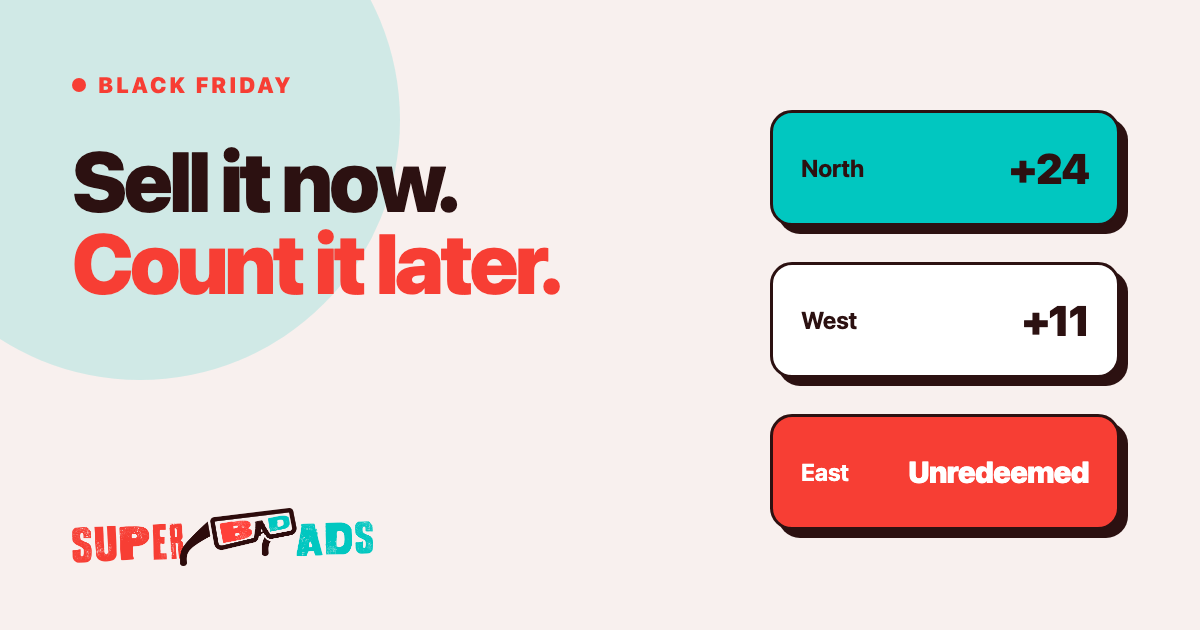
For a service brand with many locations, the Black Friday marketing ideas that work are the ones you can sell centrally and redeem locally: gift cards with bonus value, membership and class-pack presales, an intro offer designed to earn the second visit, and early rebooking for current clients. Local ads and updated Google Business Profiles at every location support those offers, and each one is judged by redemptions and first visits per location in the booking system, not by the revenue that arrives on Black Friday itself.
Most lists of Black Friday marketing ideas are written for online stores with carts, inventory and doorbuster pricing. A salon group, a gym operator or a spa brand with 8 or 30 locations sells time, and its holiday sale is usually redeemed weeks later. This guide explains which offers fit an appointment business, how to run them across many locations, what the timeline should look like between now and Cyber Monday, and how to show the finance seat which locations the campaign helped.
Which Black Friday marketing ideas fit an appointment business?
An appointment business can't discount its most limited resource, which is the chair, the room or the class spot, without filling its busiest hours at a lower price. The strongest Black Friday promotion ideas for services therefore sell future visits at full value and add an incentive on top.
- Gift cards with bonus value: holiday buyers already shop for gifts, and the National Retail Federation reported that a record 202.9 million consumers shopped during the five days from Thanksgiving through Cyber Monday 2025, with gift cards among the three most popular gifts purchased. A bonus card or an add-on service protects your base price while still giving the buyer a reason to act this week.
- Membership and package presales: a gym or studio can presell January memberships or class packs at the regular price with an extra month, a guest pass or a starter session. Our guide on how to get more gym members covers how to turn those first visits into joins.
- An intro offer that earns the second visit: for new clients, a first-visit offer works only when the front desk books the second appointment before the client leaves. Price the offer for the first visit, but plan the follow-up for the second one.
- Early rebooking for current clients: your existing clients are the cheapest bookings you'll get all season. Ask them to reserve January and February appointments now, and give them priority times in return.
- A Small Business Saturday angle: each location can carry the same offer with a neighborhood message, which suits a local service brand far better than national e-commerce messaging.
Salon brands can borrow more seasonal angles from our list of salon marketing ideas, but the rule stays the same: sell future visits, and protect the hours that are already full.
How should you set up offers across many locations?
A multi-location Black Friday marketing strategy works best with one central offer, one set of rules and a short list of exceptions. Separate offers for every location multiply the creative, the codes and the reporting, and they make the January results almost impossible to compare.
Start with the offer and its terms, and then decide which locations should sit out the new-client push. A location that's already booked out in December should sell gift cards to its current clients instead of buying new demand it can't serve. The same principle sits behind sound multi location marketing: money goes where there's capacity to use it.
Next, create the offer in the booking system as its own item or code at every location, so each sale and each redemption can be counted later. Run a test purchase and a test redemption at two locations before anything launches. Finally, give the front desk a short script that explains the offer in plain language and asks every new client for the second booking. In most multi-location brands, holiday leads are lost at the front desk or on the phone rather than in the ads themselves.
How do you run ads and listings for every location?
The ad plan for a holiday offer follows the same structure as the rest of the year: one well-organized account, local Meta and Google campaigns built around the radius each location serves, and budget moved toward the locations with open capacity. The two elements that change for the holiday season are the length of the buying window and the creative.
- Creative from your own team: short videos of real stylists, coaches or therapists explaining the offer are cheap to produce and usually look more credible than polished studio footage. Shoot several versions, run them as small tests, and let the booked first visits decide which ones receive more spend.
- Bidding for a short event: Google describes seasonality adjustments as an advanced tool that tells Smart Bidding to expect a change in conversion rates during a short event, and notes that they work best for one to seven days and may not work as well beyond 14 days. Use them for the holiday weekend itself, not for the whole month.
- Holiday hours on every listing: Google lets each location set special hours for holidays and other brief changes. Update every Google Business Profile before Thanksgiving week, so nobody drives to a closed door on the busiest weekend of the year.
- Exclusions for current members: exclude active members and recent clients from the new-client campaigns, and reach them through email, text and the front desk instead.
How should you reach current clients by email and text?
Your current clients are the audience most likely to respond, so the email list and the text list deserve as much planning as the paid campaigns. Loyal customers already trust the brand, know the staff and understand the value of a visit, which means a well-timed message can encourage customers to buy gift cards for friends or to secure their own January appointments before the calendar fills.
- Build anticipation a week early: send current clients a short preview of the offer before it opens to the public, and give them first access to the best appointment times. Early access rewards loyalty without lowering the price.
- Create urgency with a real deadline: a clear end date, stated in every message, creates a sense of urgency that vague "limited time" wording never does. A countdown timer on the offer's landing pages can reinforce the deadline, provided the deadline is genuine and the offer ends when the timer does.
- Consider a short flash sale for gift cards: a 24-hour bonus on gift card purchases can lift sales on a slow day of the weekend, such as the Sunday after Thanksgiving, without changing the core offer.
- Send each location's message from that location: a note signed by the manager or a familiar stylist or coach usually earns more replies than a corporate announcement, and it tells the client which front desk to contact.
Keep the landing pages simple: one offer, the participating locations, the terms, and a booking or purchase path that records the sale in the booking system. A clean page also improves the conversion rate of the paid campaigns, because ads and emails send people to the same place.
What Cyber Monday marketing ideas suit a service brand?
For an online retailer, Black Friday and Cyber Monday are two separate shopping events with different audiences. For a service brand, the period between Friday and Cyber Monday works best as one continuous Black Friday marketing campaign, with the message adjusted for the people who shop online on Monday. The most useful Cyber Monday marketing ideas for an appointment business are online versions of the same offer: digital gift cards that arrive by email, online membership or package purchases, and a final reminder to clients who opened earlier messages but didn't buy.
Treat the Black Friday sale and the Cyber Monday extension as a single offer with a single deadline, rather than two competing Black Friday deals. Black Friday shoppers who see one price on Friday and a better one on Monday learn to wait, and the front desk has to explain the difference. If you add anything on Monday, make it a convenience, such as instant digital delivery, rather than a deeper discount. That keeps the Black Friday promotion consistent across every location and every channel, and it keeps the reporting simple when the redemptions arrive in December and January.
What should the timeline look like from now to Cyber Monday?
Black Friday 2026 falls on November 27 and Cyber Monday on November 30, which leaves roughly four weeks from early November. The schedule below assumes a central marketing team of one to three people working with location managers.
| Week | What to do | Who owns it | What to check | |---|---|---|---| | Nov 2 to Nov 8 | Choose the offer, the terms and the locations that sit out the new-client push | Marketing lead, approved by the CEO or CFO | Each location's December capacity in the booking system | | Nov 9 to Nov 15 | Build the offer as a code or item at every location; shoot staff videos | Marketing lead and location managers | A test purchase and a test redemption at two locations | | Nov 16 to Nov 22 | Build local campaigns, audiences and exclusions; set special hours on every profile | Paid media team | Radius targeting, budget per location, profile hours | | Nov 23 to Nov 30 | Launch the holiday push, apply seasonality adjustments, email and text current clients | Paid media team and front desk | Daily sales by location; the front desk script in use | | Dec 1 to Jan 31 | Follow up on unredeemed gift cards and presales; book second visits | Front desk and marketing lead | Redemptions, first visits and joins per location per week |
How will you know which locations it worked for?
The honest answer arrives in December and January, because gift cards, presales and intro offers turn into visits after the sale. Platform dashboards will report purchases and conversion values within days, but those figures don't show whether new clients came in, or at which location, which is information only the booking system can provide.
Track four numbers for every location, every week: offers sold, redemptions, first visits from new clients, and memberships or packages that followed. Divide the ad spend for each location by its new clients to get cost per new client. The next step is to compare those results with the same weeks last year and with any locations that didn't run the new-client push. That comparison is what shows the CFO whether the campaign added clients or simply moved purchases from December into November.
The approach matters because it holds up under scrutiny. In one example, a 30+ location grooming brand recorded 36.6% more new customers and a 34.3% lower cost per new client than a static-only baseline. Results like that become believable to the money gate only when they come from the booking system, location by location.
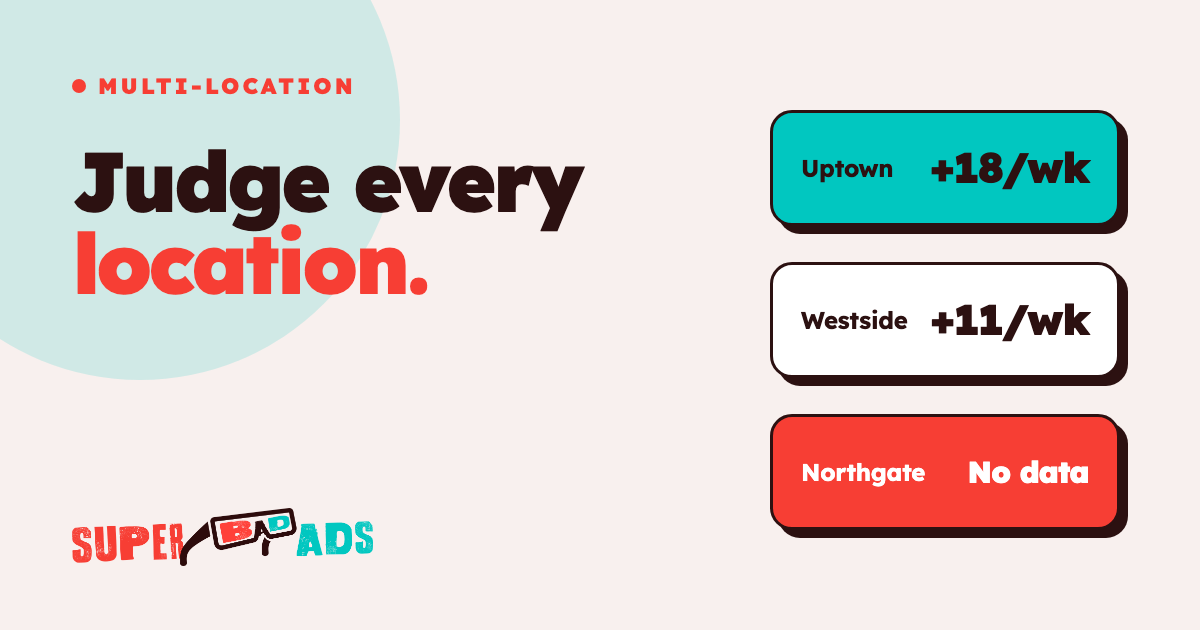
If the ad platforms report strong holiday sales while redemptions stay flat at certain locations, the problem is rarely the offer. The usual cause is weak follow-up: unanswered calls, missing second bookings, or gift cards that nobody reminded the recipient to use.
Where to start
Super Bad Ads is the paid media partner for multi-location salon, grooming, fitness and wellness operators. We run Meta and Google for every location and report new clients per location every week from your booking system, stricter than the platform numbers. As a multi-location marketing agency, we build holiday campaigns around capacity at each location, not around a single national number.
If you're unsure whether your current setup can count holiday redemptions by location, a paid media and setup audit from a paid media agency is the outside check. It shows whether the codes, conversions and location reporting will hold up before the busiest weeks of the year, so you don't have to rebuild anything in the middle of the campaign.
FAQ
When should a multi-location brand start its Black Friday marketing?
Start in the first week of November at the latest. That leaves time to build the offer in the booking system, test it at two locations, shoot staff videos and update every Google Business Profile before Thanksgiving week. Brands that start later usually skip the testing, which is where most January reporting problems begin.
Is a discount or bonus value better for an appointment business?
Bonus value is usually the safer choice. A discount lowers the price of hours you could have sold at full rate, while a bonus card, an extra class or an add-on service keeps the base price intact. It also gives the client a reason to return, which matters more than the first purchase.
Should every location run the same Black Friday offer?
Every location should carry the same offer and terms, because that keeps the creative, codes and reporting comparable. The exception is capacity: locations that are already booked out should sell gift cards to current clients rather than run new-client ads they can't serve.
How should we count gift cards that are sold but not redeemed?
Report them separately from redemptions. A gift card sale is cash collected, but it isn't a visit or a new client until someone books. Track the share that's redeemed by location each week through January, and send reminders to recipients who haven't booked.
Make the holiday season count at every location
The best Black Friday campaign ideas for a service brand are simple: one offer, sold centrally, redeemed locally and measured in the booking system. Pick your offer this week, set a target for redemptions and first visits at each location, and launch before Thanksgiving week. For a partner who can run the campaign across every location and report it from your booking system, Get Started.
Find out what your ad spend actually books.
We instrument the whole funnel — lead to booked to showed to revenue — and buy media against the number that matters. No calendar invites, no sales-call bait. Just the build.
Get Started →