
Jewelry Store Advertising That Counts Every Store
Jewelry store advertising for a chain with several stores works as one program run per store: a seasonal calendar set by each store's capacity, local ads that book bridal, custom design and repair appointments, and one weekly scoreboard of new customers per store from the POS.
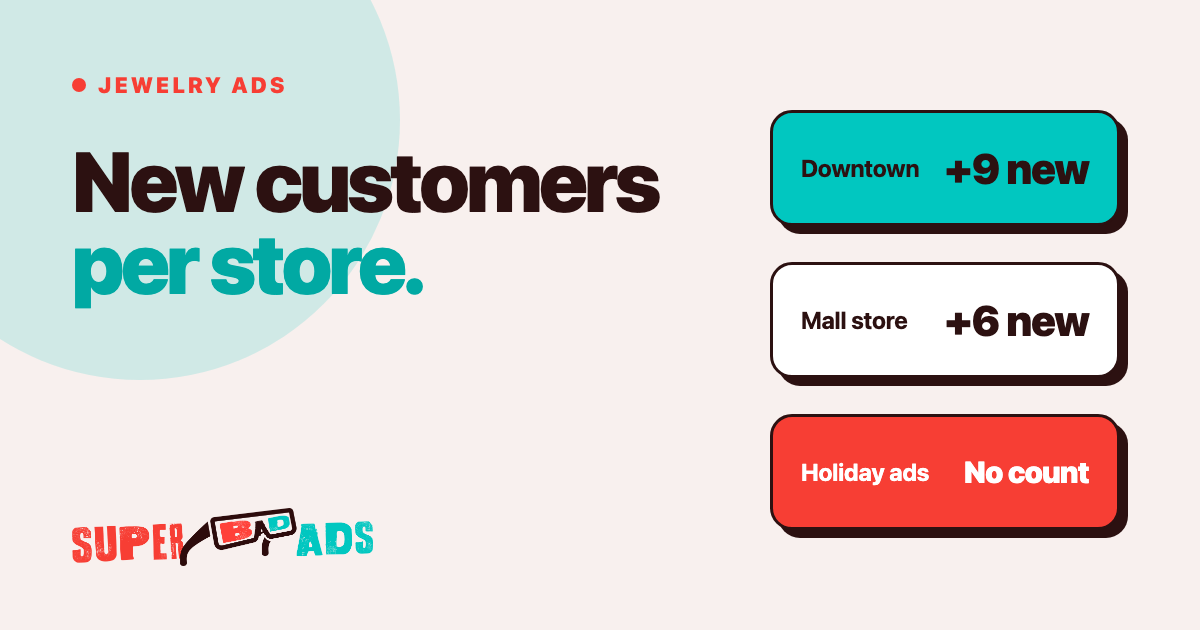
Jewelry store advertising for a chain with several stores works best as one program run store by store. Plan the holiday season and engagement season for each store from its stock, staff and appointment capacity, aim paid search and paid social at each store's trade area from one central account, sell the bridal consult, the custom design visit and the repair drop-off rather than a single piece, and judge every store on new customers and booked appointments per store per week, counted in your POS.
Most advice in the jewelry industry on jewelry advertising and jewelry marketing is written for one independent shop, so it treats the whole budget as a single pot and the whole calendar as a single season. A chain with four or more stores has a different problem, because the mall store, the downtown store and the newest location rarely need the same push in the same week. This guide is for the owner-operator who wants an advertising plan they can run across every store and check in one weekly report.
What should jewelry store advertising measure for each store?
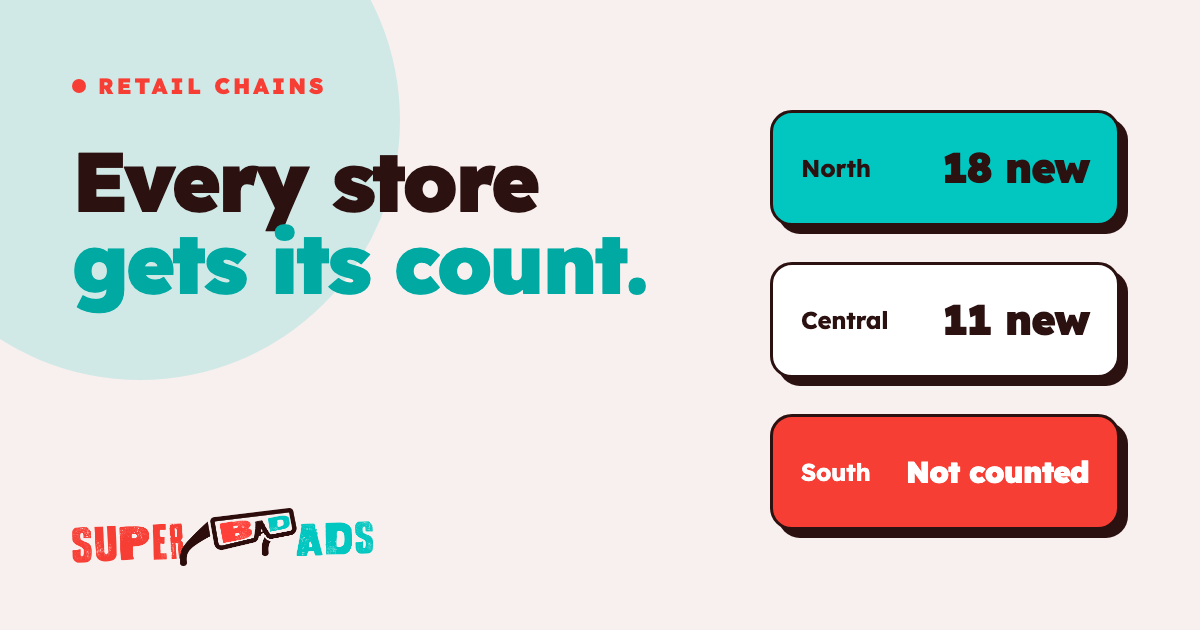
Jewelry store advertising should be measured in new customers per store per week and booked appointments per store per week, both drawn from the POS customer list or the appointment book rather than from the ad platforms. Clicks, reach and video views indicate how many potential customers saw an ad, but those platform metrics can't confirm whether a new customer walked into the right store and bought a piece of jewelry.
Start by auditing what your POS reports today. In many chains the sales associate skips the customer profile during a busy Saturday, so some first-time buyers never reach the customer list, and the cost per new customer for that store can't be trusted until the habit is fixed. A POS-based count is also stricter than the platform numbers, because it only includes people who became customers. Our guide to retail marketing strategies covers this scoreboard for every type of specialty retail chain.
The same scoreboard should count owned channels as well. Email marketing to the POS customer list, such as email campaigns for anniversaries, finished repairs and new collections, is part of a jewelry business's digital marketing, and the customers those messages bring back belong in the same per-store count rather than in a separate report.
How should a jewelry chain plan holiday season and engagement season by store?
A jewelry chain should plan each season store by store, because inventory, counter staff and appointment capacity differ from one location to the next. The holiday season brings gift shoppers who want help fast, while engagement season brings couples who want time with a bridal specialist, so the same week can call for different ads at two stores. The calendar below gives the owner and the store managers one shared plan.
| Season | What the shopper wants | The ad's job | Store readiness check |
|---|---|---|---|
| Holiday season | A gift, chosen quickly, with help at the counter | Bring gift buyers to the nearest store with the pieces it has in stock | Extra counter staff, gift wrap, holiday hours on every profile |
| Engagement season | Time with a bridal specialist after a holiday proposal | Book bridal consults at stores with open specialist time | Bridal specialist calendars open, ring sizing and custom design ready |
| Valentine's Day | A meaningful gift without a long search | Promote the store's own gift edit to nearby shoppers | Stock of the featured pieces at each store |
| Mother's Day | A personal gift, often engraved or custom | Book custom design and engraving visits early | Bench capacity for engraving and custom work |
| Quieter months | Repairs, cleaning, appraisals and upgrades | Fill bench and appointment time with service visits | Repair turnaround the counter can promise |
Google's own guidance warns against overreacting to busy weeks in bidding. Google Ads Help says to "use seasonality adjustments only if you expect major changes to conversion rates, because Smart Bidding already manages seasonal events." For most chains, the larger seasonal lever is the budget split between stores, not a bidding override.
How do you run paid search and paid social for every store?
Run one central ad account with a separate campaign for each store, each aimed at that store's trade area. A shopper who searches for an engagement ring near the mall should see the mall store, not a location across town, and a central account keeps two of your stores from bidding against each other for the same search. Paid social on platforms like Instagram and Facebook should follow the same structure, with one target audience for each store's surrounding neighborhoods, so the ads that appear on search engines and in social feeds point every shopper to the same nearby store.
Keep the brand, the offers, the creative and the reporting central, and keep the store hours, the specialists and the local details local. Our guide to multi location marketing explains this split for every type of operator. Budget should follow each store's capacity and results rather than an even split, so a store with open bridal specialist time and a weak customer count gets funded before a store whose appointment book is already full.
Why should jewelry ads sell the appointment and not the piece?
Jewelry store ads should sell the appointment because, for most high-value purchases, the visit is where the sale begins. A couple choosing an engagement ring, a client commissioning a custom design and a customer dropping off a family heirloom for repair all need time with a person at the counter. An ad that books that time gives the store a named visitor, a reason to prepare and a customer record from the first visit.
Point bridal and custom design ads to a booking page for the nearest store, and send every booking a confirmation and a reminder. The counter also needs a follow-up routine for shoppers who leave without buying, because a personal note about the setting they tried on often brings them back during engagement season. Repairs deserve their own ads in the quieter months, since a satisfied repair customer is often the next anniversary or upgrade sale, and later ads meant to drive sales of fine jewelry then reach someone who already knows the counter.
What creative works for jewelry store ads?
The creative that works for advertising for jewelry stores is usually cheap, representative footage from your own counters and bench rather than a national-style shoot. A regional jewelry brand isn't a national luxury house, and its local audience tends to trust a real bridal specialist, a real bench jeweler and the store they can visit. A short phone video of a setter at work, a ring under the store's own light or a specialist explaining how custom design works costs little, and each one can run as a small bet.
A successful jewelry chain tests those bets with a written hypothesis and reads the result in new customers and booked appointments per store, not in likes. Our guide to creative testing covers the method. Outside retail, for a 30+ location grooming brand, cost per new client fell 34.3% against a static-only baseline.
Every ad and post also needs plain wording about what a stone is. The FTC states that "the Jewelry Guides apply in social media advertising," and its advice is to "keep disclosures close to the terms they explain." Say lab-grown or simulant in the ad text itself, not in a hashtag or a linked page, and check new claim wording with your counsel before a campaign goes live.
How does Google Business Profile support jewelry store advertising?
Google Business Profile supports jewelry store advertising because many shoppers check the nearest store on a map before they visit. Google Business Profile Help explains that "relevance is how well a Business Profile matches what someone is searching for," and that "more reviews and positive ratings can help your business's local ranking." A chain can't change how far a store is from a shopper, but it can control how complete and well-reviewed each profile is.
The central team should keep each store's hours, holiday hours, services and appointment links accurate, while store managers ask satisfied customers for reviews and reply to them. That local work makes every ad more effective, because a shopper who clicks an ad often checks the profile next. Our guide to local seo for multiple locations explains how to manage this across a chain, and it fits alongside the rest of your jewelry store marketing.
Where to start
Super Bad Ads is the paid media partner for multi-location operators, including jewelry chains with several stores. We run Meta and Google for every store and report new customers and booked appointments per store every week, counted in your POS rather than the ad platform, and reported stricter than the platform numbers. See how we work as a retail marketing agency and as a paid media agency.
We test cheap, representative creative from your own counters as many small bets, and we let you switch safely: an audit first, an overlap with your current agency, and you own every account and pixel. For your chain, start this week by writing the store-by-store calendar for the holiday season and engagement season, then set up one weekly scoreboard per store.
FAQ
How should a jewelry chain split its advertising budget across stores?
A jewelry chain should split its advertising budget by each store's capacity and results rather than evenly. Fund the stores with open bridal specialist time, bench capacity and weak new-customer counts first, hold new spend at stores that are already full, and review the split every month from the POS scoreboard.
When should jewelry stores start holiday and engagement season advertising?
Jewelry stores should start holiday and engagement season advertising once each store's stock, staff and appointment calendars are ready for the extra demand. Plan both seasons together, because holiday gift shoppers come first and engaged couples often book bridal consults soon after, and set each store's ads by its own readiness.
What should jewelry store ads promote to bring in new customers?
Jewelry store ads should promote appointments as well as pieces: bridal consults, custom design visits and repairs, booked at the nearest store. An appointment gives the store a named visitor and a customer record, and it suits the high-value purchases that most shoppers want to see in person before they buy.
How do you measure results from jewelry store advertising?
You measure results from jewelry store advertising with a weekly scoreboard per store drawn from the POS: new customers per store, booked appointments per store and cost per new customer. These numbers are stricter than ad platform reports, because they count only shoppers who became customers, and they show where next week's budget belongs.
One program, every store
Jewelry store advertising for a chain comes down to one seasonal calendar per store, local ads that book appointments, plain disclosure wording and one weekly scoreboard counted in the POS. For help running paid media for every store, with results counted in your POS, Get Started.
Find out what your ad spend actually books.
We instrument the whole funnel — lead to booked to showed to revenue — and buy media against the number that matters. No calendar invites, no sales-call bait. Just the build.
Get Started →