
Google Ads for Gyms: One Plan, Every Club
Google Ads for a gym group works when every club has its own budget, radius, landing page and assets inside one plan, search carries the high-intent queries, and results are counted as joins per club per week in the membership system.
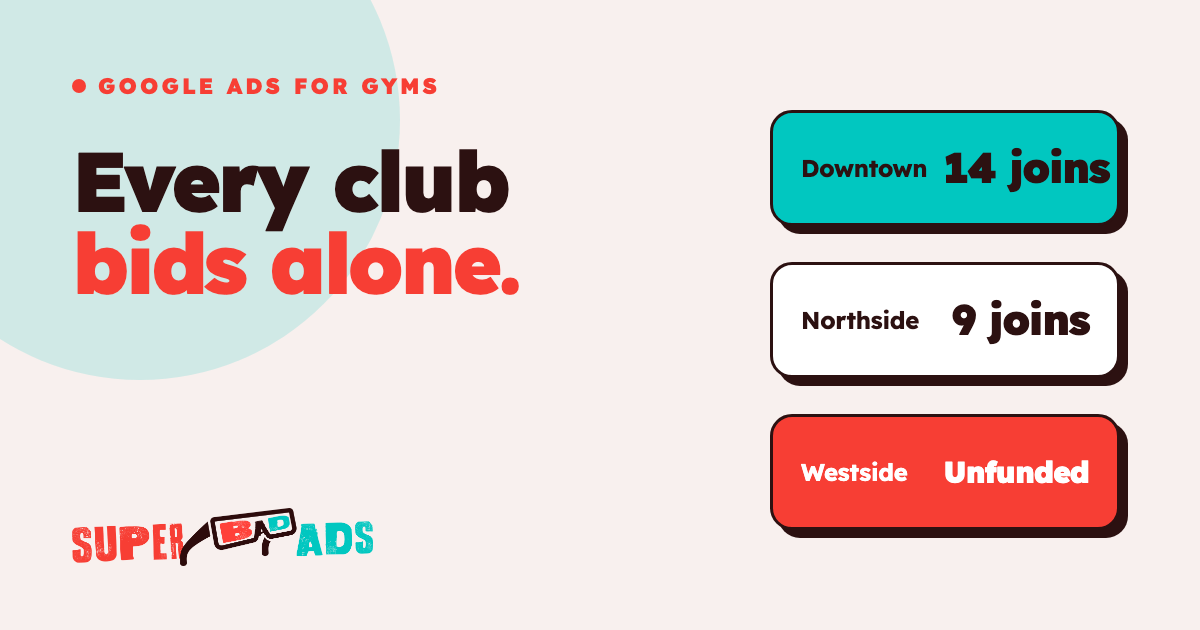
Google Ads for gyms with several clubs works when every location has its own budget, radius, landing page and assets inside one shared plan, so that a full club and a quiet club are never funded from the same pot. Search campaigns carry the high-intent queries, Performance Max waits until each location reports clean conversions, and the account is judged on joins per club per week counted in your membership system, not on clicks or form fills in the ad platform.
Most guides to gym Google Ads, like most fitness advertising advice written for the fitness industry, assume one owner setting up one account for one gym. An organization with eight or twenty clubs faces different questions: which clubs need members this quarter, how to stop one club's budget from paying for another club's searches, and how to demonstrate the CEO what the spend produced at each address. This guide is for the marketing lead who answers those questions every week for the people who approve the budget. Search is one channel among several; our guide on how to get more gym members covers the rest.
What should a gym group measure before it changes Google Ads?
Agree on the scoreboard before you touch the campaign structure, because every decision about Google Ads for gyms depends on which number the organization trusts. The number that matters is joins per club per week, counted in your membership system, whether that's Club Automation, ABC or another platform, and reported next to the Google Ads spend for each location.
Google Ads reports its own conversions, click through rate and conversion rate, and the conversion figure is usually higher than the joins your membership system records, since the platform counts form fills and calls that never become paid gym memberships. Our guide on why your booking system and ad platform disagree explains the gap and how to report the stricter number.
For an 8-location California fitness operator, the group went from 0 of 8 to 8 of 8 locations with per-location attribution, and cost per lead fell 25% by month 3.
How should Google Ads be structured for a gym group with several clubs?
A sound Google Ads strategy for gyms gives each location its own controls while the organization keeps one plan, one naming convention and one set of offers. Most gym groups do well with four campaign types:
| Campaign | What it covers | Budget rule | Judged on |
|---|---|---|---|
| Search, one per club | "Gym near me", class types and trial searches within each club's radius | Funded by club capacity and stage | Joins per club per week and cost per new member |
| Brand search, group-wide | Searches for your gym's own name | Small and steady; kept apart from new demand | Click share and brand cost, never new-member credit |
| Performance Max, per club or region | Search, Maps, YouTube and Display from one campaign | Only after search conversions are clean per club | Joins per club, not platform conversions |
| New-club launch | Presale and opening searches around a club that isn't open yet | A launch budget with a set end date | Presale list size, then joins in the opening month |
Each club should target the area its members travel from, which is where Google Ads for fitness centers in a multi-club organization differs most from a single gym. Keep brand searches in their own campaign, because people who searched your name would likely have found you anyway, and folding them into club campaigns flatters the numbers and hides the new demand each location is purchasing.
Which searches should each club pay for?
In Google Ads for gyms, fund searches by intent first and by each location's open capacity second. Searches for a gym near me, a day pass, a trial pass or a specific class type near a club come from people who are ready to visit soon, so they deserve steady funding wherever a club has room for new members. Broad searches about fitness goals rarely lead to a join, often carry a higher cost per click, and deserve little budget unless the organization has a separate brand awareness goal it measures on its own terms.
Negative keywords protect the budget across every location, so the account should exclude employment searches, equipment purchases, home workout queries and services your clubs don't offer, and the team should review the search terms report on a regular, documented schedule. Each club's search ad should name the club and its neighborhood, carry calls to action that match the intro offer, and send each click to that club's own page with its address, hours, class schedule and a clear intro offer.
Google Ads for fitness is one lead source among several, and the leads it produces need the same follow-up as any other channel. Our guide to gym lead generation covers how paid search sits next to referrals, social and walk-ins. If Google offers promotional credit when you open a new club's account, read is google ad credit really free before you accept the spend conditions.
Where do Performance Max and local campaigns fit?
Performance Max belongs in the account only after the fundamentals are in place, and Google describes it precisely: "Performance Max is a goal-based campaign type that allows you to access all Google Ads inventory, including YouTube, Display, Search, Discover, Gmail, and Maps, from a single campaign." That reach is useful for fitness businesses with several clubs, but the campaign optimizes toward whatever conversion you give it, so it will chase form fills if that's all it can see, and its Display and YouTube placements can behave like retargeting campaigns that claim credit for members who were already on their way.
Our rule for a gym organization is to run search per club first, confirm that conversions are counted cleanly and tie to joins in the membership system, and only then test Performance Max for one region or a small set of clubs. Judge the test on joins per club against comparable clubs that kept search only, and hold its budget if nobody can say which club it helped.
Local results on Maps matter for every location, so each location's Google Business Profile must be accurate and linked to the account first.
Which assets should every club's ads carry?
Assets answer the questions a prospective member has before visiting, and Google Ads for gyms with several clubs should set them per club rather than once for the whole account.
- Location assets: according to Google, "with location assets, your ads can display information such as the store address, a map to the store location, or the approximate travel distance to help people find your stores." Link every location's Business Profile so the right address appears on the right ad.
- Call assets: give each location its own tracked number, so you can see which club received each call and when calls go unanswered.
- Lead form assets: Google explains that "lead forms help you generate leads by letting people submit their information in a form directly in your ad." Each form should reach the right club's front desk on the day it arrives, so that no lead waits overnight for a reply.
A call that rings out or a lead form nobody follows up wastes a click the organization already paid for, so compare call times from the ads with missed calls in each location's phone system and resolve front desk coverage before adding budget to that club.
How should budget move between clubs?
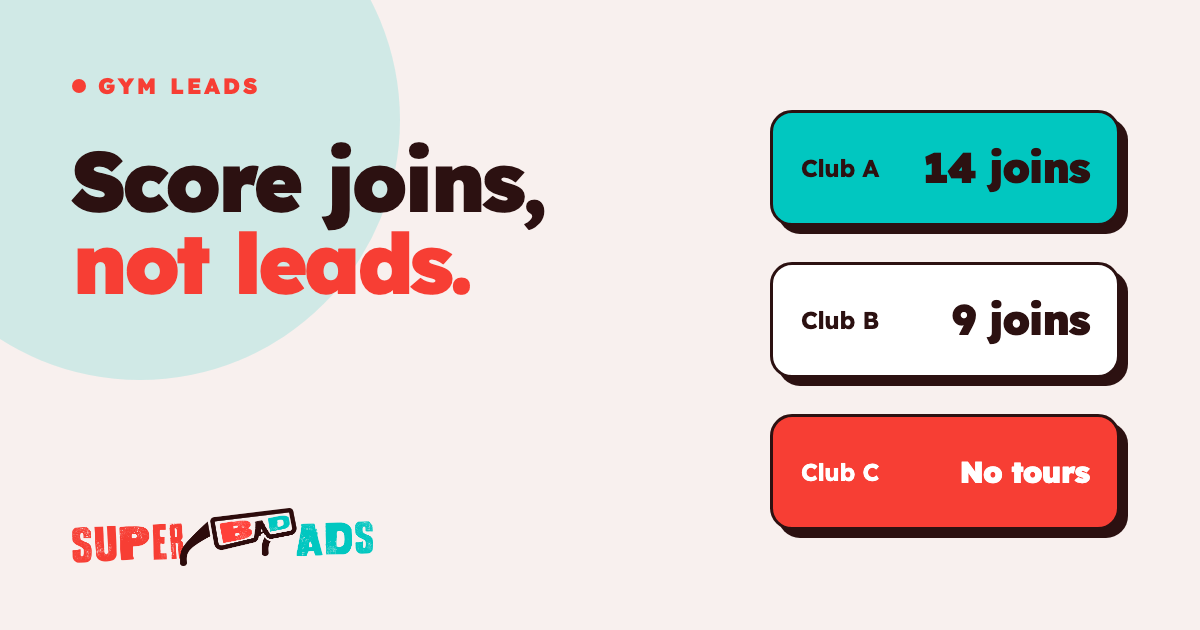
Budget should follow each location's capacity and maturity rather than an equal split, because a ramping club below its membership target requires steady search funding, a mature club at its target requires a smaller always-on presence, and a soft club missing its join targets requires a review of follow-up and pricing before more spend. Re-verify the split weekly against joins per club, and move money toward clubs that convert leads into members at or below your target cost per new member.
The total investment is a separate decision from the allocation between locations, and for setting that overall number you can consult our guide on how much should a gym spend on marketing. For deciding how much of it belongs on Google versus Meta at each location, our comparison of google ads vs facebook ads explains which channel captures existing demand and which one creates it.
Per-club reporting also makes an agency's performance on Google Ads for gyms straightforward to evaluate: for a multi-location gym operator that switched agencies, paid-search ROAS went from 0.15x to 1.62x by month 3 on flat spend. The owners could see that change club by club rather than as one blended figure, which is the view that keeps a gym ad budget defensible over the long term.
Where to start
Super Bad Ads is the paid media partner for multi-location operators, including gym and fitness groups. We run Google and Meta for every location and report joins per club every week, counted in your membership system, not in the ad platform, so the numbers are stricter than the platforms' own reporting. You can review how we operate as a gym marketing agency and as a paid media agency.
We start with an audit of the account you are running ads in today, run new campaigns alongside what already works so nothing breaks during a switch, and make sure your organization owns every account. The first step for any organization is to split the account by club and agree on joins per club per week as the shared number.
FAQ
Should each club in a gym group have its own Google Ads campaign?
Each club in a gym organization should have its own search campaign, or at least its own budget, radius and landing page. Separate campaigns let the marketing team fund clubs by capacity, match ad text to each neighborhood and see joins per club without one busy club hiding a quiet one.
Is Performance Max a good fit for gym Google Ads?
Performance Max can be a good fit for gym Google Ads once search campaigns are running per club and conversions tie to joins in the membership system. Test it in one region first, judge it on joins per club against clubs that kept search only, and expand it only if the gain holds.
How do you measure Google Ads results for a gym group?
You measure Google Ads results for a gym organization in joins per club per week and cost per new member per club, counted in the membership system rather than the ad platform. Platform conversions include form fills and calls that never become members, so the membership count is the stricter, more defensible number.
What is the best Google Ads strategy for gyms with several clubs?
The best Google Ads strategy for gyms with several clubs gives each location its own search campaign, radius, assets and landing page inside one group plan. Keep brand searches apart, fund clubs by capacity and stage, add Performance Max only after clean per-club conversions, and judge everything on joins per club.
One plan, scored club by club
Google Ads for gyms with several clubs comes down to a per-club structure, assets that the front desk can answer, a budget that follows capacity and one scoreboard in joins per club per week. If your organization is ready for paid media that is run for every location and judged against that scoreboard, the next step is to Get Started.
Find out what your ad spend actually books.
We instrument the whole funnel — lead to booked to showed to revenue — and buy media against the number that matters. No calendar invites, no sales-call bait. Just the build.
Get Started →