
Salon Social Media Marketing Across Every Salon
Salon social media marketing for a brand with several salons is an operating setup, not a posting habit: separate jobs for organic and paid social, one brand account, stylist content under written rules, paid social sized by open chair time and booked new clients per salon as the measure.
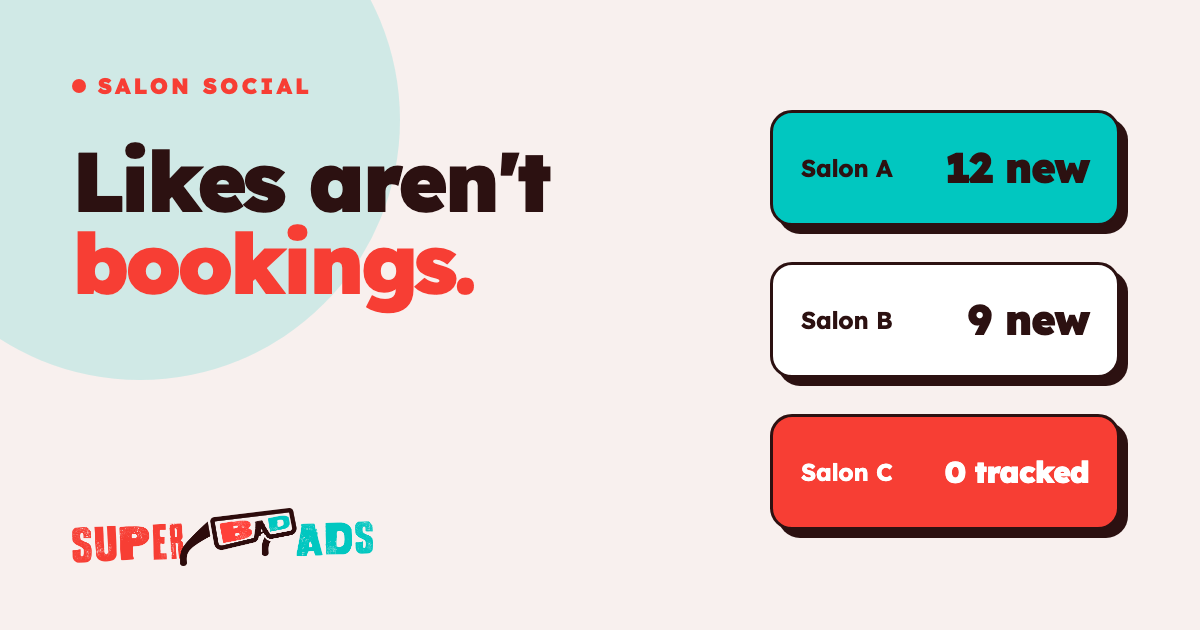
Salon social media marketing that works across several salons gives organic and paid social separate jobs, runs one brand account with a clear presence for each salon, posts stylist-led work under written rules, sizes paid social by each salon's open chair time and judges everything in booked new clients per salon, counted in the booking system. Likes and followers tell you what people noticed, while booked first visits tell you which chairs the program filled.
Most advice on social media marketing for salons, and for beauty salons in general, is written for a single salon whose owner posts from their phone between clients. A brand with several salons faces managers running their own accounts, star stylists with bigger followings than the brand, and a freelancer who reports reach while the owner asks whether Instagram fills the empty chairs. This guide covers the salon social media marketing setup an owner-operator can run across every salon.
What is the job of organic social versus paid social for a salon brand?
Organic and paid social do different work across the social media platforms, Facebook and Instagram above all, and most wasted social budgets in the beauty industry come from asking one channel to do both jobs at once.
Organic social builds trust: people who already know your brand, or who are close to booking, check your feed to see the work, the stylists and the space before they commit to a first appointment. Organic content answers who will cut their hair, what the salon feels like and whether the color, cuts and hair care advice match what they want, which is why eye catching work from real stylists matters more than brand graphics.
Paid social brings new clients to salons with room: paid campaigns put a first-visit offer in front of people near each salon, on a budget you control, with one goal, which is a booked first appointment at a salon that has open chair time. That job, which is to attract new clients where chairs are open, needs its own creative, its own budget and its own scoreboard, separate from the feed.
Our post on salon marketing ideas covers the channels beyond social that bring clients to a salon.
Should each salon have its own social media account?
For most brands, the answer is one brand account with a clear presence for each salon inside it: a location tag on every post, a highlight for each salon, and links from each salon's page on your website. One account keeps the brand consistent and keeps one team accountable for what gets published.
Separate salon accounts bring off-brand promotions, unapproved discounts, unchecked photos and passwords held by a manager who left last year. If a salon needs its own account, for example a salon you acquired that still trades under its original name, keep the brand team as the account owner and give the local team posting access only.
Whatever the structure, the brand should own every login and every ad account. Keep a short access list for each account, and review it whenever a manager or stylist changes.
How should stylists' personal accounts fit the brand?
Stylists' personal accounts are often the strongest part of hair salon social media marketing, because clients follow a person before they follow a brand. The US Bureau of Labor Statistics notes that stylists "must be friendly, pleasant, and able to interact with clients to build and retain clientele," and social media is now where much of that clientele building happens.
Treat stylist accounts as a channel you support rather than one you control, and put the rules in a one-page document that every stylist signs at onboarding:
- Disclose the relationship: a stylist who posts about the salon where they work has a connection that followers should know about. The FTC's Endorsement Guides say that for employees, "Listing your employer on your profile page isn’t enough," and that "Your company is ultimately responsible for what others do on your behalf."
- Get client consent for photos: every before-and-after photo should carry the client's written permission, whether it appears on the brand account or a stylist's account, and the same rule applies to user generated content that clients share.
- Use brand offers only: stylists can share the brand's current first-visit offer, but they shouldn't invent their own discounts.
- Book through the brand: every link in a stylist's bio should point to the brand's online booking page for that stylist's salon, so that a follower who decides to book an appointment is recorded in the booking system.
That last rule also answers the fear that a star stylist leaves and takes the following, because clients who book through your system and rebook at checkout have a relationship with the brand as well.
What should a salon brand post each week?
A salon social media strategy does not depend on expensive shoots, because the video content that does the most is usually cheap, representative and made by the people clients will meet, because a short phone video of a stylist explaining a color correction answers the real question better than a polished brand film.
A weekly mix that a small team can run across several salons:
| Content type | Its job | Who makes it | The rule |
|---|---|---|---|
| Stylist work | Show the cuts, color and styling each salon delivers | Stylists film on their phones; marketing edits | Client consent first; tag the salon and the stylist |
| Stylist introductions | Help a new client pick a stylist before booking | Marketing, with each stylist | One stylist per post; link to that stylist's booking page |
| Behind the chair | Show the space, the team and the standards | Salon managers capture; marketing posts | Real people at the real salon, with their permission |
| Reviews and questions | Answer the worries a first-time client has | Marketing | Use only what the client posted publicly |
| Salon news | New stylists, new hours, new salons | Marketing with each salon | Tag the salon every time |
Keep the mix steady rather than chasing a daily quota. For salon instagram marketing on the paid side, test several of these cheap videos as small bets and keep the ones that book first visits, a method our guide to creative testing explains step by step.
How should a salon brand run paid social by salon?
Paid social should be split by each salon's open chair time rather than evenly across the brand, since a salon with a waitlist requires far less spend than a salon with empty chairs on weekday mornings. Review the split every week against the booking calendar and move money toward the salons with room.
Each salon's campaign should target people near that salon, send them to that salon's booking page and use creative from that salon's stylists wherever possible. Keep paid offers, and the call to action that carries them, for first-time clients only, so that loyal clients aren't trained to wait for a discount; our list of salon promotion ideas shows which offer fits which gap in the calendar.
A salon's social media presence also has a local layer on Google, which is part of the same online presence that new clients check before they book. Google Business Profile Help says "You can post updates on your Business Profile to share announcements, offers, updates, and event details," and those posts appear in "The “Updates” or “Overview” tabs of the Business Profile on mobile on Search and Maps." Post each salon's new stylists and first-visit offer there too, so local searchers see the message your social campaigns carry.
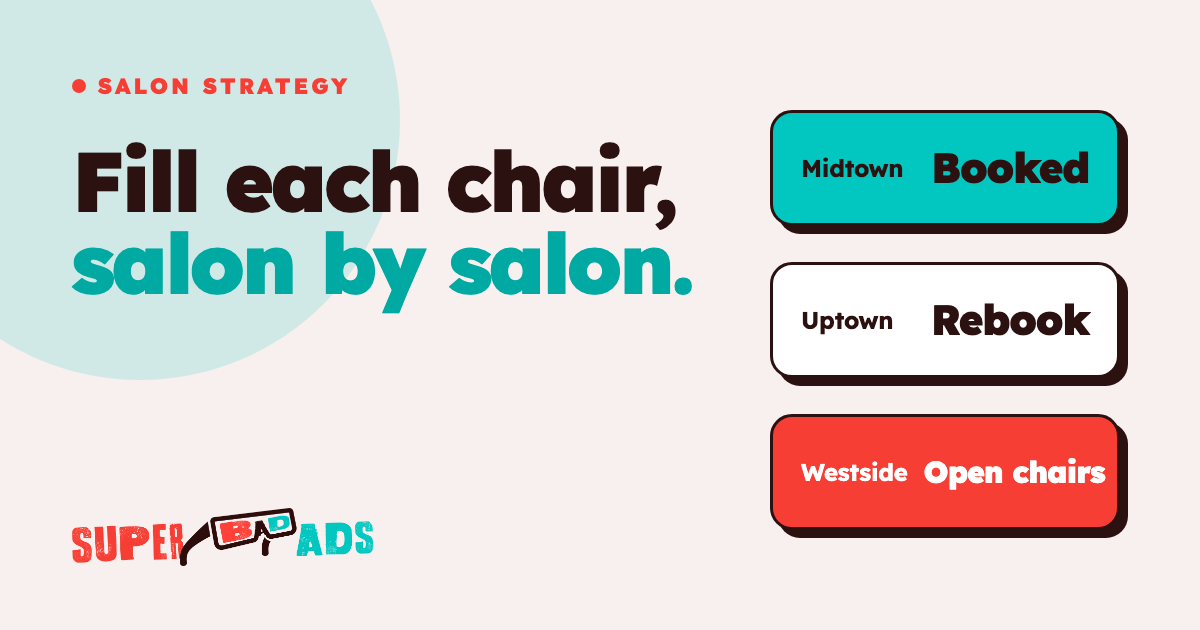
How do you measure salon social media marketing in booked new clients?
Judge salon social media marketing by booked new clients per salon, counted in your booking system. Likes and followers are useful signals for the content team, but they don't tell the owner whether social filled the chairs that needed it.
A weekly scoreboard should hold one row per salon, with these columns:
- paid social spend for that salon;
- new clients from social, counted in your booking system, whether that's Zenoti, Booker, Boulevard or another platform;
- cost per new client, which is spend divided by those new clients;
- open chair time next week, so the budget follows capacity.
Your ad platform and booking system will report different numbers, and our post on why your booking system and ad platform disagree explains why the booking system is the number to run the business on. Reported this way, the scoreboard is stricter than the platform numbers, because it only counts clients who booked and came in.
Where to start
Super Bad Ads is the paid media partner for multi-location operators, including salon brands. We run Meta and Google for every salon and report new clients per salon every week, counted in your booking system and reported stricter than the platform numbers. See how we work as a salon marketing agency and as a paid media agency.
We test cheap, representative creative from your own chairs as many small bets, and you own every account and pixel. Outside salons, for a 30+ location grooming brand, cost per new client fell 34.3% against a static-only baseline. For your brand, the first step is smaller: put the account and stylist rules on one page this week, and set up one scoreboard per salon in booked new clients.
FAQ
Should a salon brand run one Instagram account or one per salon?
A salon brand should usually run one Instagram account and give each salon a presence inside it, with location tags, a highlight for each salon and links to each salon's booking page. A separate account makes sense only for a salon that trades under its own name, and the brand should still own the login.
Should salon stylists post on their own social media accounts?
Salon stylists should post on their own accounts, because clients often follow a stylist before they follow a brand. Give every stylist a written rule: disclose that they work at the salon, get client consent for photos, share only brand offers and link their bio to the brand's online booking for their salon.
What should a salon post on social media each week?
A salon should post a steady weekly mix of stylist work, stylist introductions, behind-the-chair content, client reviews and salon news. Cheap phone video made by stylists usually outperforms polished shoots, and a schedule the team can keep every week works better than a burst of posts that stops after a month.
How should a salon brand measure results from social media?
A salon brand should measure social media in booked new clients per salon, counted in its booking system, next to paid social spend for each salon. Likes and followers help the content team, but cost per new client and open chair time decide where next week's budget goes.
Run social for every salon
Salon social media marketing for a multi-salon brand comes down to clear jobs, one brand account, written stylist rules and one scoreboard per salon. For salon owners who are ready to run paid social for every salon, with results counted in the booking system, the next step is to Get Started.
Find out what your ad spend actually books.
We instrument the whole funnel — lead to booked to showed to revenue — and buy media against the number that matters. No calendar invites, no sales-call bait. Just the build.
Get Started →