
Local Marketing for Franchises, Unit by Unit
Local marketing for franchises works when each unit's local budget runs as one program: the agreement sets the spend, the money splits between local paid media and field marketing, franchisees localize brand templates, and every channel is judged in bookings per unit from the booking system.
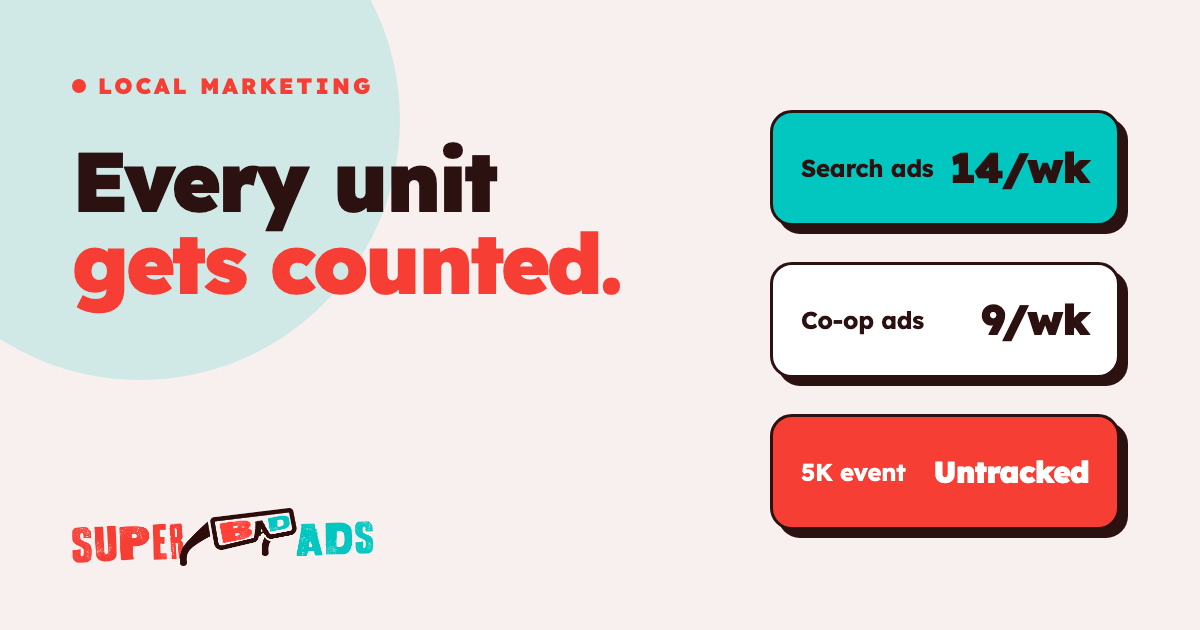
Local marketing for franchises works when each unit's local budget runs as one program instead of a list of separate tactics. The franchise agreement sets what each unit must spend and whether a co-op pools the money, the budget is split between local paid media and field marketing such as events and partnerships, franchisees localize brand templates instead of designing their own ads, and every channel is judged on one weekly scorecard of bookings per unit, counted in the booking system.
Most guides on local marketing for franchises list small business tactics, but a franchisor's marketing lead with 20 or 50 units already knows the tactics and needs a way to run them across the system, so that franchisees can see what their local dollars booked. This guide is written for that marketing lead and for the multi-unit franchisee who reports results to the advisory council.
What does the franchise agreement say about local marketing?
Every local marketing program starts with the franchise agreement, because it defines what each unit must spend locally, whether a cooperative pools that money and which materials a franchisee is allowed to use. The federal Franchise Rule requires the disclosure document to describe the advertising program, including "Whether the franchisee must participate in a local or regional advertising cooperative," and "The circumstances when the franchisor will permit franchisees to use their own advertising material." Those two lines define the boundaries of franchise local marketing in your system before anyone books an ad.
Read those sections with your franchise counsel, then translate them into plain operating rules: what counts toward the local requirement, who buys the media, who approves a sponsorship and which report proves the money was spent. The annual document that holds those rules belongs in your franchise marketing plan; this guide covers how the local budget is spent and judged once the plan is approved.
How should a unit split its local budget between paid media and field marketing?
Each unit's local budget should be divided between two jobs: local paid media, which reaches people nearby who are already searching or scrolling, and field marketing, which builds trust in the local community through events, partnerships and a visible presence at the local level. Local area marketing once meant flyers and sponsorships; today, the digital marketing side, paid search and paid social, is usually where a unit's steady weekly bookings can be measured most directly, while field marketing adds bursts of attention around openings and seasons.
The split should follow each unit's capacity and stage rather than one fixed rule: a new unit with open appointment time can use more paid media, while a mature unit that is nearly full may put more money into partnerships that bring referrals. The table below sets out each channel's job, owner and booking-system count, and it can go to the advisory council unedited.
| Local channel | Job for the unit | Who runs it | How the booking system counts it |
|---|---|---|---|
| Paid search by territory | Catch people searching for the service near the unit | The brand or its agency, in brand-owned accounts | New clients booked from the unit's search campaign |
| Paid social by territory | Reach nearby people who aren't searching yet | The brand or its agency, with local footage from the unit | New clients booked from the unit's social campaigns |
| Co-op campaigns for a shared market | Cover a metro area where several units overlap | The co-op administrator, under written rules | New clients per unit inside the shared market |
| Local events | Meet nearby people in person around a date | The franchisee, with a brand kit | Bookings that use the event's offer code |
| Local partnerships | Earn referrals from nearby businesses and groups | The franchisee, with brand-approved terms | Bookings that use the partner's offer code |
How should franchise co-op advertising work for paid search and paid social?
Franchise co-op advertising works best when several units that serve the same metro area pool their local dollars into shared campaigns, instead of bidding against each other for the same local search queries from potential customers. The co-op should operate from written rules that define its area, each unit's contribution, who administers the money and how results are reported to each member.
Inside the co-op, paid search should still be organized by territory and kept separate from the brand's national campaign, so each unit's campaign targets its own neighborhoods and the report separates results by unit. Location details help nearby searchers choose the closest unit: Google explains that "With location assets, your ads can display information such as the store address, a map to the store location, or the approximate travel distance to help people find your stores." Paid social follows the same territory logic, with each unit's area as the audience and the brand's approved creative carrying the unit's own photos and offer.
Account structure is a separate decision; our guide to franchise advertising covers who owns each ad account and how one account holds a campaign per territory. Listings, including the profile once called Google My Business, sit outside the paid budget; who owns each one is covered in our guide to local seo for franchises.
How do you give franchisees templates they can localize?
Templates are the most practical control a brand has over local franchise marketing and brand consistency, because they let franchisees produce local ads, flyers and other marketing material without a fresh pre approval for every piece. A good template fixes what carries brand or legal risk, such as the logo, offer wording and terms, and leaves marked slots for local details: the unit's name, a team photo, an event date and the unit's offer code.
The best local creative is usually inexpensive and representative, because a short clip of a unit's own staff builds more trust with nearby customers than a polished national shoot. For a 30+ location grooming brand, cost per new client fell 34.3% against a static-only baseline. Organic posting uses the same library, and our guide to franchise social media marketing explains how the brand and each franchisee divide that work.
Which local events and partnerships are worth a unit's time?
A local event or partnership is worth a unit's time when it puts the brand in front of nearby people who can book, and when the booking system can count the result afterward. Many field efforts feel productive but leave no record to compare with paid media at the next budget review.
Four criteria keep field marketing honest and comparable across units:
- Distance: the event or partner should sit inside the unit's own territory, close enough that attendees could become regular local customers.
- Audience fit: the attendees should resemble the unit's target audience, as a running club does for a fitness studio and a wedding fair does for a salon.
- An offer code: every event and partner should receive its own code, recorded by the front desk in the booking system, so that each booking can be traced to its source.
- Front desk readiness: staff know the offer, can book on the spot and follow up with every name collected within the same week.
When an event or partner produces no coded bookings after several attempts, the unit should move that money to a marketing channel or local marketing campaign that has shown coded bookings.
How do you measure local marketing for franchises per unit?
Measure local marketing for franchises on one weekly scorecard per unit that puts paid media and field marketing side by side, using new clients counted in the booking system rather than clicks, impressions or platform conversions. Ad platforms count their own conversions, which rarely match what the front desk sees, so the scorecard reports the stricter number every franchisee can check.
Each scorecard shows local spend by channel, new clients per unit per week, cost per new client and bookings per event and partner code. Per-unit reporting changes the conversation, because the advisory council can see which channels book new clients at which units instead of debating a system-wide average. An 8-location California fitness operator went from 0 of 8 to 8 of 8 locations with per-location attribution.
Where to start
Super Bad Ads is the paid media partner for multi-location operators, including franchise brands and multi-unit franchisees. We run Meta and Google for every unit and report new clients per unit every week, counted in your booking system, not in the ad platform, and reported stricter than the platform numbers. See how we work as a franchise marketing agency and as a paid media agency for marketing teams of one to three people.
Start this week by listing what the agreement requires each unit to spend locally, assigning an offer code to every event and partner, and building one scorecard per unit.
FAQ
What is local marketing for franchises?
Local marketing for franchises is the marketing each unit runs to reach customers in its own territory, funded by the local advertising requirement or a co-op. It combines local paid media, such as paid search and paid social, with field marketing, such as events and partnerships, and it's judged in bookings per unit.
Who pays for local marketing in a franchise system?
Local marketing in a franchise system is usually paid by each franchisee through a local advertising requirement, a co-op contribution or both, as the franchise agreement defines. The brand fund typically pays for shared assets such as templates and creative, while local dollars pay for media and events in each territory.
Does a local event count toward a franchisee's local advertising requirement?
Whether a local event counts toward a franchisee's local advertising requirement depends on the franchise agreement and the brand's written rules. Many systems count approved events and sponsorships with local businesses when the franchisee uses brand materials and a tracked offer code, so the spend and the resulting bookings can be reported like any other local channel.
How should a franchisor measure local marketing for each unit?
A franchisor should measure local marketing for each unit with a weekly scorecard of new clients and cost per new client, counted in the booking system. The scorecard should show paid search, paid social, co-op campaigns, events and partnerships side by side, so franchisees can compare every channel on the same terms.
One budget per unit, one scorecard
Local marketing for franchises comes down to a clear local requirement, a paid and field split that follows each unit's capacity, localizable templates and one weekly scorecard of bookings per unit. For help running local paid media for every unit, counted in your booking system, Get Started.
Find out what your ad spend actually books.
We instrument the whole funnel — lead to booked to showed to revenue — and buy media against the number that matters. No calendar invites, no sales-call bait. Just the build.
Get Started →