
Local SEO for Franchises: Ownership and Per-Unit Reporting
Local SEO for franchises works when the brand owns every unit's profile and page, franchisees run the local parts within a written standard, and both sides read one per-unit report. Here's the ownership model, the brand and franchisee split, and the opening and transfer checklist.
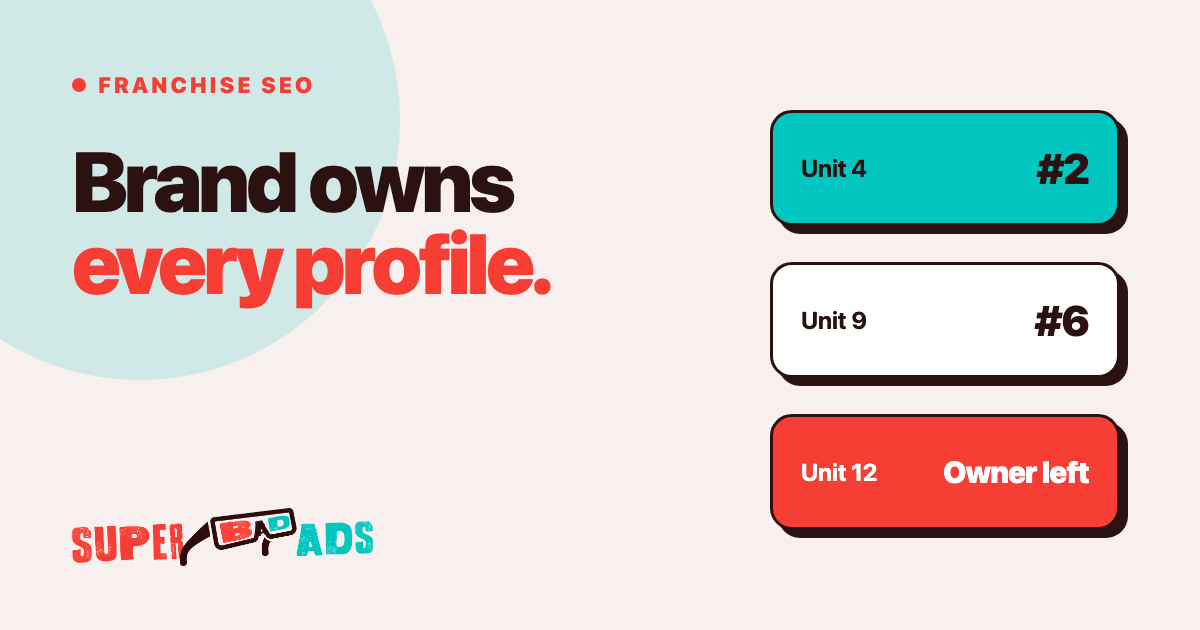
Local SEO for franchises works when the brand owns every unit's Google Business Profile and location page, franchisees run the local parts within a written standard, and both sides read one per-unit report. The tactics are the same ones any multi-location operator uses. What breaks franchise SEO is ownership: two owners, two budgets and units that open, sell and close.
If you need the setup steps themselves, start with our guide to local SEO for multiple locations. This post covers the franchise problem only: who owns each profile, what the brand locks and what each franchisee controls, how location pages live on the brand site, how reviews work across owners, what happens when a unit changes hands, and how to report results so franchisees trust the brand fund.
Why is local SEO for franchises harder than for one company with many locations?
A corporate chain has one chain of command. When the marketing team updates a profile or publishes a location page, the change simply happens. A franchise system has a brand and a set of independent owners, and both of them touch the same search presence.
The brand needs consistency: one name, one set of categories, one website and one look across every unit. Each franchisee needs visibility in their own territory, because they judge marketing by new clients at their front desk this week. When those needs are not documented, each owner fills the gaps in a different way. For example, a franchisee claims their own profile on a personal email address, adds a city name to the business name, or builds a separate website. A former owner keeps control of a profile after the unit sells.
Your franchise marketing strategy sets the overall plan and budget, and a franchise marketing plan puts that plan in writing. Franchise local SEO needs its own operating model underneath it, and that model starts with ownership. The same model works as a franchise SEO strategy for brands of any size, because local SEO for franchise businesses depends on the visibility of individual franchise locations, not on the brand name alone.
Who should own each franchise location's Google Business Profile?
The brand should be the primary owner of every unit's profile, held in one business group under a brand-controlled account. Each franchisee gets manager access, which lets them update hours, add photos, publish posts and reply to reviews without owning the asset.
Google's bulk verification process supports the same structure. Google Business Profile Help says bulk verification is for brands with "10 or more locations of the same business", and it adds that "agencies with more than one business in one account can't bulk verify". So a franchise system with ten or more units can verify through one brand account, which is one more reason the brand, not each franchisee or an outside vendor, should hold primary ownership.
Central ownership solves three problems for individual franchises at once:
- Duplicate profiles: one owner can see every profile and find duplicates before customers do.
- Lost profiles: when a unit sells or a franchisee leaves, the profile and its reviews stay with the brand.
- Vendor changes: if you change agencies, nothing moves, because no vendor ever owned the profiles.
Our Google Business Profile guide covers how to make each profile complete once ownership is settled.
What should the brand control and what should each franchisee own?
Document the split and give it to every franchisee at onboarding. A short table works better than a long policy document, because franchisees and the franchise advisory council can read it in one minute.
| Item | Brand | Franchisee | Why |
|---|---|---|---|
| Business name and categories | Owns and locks | Read only | Keeps names consistent and avoids edits that put the profile at risk |
| Website link and brand photos | Owns and locks | Read only | Sends every search to the brand's own location page |
| Hours and holiday closures | Checks monthly | Owns and updates | The unit knows its staffing and closures first |
| Local photos and posts | Sets the standard | Owns, within the standard | Real photos of the real location build trust |
| Review replies | Writes the standard and escalation rule | Replies day to day | The local owner knows the customer and the visit |
| Location page content | Owns the template | Supplies local details | One domain, with local proof on every page |
The point of the table is speed, not control for its own sake. When everyone knows which fields are theirs, franchisees stop waiting on the brand for routine updates, and the brand stops fixing the same edits every month.
How should franchise location pages work on the brand website?
Every unit should have one location page on the brand's own domain, and franchisees shouldn't build separate websites. One domain keeps every unit's page on the brand site, under one template and one booking flow, while separate franchisee sites start from nothing and can end up competing with the brand's own pages.
A high quality franchise location page includes local content: the unit's address, hours and phone number exactly as they appear on its profile, local photos, the services that unit offers, directions or parking notes, and a booking link that goes straight to that location in your booking system. Each page should also carry LocalBusiness schema markup. Google Search Central explains that "with Local Business structured data, you can tell Google about business hours, different departments within a business". Keep that data identical to the unit's profile.
The brand owns the template and the technical setup. The franchisee supplies what makes the page local: staff, photos and the details only someone at that address knows.
How should franchisees handle reviews and review responses?
Reviews are where franchisees do most of the work, so the brand's job is to write one standard and keep it simple. A useful standard covers four things:
- Who replies: the local owner or manager replies, under the brand's tone guide.
- When to reply: set a reply window in your operating manual, and check it in the monthly report.
- What to escalate: safety concerns, billing disputes and legal threats go to the brand team before anyone replies in public.
- What the standard prohibits: paying or rewarding customers for reviews. Google's content policy prohibits "content that has been posted due to an incentive offered by a business".
The standard protects franchisees too. When a review is unfair, a written escalation path means the local owner isn't handling it alone.
What happens to local SEO when a unit opens, sells or closes?
In local SEO for franchises, changes of ownership are where systems lose profiles, reviews and rankings. A short checklist for each event prevents most of the damage.
When a unit opens: the brand creates and verifies the profile before opening day, publishes the location page and gives the new franchisee manager access. Our new location opening guide covers the launch marketing that runs alongside it.
When a unit sells: keep the existing profile, because its reviews and history belong to that address. Add the new franchisee as a manager, remove the old one and update anything that changed, such as the phone number or hours. Do not create a new profile, because a duplicate splits reviews and confuses local search results.
When a unit closes: mark the profile as permanently closed rather than deleting it, and redirect the location page to the nearest open unit.
Check how your franchise agreement treats profiles, pages and review history when a unit changes hands, and talk to your franchise attorney about the exact wording.
How do you report local SEO per unit so franchisees trust the brand fund?
Franchisees pay into the brand fund, and most of them want to know one thing: is it helping my unit? A report that shows only network totals cannot answer that question, while a per-unit scoreboard answers it for each location.
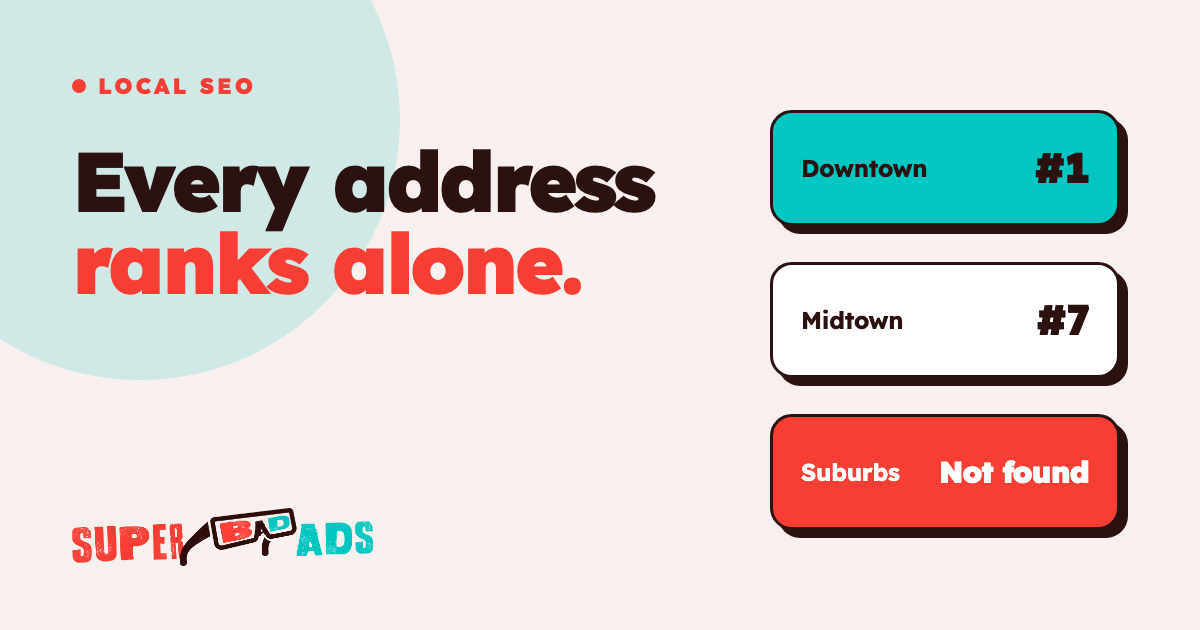
Google Business Profile Help says "local results are mainly based on relevance, distance, and popularity", so each unit earns its own local visibility and local relevance in search. Report it the same way, one row per unit:
- profile calls, direction requests and website clicks for each unit;
- location page visits and booking starts;
- booked first visits for each unit, counted in your booking system (Zenoti, Mindbody, Booker or whatever your system uses);
- open issues: missing hours, unanswered reviews, duplicate profiles and inconsistent local citations.
The booked first visits column is the one that matters to a franchisee. When local search and franchise advertising are both reported in new clients per location, the brand fund gets one number both sides can check.
Where to start
Super Bad Ads is the paid media partner for multi-location operators, including franchise systems. We run Google and Meta for every unit and report new clients per location every week, counted in your booking system, not in the ad platform. Learn how we work as a franchise marketing agency, or see what our paid media agency work includes.
The same per-location discipline applies to creative. For a 30+ location grooming brand, cheap, representative ad creative tested as many small bets cut cost per new client by 34.3% against a static-only baseline. That's a paid media result, not an SEO result, but it comes from the same habit: judge every change by new clients per location.
For local SEO, start this month with an ownership audit. List every unit, who is the primary owner of its profile, who has manager access and whether any duplicates exist. Then add the brand and franchisee table to your onboarding pack.
FAQ
Should a franchisor or a franchisee own the Google Business Profile for each location?
The franchisor should be the primary owner of every location's profile, held in one brand-controlled account. Franchisees should have manager access so they can update hours, add photos and reply to reviews. This keeps profiles and reviews with the brand when a unit sells or a franchisee leaves.
Should each franchise location have its own website?
No. Each franchise location should have its own page on the brand's website rather than a separate domain. One domain keeps the brand consistent and gives each location page a booking link that goes straight to that unit.
How should a franchise system handle duplicate Google Business Profiles?
The brand team should audit every unit for duplicates on a schedule it sets, such as every quarter, and whenever a unit opens or sells. When a duplicate appears, request ownership through Google's process or ask Google to remove it, so reviews and customer actions collect on one verified profile.
Does a franchise brand fund pay for local SEO?
That depends on your franchise agreement, which sets what the brand fund covers. Local SEO for franchises has shared parts, such as the website, the location page template and profile management, and local parts, such as photos, posts and review replies. Document which budget pays for each part so every franchisee knows.
Run local SEO and paid media per unit
Local SEO for franchises is a governance job before it's a marketing job: the brand owns the assets, franchisees run the local parts and everyone reads the same per-unit report. For help running paid media for every unit next to it, with results counted in your booking system, Get Started.
Find out what your ad spend actually books.
We instrument the whole funnel — lead to booked to showed to revenue — and buy media against the number that matters. No calendar invites, no sales-call bait. Just the build.
Get Started →