
How to Write a Franchise Marketing Plan Franchisees Trust
A franchise marketing plan is the written annual document a franchisor's marketing lead builds and reviews each quarter: per-location goals, the brand fund budget and its reported use, local spend rules, a twelve-month calendar, per-location targets and a reporting cadence, agreed with the advisory council before the year starts.
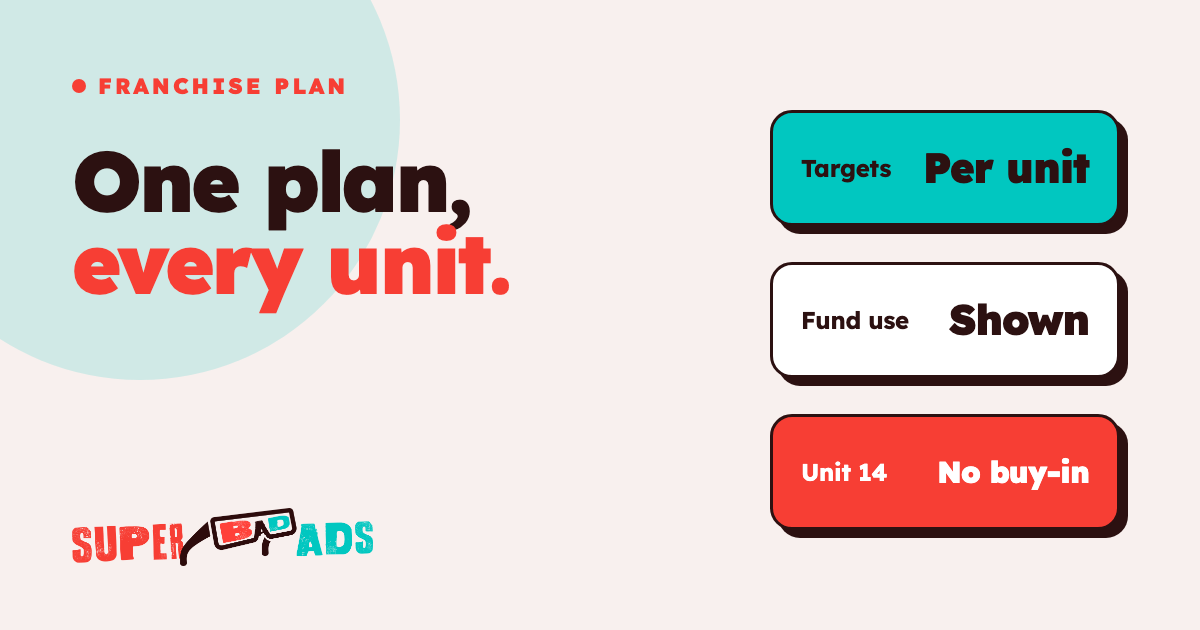
A franchise marketing plan is the written annual document that a franchisor's marketing lead builds, reviews every quarter and shares with every franchisee. It sets goals for each location in new clients or joins, budgets the brand fund by job and reports how that money was spent, states the local spend rules once, lays out a twelve-month marketing calendar, and names the weekly scoreboard that every location will be judged on, counted in the booking system rather than in the ad platforms.
Most franchise systems already have a strategy, a brand identity and brand guidelines, but they don't have a plan that franchisees can read, question and agree to before the year starts. This guide is for the marketing lead at an appointment or membership franchise brand who has to turn next year's brand fund into a document the CEO approves and the advisory council supports.
What should a franchise marketing plan include?
The plan should include seven sections, each of which makes one decision that franchisees can check later. The table below works as a template: copy the sections into one document, fill in each row for your system, and send it to the CEO and the advisory council as the draft for next year.
| Plan section | What it decides | Who owns it | What franchisees see |
|---|---|---|---|
| Goals per location | New clients or joins each location needs per week | Franchisor marketing lead, with operations | Their own weekly target, in booking system units |
| Brand fund budget | What the fund pays for, by job, and how its use is reported | Franchisor marketing lead and finance | A yearly summary of production, media and admin use |
| Local spend rules | Required local spend, co-op rules, approved creative and account ownership | Franchisor, written into the plan once | One page of rules that applies to every location |
| Location tiers | Which locations are new, ramping, mature or behind | Franchisor marketing lead and field team | Their tier and what it means for their budget |
| Marketing calendar | System-wide campaigns, grand openings and quarterly reviews | Franchisor marketing lead | A twelve-month calendar with dates and offers |
| Scoreboard and reporting | The weekly numbers per location and the reporting cadence | Franchisor marketing lead and the agency | A weekly report for their location and a quarterly review |
| Franchisee buy-in | How the advisory council reviews and signs off on the plan | Franchisor CEO and marketing lead | A draft to comment on before the year starts |
Our guide to franchise marketing strategy explains why the brand fund and local spend need different jobs; this post covers how to write those decisions down so a franchisee can hold you to them.
How do you budget the brand fund in the plan?
Budget the brand fund by job, not by channel, so franchisees can see what their contribution buys: creative production and marketing materials, system-wide marketing campaigns, the reporting every location reads, and the cost of running the fund. Write the amount for each job into the plan, along with the rule for moving money between jobs during the year.
Franchisees already expect this level of detail, because the franchise disclosure document asks for it. Under Item 11 of the FTC Franchise Rule, a franchisor discloses "Who administers the fund" and "How the funds were used in the most recently concluded fiscal year, including the percentages spent on production, media placement, administrative expenses, and a description of any other use." A franchisor marketing plan that reports the fund's use in the same categories, every quarter instead of once a year, answers the question vocal franchisees ask most often. Check the wording of any fund report with your franchise counsel before it goes to the system.
What local marketing rules belong in the plan?
The plan should state the local marketing rules once, in plain language, so that no franchisee has to guess what is required and what is not allowed. Four rules cover most appointment and membership systems:
- Local spend: what each location must spend on local paid media to reach potential customers nearby, whether a co-op pools that money, and who buys the media.
- Approved creative: which ad templates, photos and offers each location can run for its target audiences without a separate approval, so local audiences see a consistent brand.
- Account ownership: whether the franchisor or the franchisee owns each ad account, pixel and listing. Our guide to franchise advertising covers the trade-offs in detail.
- Local listings: who manages each Google Business Profile, who replies to reviews and who updates hours.
Listings are cheap to run and easy to neglect, and Google lets a brand manage profiles in bulk: "If you have 10 or more locations of the same business or an individual Business Profile, you can manage your business information on Google Search and Maps." Record who holds that access, and use the ownership rules in our post on local seo for franchises so a sold or closed unit doesn't take its listing with it.
How should the plan's calendar and quarterly reviews work?
The calendar should show every system-wide campaign, every planned grand opening and four quarterly reviews on one page, so franchisees across multiple locations can plan staffing around the busy weeks, such as the new-year intro offer for a fitness brand or the holiday gift card push for a grooming brand.
Sort every location into a tier rather than writing a separate plan for each franchisee. A new location needs a launch budget and a presale list, a ramping location needs steady paid media until it reaches its target, a mature location needs smaller always-on spend, and a location that is behind needs a review of follow-up and staffing before it gets more money. Re-sort the tiers each quarter against move, hold and cut rules written in advance, so the review is a check rather than a debate.
How do you set per-location targets?
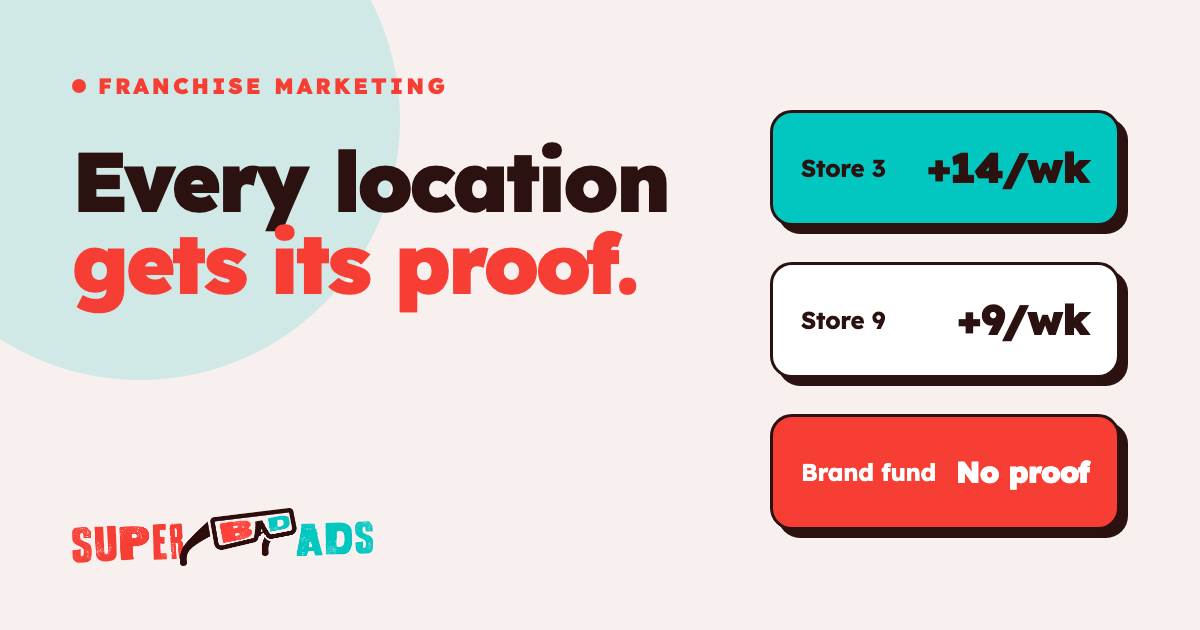
Set per-location targets in the units your booking or membership system already counts: new clients per location per week for appointment brands, and joins per location per week for membership brands. A target in clicks or leads doesn't help a franchisee, because those numbers never appear in the system they use to run the franchise business.
Each target should come from the location's tier and its capacity: a grooming location with a full schedule needs a lower new-client target than one with open chairs midweek. Our guide to multi location marketing explains how capacity should drive the budget split across franchise locations; in a marketing plan for a franchise, the same logic sets each franchisee's target.
How do you report the plan so franchisees trust it?
Report on a fixed cadence: a weekly scoreboard per location, a monthly summary for each franchisee and a quarterly review with the advisory council. The scoreboard needs four numbers: new clients or joins, local ad spend, cost per new client or member, and the gap to target, with lead-to-booking conversion rates as a check. Pull those numbers from the booking system, not from the ad platforms, because platform conversions usually run higher than what the front desk records.
This is the scoreboard we built for an 8-location California fitness operator, which went from 0 of 8 to 8 of 8 locations with per-location attribution, with cost per lead down 25% by month 3. A cadence that franchisees can check against their own booking system builds more trust in the brand fund and in all franchise marketing efforts than any year-end presentation.
How do you win franchisee buy-in before the year starts?
Win buy-in by sharing a draft with the franchisee advisory council before the plan is final, and by asking for comments on specific sections rather than general approval. Send the one-page summary first, then hold one working session where franchisees can challenge the targets and the fund split. Change something visible as a result, even if the change is small, and note it in the final plan, because franchise marketing plans that franchisees helped shape are easier to defend in the second quarter and over the long term, when a slow location asks why its numbers are behind.
Where to start
Super Bad Ads is the paid media partner for multi-location operators, including franchise brands and their franchisees. We run Meta and Google for every location and report new clients per location every week, counted in your booking system, not in the ad platform, and stricter than the platform numbers. See how we work as a franchise marketing agency and as a paid media agency.
We test cheap, representative creative from your own locations, and you own every account and pixel. For a 30+ location grooming brand, cost per new client fell 34.3% against a static-only baseline. For your system, start this month: write the one-page summary of the plan and take it to the advisory council. For the social part of the plan, see our guide to franchise social media marketing.
FAQ
What is a franchise marketing plan?
A franchise marketing plan is the written annual document a franchisor uses to set goals per location, budget the brand fund by job, state local spend rules, schedule campaigns and openings, and define the weekly scoreboard. Franchisees review it before the year starts, and the franchisor reports against it every quarter.
How is a franchisor marketing plan different from a franchise marketing strategy?
A franchisor marketing plan differs from a franchise marketing strategy because it turns the strategy into dated decisions. The strategy explains why the brand fund and local spend have different jobs, while the plan states the budget, the rules, the calendar, the per-location targets and the reporting cadence for one specific year.
What should a franchise marketing plan template include?
A franchise marketing plan template should include seven sections: goals per location, the brand fund budget and its reported use, local spend rules, location tiers, a twelve-month marketing calendar, the scoreboard and reporting cadence, and a franchisee buy-in step. Each section should make one decision that franchisees can check during the year.
How often should a franchisor review its franchise marketing plan?
A franchisor should review its marketing plan every quarter, with a weekly scoreboard per location between reviews. At each quarterly review, re-sort locations into tiers, apply the move, hold and cut rules written at the start of the year, and report the brand fund's use to the advisory council.
One plan for every location
A franchise marketing plan that franchisees trust comes down to written decisions they can check: goals per location, a brand fund reported by job, local rules stated once, a calendar, and one weekly scoreboard from the booking system. For help running paid media for every location under that plan, Get Started.
Find out what your ad spend actually books.
We instrument the whole funnel — lead to booked to showed to revenue — and buy media against the number that matters. No calendar invites, no sales-call bait. Just the build.
Get Started →