
A Franchise Marketing Strategy Built Per Location
A franchise marketing strategy works when the brand fund builds the assets, local paid media buys the bookings, and every location sees its own new clients each week from the booking system. How to split the budget, which channels earn it, how to prove results to franchisees, and how to launch a new territory.
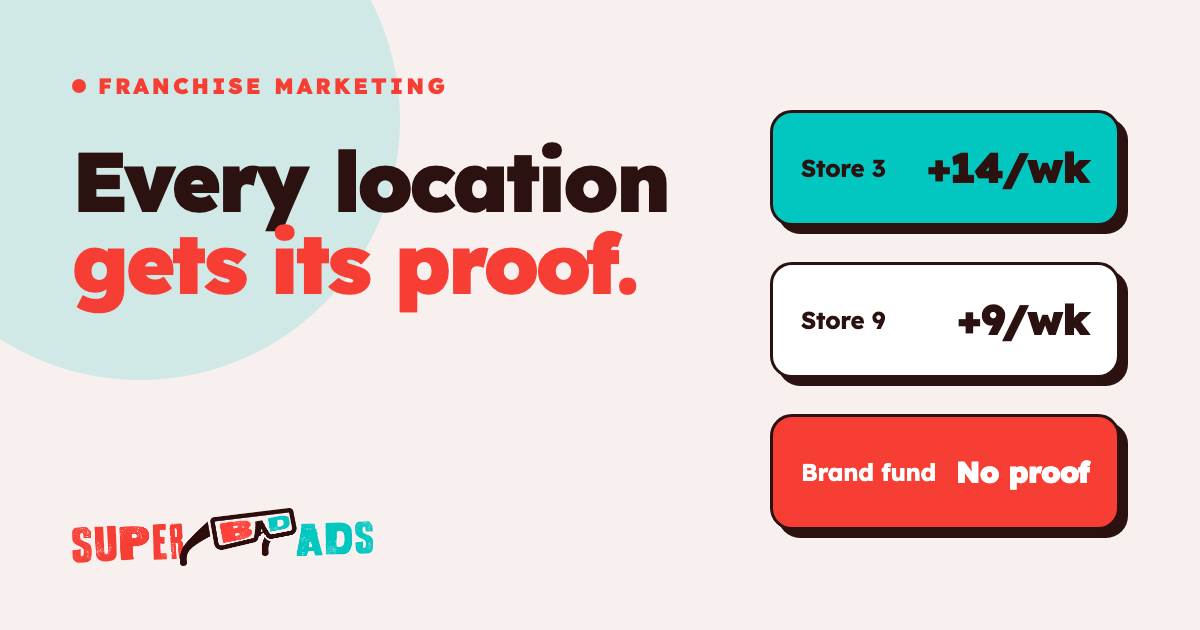
A franchise marketing strategy that franchisees trust does two things. It splits brand work, paid for by the brand fund, from local demand, paid for location by location. And it reports new clients per location per week from the booking system, not from the ad platforms. Every other decision in the plan follows from those two.
Most franchise marketing strategies fail on the second point. The franchisor runs a polished campaign, the platforms report a strong return, and a franchisee with an empty schedule asks what the fund did for their location. Nobody can answer, because the report was never built per location. This guide sets out how to split the budget, which channels earn local money, how to prove results to franchisees, and how to launch a new territory.
What should the brand fund pay for, and what should be local?
The cleanest franchise marketing strategy gives the brand fund one job: build the assets every location uses. Local budgets get a different job: turn those assets into booked first-time clients in each territory.
The brand fund pays for:
- Creative production: photography and video shot at real locations, plus ad templates each territory can reuse.
- System-wide offers, such as the intro offer or first-visit package, and the rules for running them.
- Brand guidelines, brand identity, marketing materials and the shared reporting tools every location reads, so each franchise business presents a consistent brand.
Local budgets pay for:
- Per-location Meta and Google paid media, targeted to the radius each location actually serves.
- Google Business Profile management and local SEO for multiple locations.
- Prompt follow-up on the leads that those ads create.
The split matters because it changes the conversation with franchisees. When the fund visibly builds assets and local dollars visibly buy bookings, franchisees stop treating the fund as overhead. It also keeps franchisees from running their own off-brand ads, because the approved creative is better than anything they'd make themselves. Established branding protects brand reputation and brand recognition across every territory, while local budgets reach localized audiences and potential customers near each location.
For creative, inexpensive and representative content consistently outperforms expensive, polished production, and a franchise brand does not need a national-agency budget. A library of real photos and short videos from your own locations does more than one national commercial. Test it as many small bets across territories, and expand what produces booked first-time clients.
How do you set a marketing budget per location?
Equal budgets across every location almost always waste money. A franchise marketing plan should set each location's budget from two inputs: capacity and maturity.
- Capacity: if a location's schedule is already full, more ads only raise the cost per new client. Move that spend to a location with open appointments.
- Maturity: a new location needs a heavier launch budget to build its first client base. A mature location needs steady spend to replace normal churn.
- Staffing: doubling spend in a territory with one person on the front desk creates leads nobody calls. Each budget should reflect the number of appointments the location can actually book.
Review these numbers weekly, not quarterly. Moving budget weekly only works if your company owns every ad account and pixel. An agency that keeps the accounts in its own name controls your history and makes every change slower.
If you have inherited a setup that is difficult to interpret, avoid guessing. A paid media and setup audit maps the accounts, tracking and spend by location before you move a dollar.
Which channels work for franchise digital marketing?
Franchise digital marketing works best when it's narrow. For appointment and membership businesses, most new clients come from three places:
- Meta ads, targeted around each location, for intro offers and first visits.
- Google Ads, which reach people who are already searching for a gym, a barbershop or a studio nearby.
- Google Business Profile and local search, so the right address, hours and reviews appear when someone searches the brand after seeing an ad.
Good digital marketing for franchises starts with that focus, and it's the core of sound multi-location marketing. Other channels, such as social media marketing, content marketing, blog posts and local events, can support that digital marketing strategy, but none of them replaces paid media that answers to the booking system.
The conversion that counts is a booked appointment or a membership join, recorded in Zenoti, Booker, Mariana Tek, Mindbody or whatever system your front desk uses. A click or a form fill is not a result.
Follow-up is the part most franchise advertising plans skip, which is where many leads are lost. A lead from a Meta form that waits half a day for a call will often book with a competitor instead. Set a response standard for every location and give the front desk a short script. Then report the booked percentage next to the lead count, so you can see whether the problem is the ads or the follow-up.
How do you prove results to franchisees?
Franchisees say the same thing in almost every system: the numbers don't tie to our booking system. The fix is a per-location scoreboard that is stricter than the platform numbers.
Meta and Google each claim credit for every conversion they can. A franchise scoreboard should only count new clients your booking system confirms, location by location, week by week. When franchisees see their own location's new clients, in their own system's numbers, the argument about the fund changes.
The franchisor and the board need one more layer: proof that the results are incremental. Platform-attributed return isn't enough for the people who approve the budget. Show flat-spend comparisons, where spend holds steady and new clients rise, and quarter-over-quarter progress per location.
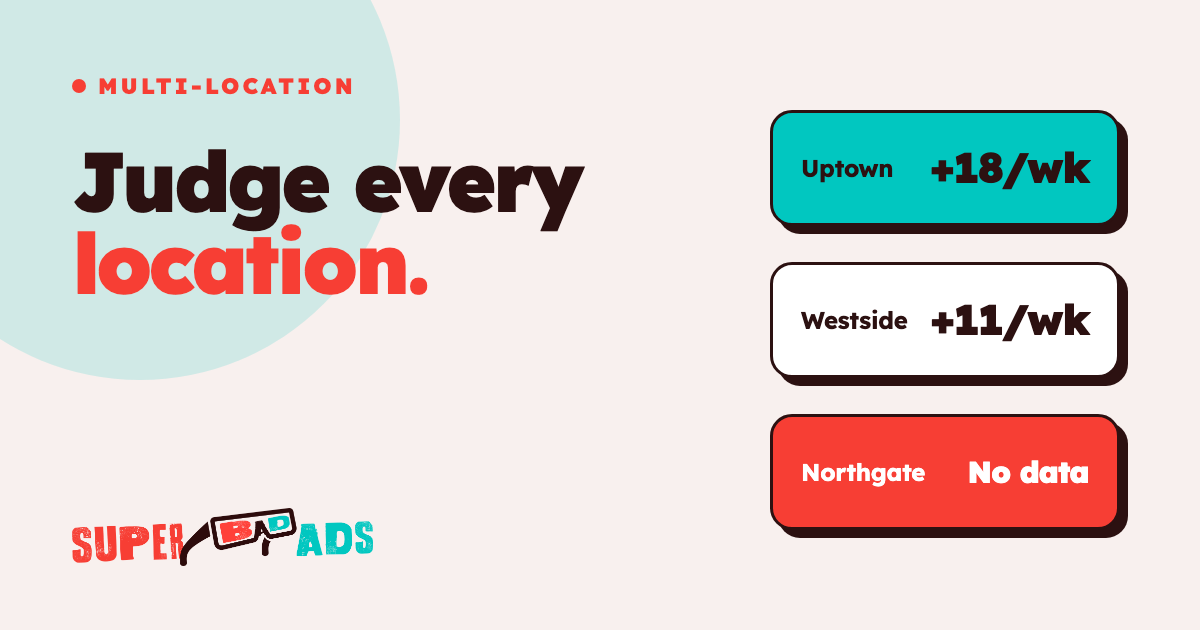
Per-location marketing attribution is achievable even in a system that has never had it. An 8-location California fitness operator went from 0 of 8 locations with per-location attribution to 8 of 8, and cut cost per lead by 25% by month three.
How do you launch marketing for a new territory or location?
A new location's first 90 days set its baseline, so start marketing before the doors open.
- Build pre-open interest: run a clear intro offer for the weeks before opening so the first schedule is already filling on day one.
- Test creative early: launch with several ads, not one, and keep the versions that produce booked first-time clients at the lowest cost.
- Spend heavier, then settle: fund the launch above the mature-location level, then move to a steady budget once the cost per new client stabilizes.
- Join the scoreboard on day one: the new location reports new clients per week like every other location, so its launch can be compared with the last one.
Creative testing pays off at any stage. A 30+ location grooming brand grew new customers by 36.6% and cut cost per new client by 34.3% against a static-only baseline, with a 21x return on creative production. More examples are in our case studies.
The per-location scoreboard
This section is written to be forwarded to a franchisee advisory council, a multi-unit owner or a CFO. A franchise marketing strategy is only as strong as the report that defends it.
| Metric | What it tells you | Who reads it | | :--- | :--- | :--- | | New clients per location per week | Verified first-time clients from the booking system, by location | Franchisees | | Cost per new client | How efficiently each location's local budget is working | Marketing lead | | Booked percentage | How many leads the front desk turned into appointments | Multi-unit owner | | Cost per member | What a new recurring member costs to acquire | Franchisor, CFO | | Joins | New memberships sold, by location | Advisory council |
The scoreboard should fit on one page that a franchisee can read on a phone. If you'd like help building it, our franchise marketing agency services start from this scoreboard.
FAQ
How should a franchise system use co-op or local ad funds? Co-op and local funds should pay for per-location paid media and local search, not national brand work. The franchisor should set the rules in writing before the year starts. Report every co-op dollar against new clients confirmed in each location's booking system, so franchisees can see what their contribution bought.
Does the booking system need to connect to the ad platforms? Yes, if the franchise system wants reporting that franchisees can trust. When bookings and joins from your booking system are matched to the campaigns that drove them, you can report confirmed new clients instead of platform clicks. That connection is what makes a per-location scoreboard possible and what franchisees will believe.
What is a reasonable cost per new client for a franchise business? It depends on the vertical, the intro offer and the value of a new client. A boutique fitness studio can usually accept a higher cost per new client than a barbershop. Set a baseline for each location, then aim to lower it quarter over quarter at flat spend.
How often should per-location budgets change? Per-location budgets should be reviewed every week. If a location is fully booked, move part of its spend to a location with open capacity. If a new location is behind its launch plan, fund it first. A budget set once a year cannot respond to what is happening at each front desk.
Where to start
Super Bad Ads is the paid media and measurement partner for franchise brands and multi-unit franchisees. We run local paid media for every territory, keep the brand fund and local spend on separate scoreboards, and report new clients per location from your booking system every week. See how our paid media agency work runs for multi-location brands, and how we work as a franchise marketing agency.
A franchise marketing strategy is more than a list of tactics: it combines a per-location budget with a scoreboard that your franchisees trust, unlike the generic plans written for local businesses with one site. Start by checking one thing: can you see new clients per location per week, from your own booking system, today? If you can't, close that gap before you change anything else, because that's where we start with every franchise system. Get Started
Find out what your ad spend actually books.
We instrument the whole funnel — lead to booked to showed to revenue — and buy media against the number that matters. No calendar invites, no sales-call bait. Just the build.
Get Started →