
12 Questions to Ask a Digital Marketing Agency
Twelve questions to ask a marketing agency before you sign, grouped by reporting, accounts and switching, strategy and creative, and the team. Each one comes with what a good answer sounds like and the red flag to listen for, plus a table you can forward to the CEO.
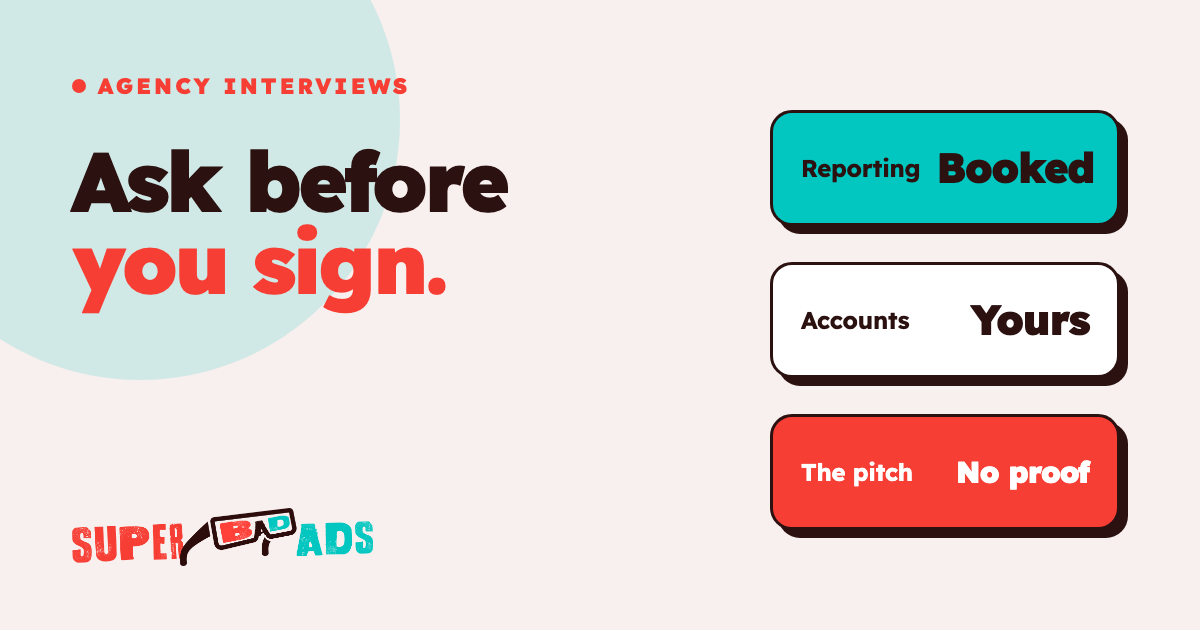
The questions to ask a marketing agency that separate operators from pitches cover four things. Do they report results from your booking system? Do they show those results per location? Who owns your ad accounts? And how would they take over without losing what already works? Awards, team size and culture fit matter, but they come after those answers rather than before them.
If you run marketing for a multi-location business, you've probably sat through pitches that sounded the same. Each promised more lead generation, more website traffic and a cleaner dashboard, yet none explained how those numbers would connect to your business goals. The twelve questions to ask when interviewing marketing agencies below are grouped into four parts of the first call. Each one comes with what a good answer sounds like and the red flag to listen for. Paste them into your agenda and ask them in this order, because the early answers determine whether the later ones are worth discussing.
What should you ask about reporting and results?
Of all the questions to ask a marketing agency, start with these, because every other answer depends on them. If an agency can't tell you how it measures results, it can't tell you whether it's working.
1. What counts as a conversion? A good answer is a booked appointment or a membership join, recorded in Zenoti, Booker, Mariana Tek, Mindbody or whatever system your front desk uses. A strong agency reports results that are stricter than the platform numbers, because Meta and Google each claim credit for anything they can.
The red flag is an answer built on clicks, website traffic, landing pages or form fills, which are vanity metrics for an appointment business. A form fill from someone who never books isn't a result, and a low cost per click doesn't pay for a single empty appointment slot.
2. How do you report on each location? A good answer is new clients per location per week, with cost per new client or cost per member beside it. You should be able to see which locations are working and which aren't, in the same units your operations team uses, presented in a format that is easy to understand.
The red flag is a blended, account-wide report of campaign performance and conversion rates. One strong urban location can hide three suburban locations that are losing money, and a budget decision based on an average will move spend in the wrong direction.
3. How do you prove the results are incremental? A good answer points to flat-spend comparisons and quarter-over-quarter progress per location: spend holds steady and new clients rise. That's the proof your CEO or CFO will ask for at renewal.
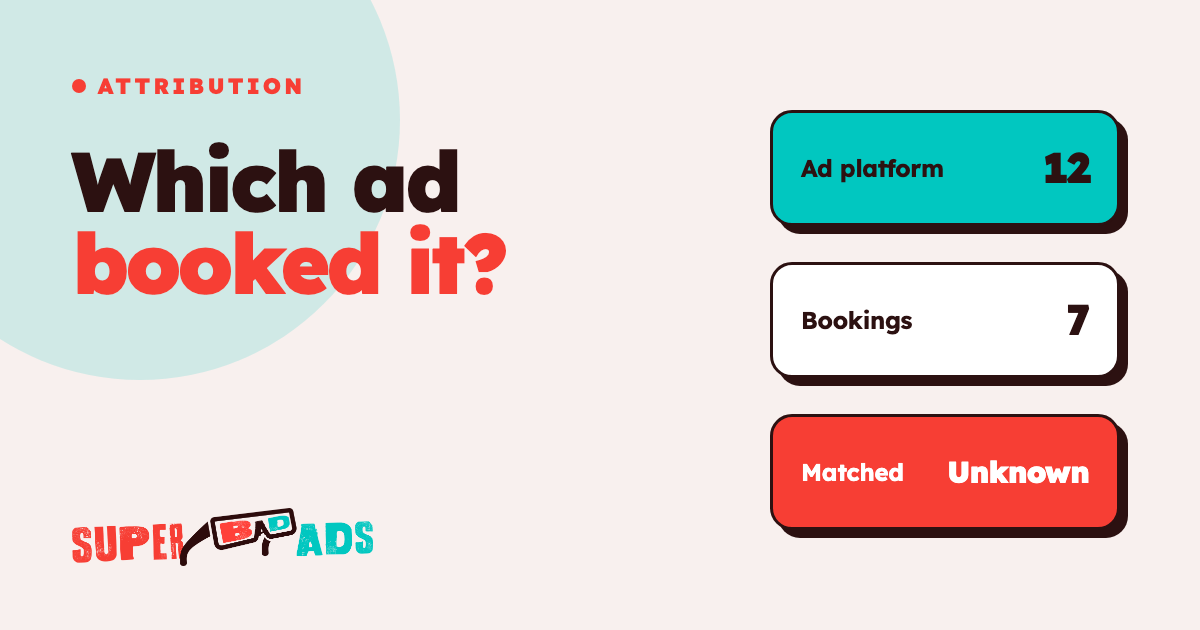
The red flag is an agency that leans only on platform-reported return. Ad platforms routinely count customers who would have booked anyway. If spend doubles and total new clients don't move, the ads aren't the reason for any growth. If you're unsure how credit is assigned in the first place, read our guide to marketing attribution.
What should you ask about accounts, data and switching?
These questions protect what you've already built. They matter most if you're replacing an incumbent or coming up on a renewal.
4. Who owns the ad accounts and pixels? The only acceptable answer is that your company owns them. The ad accounts, pixels and audience data should sit in your company's name, with the agency added as a user.
The red flag is an agency that builds campaigns inside its own business manager. If you leave, your history stays with them, and the next team starts from zero.
5. How would you take over from our current agency? A good answer starts with an audit of the accounts, tracking and spend by location, then a short overlap with the incumbent so booking volume doesn't drop. A marketing audit sample shows what that first review should cover.
The red flag is "we pause everything and rebuild." A full teardown on day one risks a gap in new clients while the new team learns your business.
6. What happens at the end of the contract? A good answer is a clean handoff: you keep the accounts, the creative, the tracking setup and the reports.
The red flag is reporting that only lives in the agency's own dashboard. If the dashboard disappears when the contract ends, so does your history.
What should you ask about strategy and creative?
Now you're testing whether they understand how a multi-location business makes money.
7. How does budget move between our locations? A good answer is that spend follows capacity. If a location is fully booked, part of its budget moves to a location with open appointments. A data driven agency reviews that allocation weekly, not quarterly, because capacity changes faster than a quarterly plan can follow.
The red flag is equal budgets for every location, set once and left alone. That spends money where you can't book more clients and starves the locations that need them.
8. How do you test new creative? A good answer is cheap, representative creative tested as many small bets. That means real photos and short videos from your own locations, with budget moving to the versions that book first-time clients. A multi-location operator does not need a national commercial to win local bookings.
Creative testing at that scale pays off. A 30+ location grooming brand grew new customers by 36.6% and cut cost per new client by 34.3% against a static-only baseline, with a 21x return on creative production.
The red flag is a pitch that opens with an expensive brand shoot, because one polished video tests only one idea.
9. How do you handle lead follow-up? A good answer treats follow-up as part of the job. Many leads are lost in follow-up, so a strong agency reports the booked percentage next to the lead count and helps the front desk respond fast.
The red flag is "our job ends at the lead." If half of the leads never get a call back, the ads aren't the problem. An agency that won't look at that will keep buying leads you can't book.
What should you ask about the team and the fit?
The last questions tell you who you'll actually work with and whether they've done this before.
10. Who works on our account, and how senior are they? A good answer names the senior person who'll make the decisions, confirms that person is your point of contact, and lists the other team members who touch the account. For a marketing team of one to three, that access matters more than the size of the agency.
The red flag is a senior pitch followed by a junior handoff after signing. Ask who runs the account in month three, not who's on the call today.
11. Can you show results from operators like us? A good answer is case studies from multi-location grooming, fitness or wellness businesses, with results stated per location. For example, one multi-location gym operator that switched agencies went from 0.15x to 1.62x paid-search ROAS by month three on flat spend.
The red flag is proof from e-commerce or software brands, or a pitch built on industry trends and brand awareness rather than booked clients for your target audience. Selling online subscriptions is a different problem from filling appointment slots across twelve locations, and content marketing results for a software brand say little about local bookings. It's also worth asking whether digital marketing is legit for a business like yours; a good agency will answer that honestly.
12. What are the contract terms and minimums? A good answer explains the fee, the minimum term and what's included in plain language, before you ask twice. Many agencies start with a paid media and setup audit so you can see how they work before a longer commitment.
The red flag is a fee you can't explain to your CFO, or a long lock-in with no way to measure whether it's working.
Red flags when hiring a marketing agency
This table is written to be forwarded to your CEO or CFO as is. It sums up the questions to ask a marketing agency on the first call. It also shows how to evaluate a digital marketing agency by the answers you get back.
| Answer you hear | Why it's a red flag | What a good answer sounds like | | :--- | :--- | :--- | | "Your cost per click is down this month." | Clicks don't show whether any location booked more clients. | "Here are new clients per location this week, from your booking system." | | "We build everything in our own accounts." | You lose your history and pixels if you leave. | "You own the accounts and pixels. We're added as users." | | "We'll pause everything and rebuild." | A teardown risks a gap in new clients. | "We audit first, then overlap with your current agency." | | "We need a big budget for a brand video." | One expensive asset tests one idea. | "We test many small, representative ads and keep what books." | | "Our leadership oversees every account." | A senior pitch often means a junior manager. | "I'm the person running your account, every week." |
FAQ
How many agencies should you interview? Interviewing two or three agencies is usually enough, because that gives you a real comparison without losing a week to calls. Send the same questions to each agency before the call, so you're comparing answers, not presentations. If your incumbent is up for renewal, ask them the same questions too.
What are the best questions to ask a digital marketing agency that runs paid search? These are the questions to ask your PPC agency, and they matter most when choosing a PPC agency for several locations. Ask what counts as a conversion, how they report search results per location, and how they'd show that paid search is incremental at flat spend. Then ask who owns the Google Ads account. Those four answers reveal more than any keyword report, and an agency that can show them in real time is rare.
Should you ask a marketing agency for references? Yes, references are worth requesting. Ask to speak with a current client that runs several locations in a similar vertical. Ask how the agency reports results, how it handled a weak month, and how the switch from the previous agency went. Specific answers are a good sign, while vague praise is a warning.
What if your current agency fails these questions? Avoid switching overnight. First, confirm your company owns every ad account and pixel. Then interview a replacement paid media agency that will audit first and overlap with the incumbent, so booking volume holds while the new team takes over.
Where to start
Super Bad Ads runs paid media for multi-location gyms, salons, med spas and dental groups, and we expect to answer every question on this list before you sign: who owns the accounts, how results are counted from your booking system, and what each location sees every week. Start with our multi-location marketing agency services, or see who we serve.
The questions to ask a marketing agency come down to one test. Can they show you new clients per location per week, from your own booking system? And can they protect what already works while they do it? If you'd like to hear how we answer all twelve, Get Started.
Find out what your ad spend actually books.
We instrument the whole funnel — lead to booked to showed to revenue — and buy media against the number that matters. No calendar invites, no sales-call bait. Just the build.
Get Started →