
Cosmetic Dentistry Marketing Across Every Practice
Cosmetic dentistry marketing for a dental group works as its own program: each cosmetic service is marketed only at practices with the dentists and capacity for it, campaigns and content are built for a long decision cycle, and results are counted as consults booked and cases started per practice.
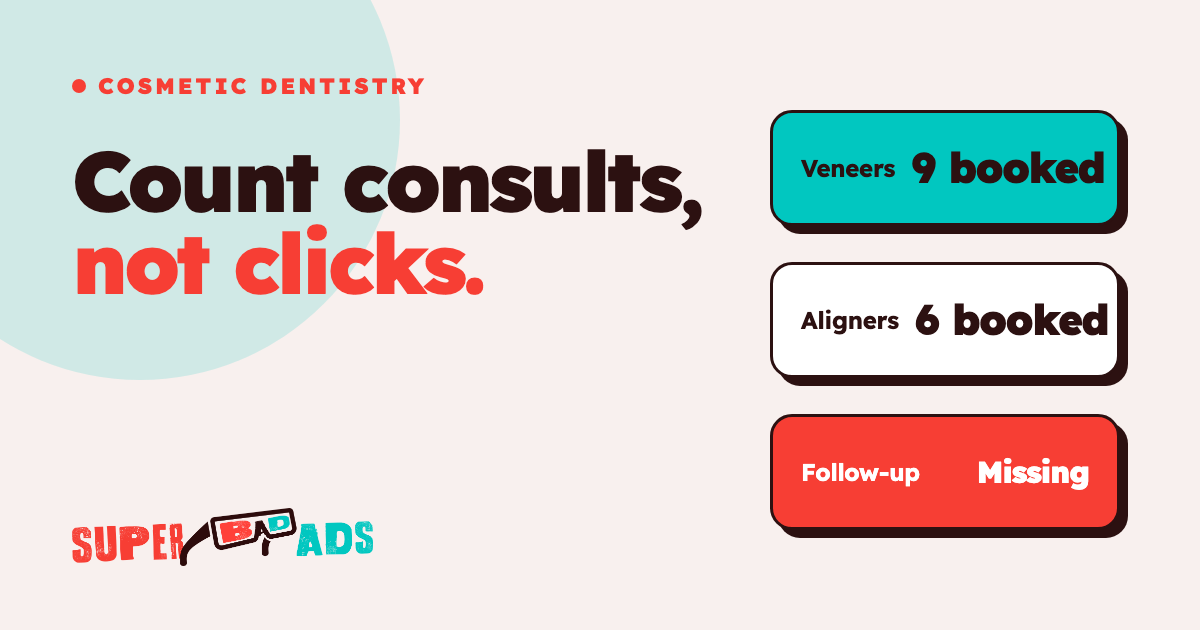
Cosmetic dentistry marketing for a dental group with several practices works best as its own program, separate from general new-patient marketing: each cosmetic service is promoted only at the practices that have the dentists and the chair time for it, campaigns and content are built for a patient who often takes a long time to decide, and the conversion that counts is a consult booked at a named practice. The group then follows every consult to a decision and judges the program each week in consults booked and cases started per practice, counted in its practice management system rather than in the ad platforms.
Most advice on cosmetic dental marketing is written for one dentist with one office, yet a group with 4 to 40 practices must also decide which practices sell veneers, whitening, clear aligners and bonding, who owns the follow-up after each consult, and how the partners will see whether the spend turned into treatment. This guide gives the marketing lead a plan they can run across every practice and forward, unedited, to the partners or the CFO.
Why is cosmetic dentistry marketing different from general dental marketing?
Cosmetic dentistry marketing is different because the patient is choosing an elective service that they could postpone indefinitely, so the decision is slower, more personal and more likely to involve comparing dentists, prices and financing before anyone books. A patient weighing veneers wants to trust the dentist who will do the work, which an open appointment alone doesn't provide.
That longer decision cycle changes three things for a group: the conversion is a consult rather than a cleaning, content must answer questions across several visits because one ad rarely carries a patient to a signed treatment plan, and budget belongs only where a practice can deliver the service well, so marketing for cosmetic dentists in a group is planned practice by practice. Our guide to dental marketing strategies shows how this cosmetic program fits beside recall, search and the yearly calendar.
Which practices and services should carry cosmetic campaigns?
Start with an honest inventory of each practice: which dentists offer each cosmetic service, how much consult time they have each month, and whether the front desk can explain financing and next steps with confidence. A practice whose cosmetic dentist is fully booked gains little from more ads, while a practice with open consult time is where the first budget should go, and the table below is the one-page view we suggest sharing with the partners.
| Cosmetic service | What the patient weighs | Where the campaign runs | What counts as a result |
|---|---|---|---|
| Veneers and smile makeovers | Trust in the dentist, the look of their work, total cost and financing | Practices with a dentist who does this work and open consult time | Consults booked, then treatment plans accepted |
| Clear aligners | Time in treatment, comfort, monthly cost against alternatives | Practices that offer aligners and can schedule scans quickly | Scans or consults booked, then cases started |
| Teeth whitening | Price, convenience and whether results are worth it | Practices with hygiene or chair time to spare | Whitening appointments booked |
| Cosmetic bonding | Speed, cost and whether bonding suits their smile | Practices whose dentists offer bonding regularly | Consults booked, then procedures completed |
Each row gets its own campaign, landing page and line in the weekly report, so a strong aligner month at one practice doesn't hide a weak veneer month at another.
How should search and social campaigns work for cosmetic services?
Paid search captures patients who are already looking, so cosmetic dentistry advertising on Google should run as separate campaigns by service and by practice, each sending the searcher to a landing page about that service at that practice. Our guide to google ads for dentists covers account structure and keyword choices.
Google's healthcare and medicines policy says "ads and destinations are expected to follow appropriate laws and industry standards," which means the landing page is reviewed alongside the ad, and an overstated promise on either can stop campaigns that several practices share.
Paid social on Meta reaches nearby adults before they search, which suits a long decision cycle. Give each practice its own ad set, a radius that matches where its patients live, and a budget tied to its open consult time. Our guide to facebook ads for dentists explains Meta's health advertising rules and the creative that tends to work for dental groups.
What content and creative help a patient decide?
The content that helps a cosmetic patient decide explains the process honestly, introduces the dentist who will do the work and answers practical questions about time, comfort and financing, which a stock photo of a model's smile can't do. The most useful creative for cosmetic dentist marketing tends to be simple, such as a dentist explaining what happens during a veneer consult or a treatment coordinator walking through financing options. Cheap, representative video made inside your own practices lets the team test several messages each month instead of one polished shoot. Outside dentistry, for a 30+ location grooming brand, cost per new client fell 34.3% against a static-only baseline. That result comes from grooming, not from dental work, and we include it only as evidence that creative made at real locations deserves a fair test.
What are the rules for claims, before-and-after photos and testimonials?
Cosmetic claims need care, starting with titles: the ADA's National Commission on Recognition of Dental Specialties and Certifying Boards states, "Currently there are 12 dental specialties recognized by the National Commission," and cosmetic dentistry isn't one of them, so ads and landing pages should describe the services a dentist offers rather than calling them a cosmetic specialist.
Before-and-after photos and patient testimonials need written consent from the patient, and they mustn't promise that every patient will get the same result. The FTC's Endorsement Guides say that when an advertiser lacks proof that an endorser's experience is typical, "an ad featuring that endorser must make clear to the audience what the generally expected results" are. The same guidance reminds advertisers that "your company is ultimately responsible for what others do on your behalf," which covers any outside agency or freelancer posting for the group.
Check every claim and every piece of before-and-after imagery with your compliance lead or counsel before it runs, and keep one approved library of photos and captions for every practice.
How do you turn cosmetic consults into cases?
A cosmetic consult becomes a case only when someone at the practice follows up with the patient after the visit, answers the questions that came up at home and makes the next step easy. Without a named owner, the interest of an undecided patient fades while the spend that produced the consult is already gone.
Give each practice a treatment coordinator or a named front desk lead who owns every cosmetic consult until the patient says yes or no. That person sends the treatment plan, explains financing and records the outcome in the practice management system, so the group knows which consults are still open. Our guide on how to get more dental patients covers the same path for general new patients.
How do you measure cosmetic dentistry marketing per practice?
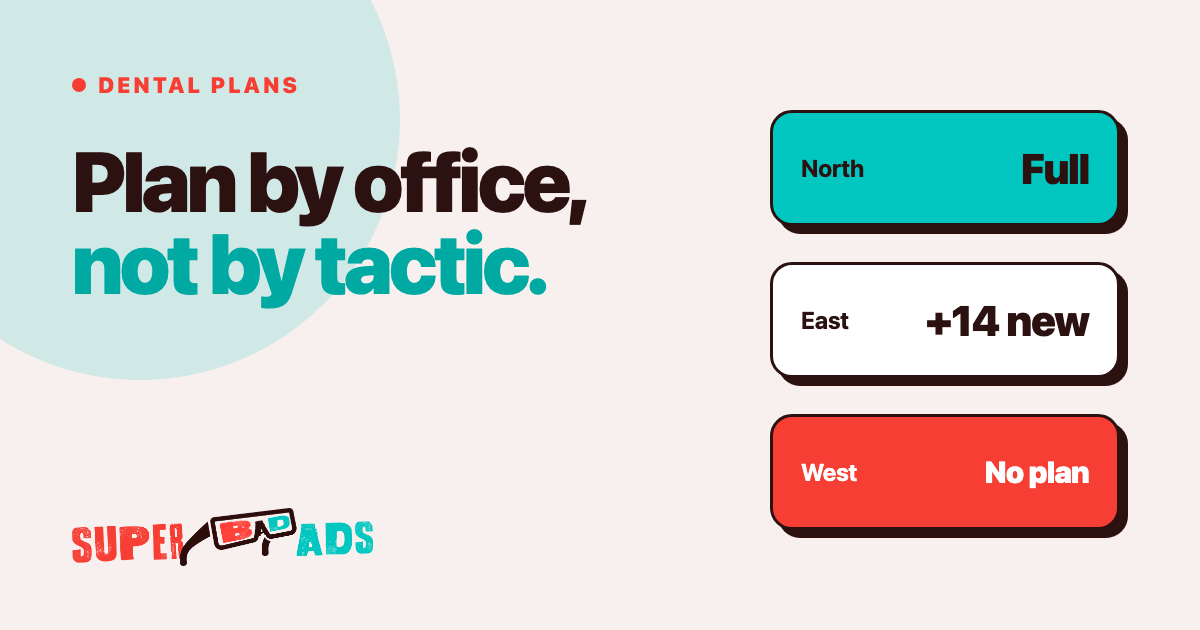
Measure the program each week by practice and by service, in consults booked, consults kept and cases started, counted in the practice management system. Platform conversions usually run higher than the consults the schedule records.
We count booked consults in your practice management system and report them next to spend for each practice and service; no patient or booking data is sent to Meta, Google or any other ad platform. A weekly scoreboard that lists spend, consults booked, consults kept, cases started and cost per consult for every practice gives the partners a view that's stricter than the platform numbers, and shows where follow-up rather than advertising is the weak point.
Where to start
Super Bad Ads is the paid media partner for multi-location operators, including dental groups. We run Meta and Google for every practice and report booked consults per practice every week, counted in your practice management system, not in the ad platform, with numbers stricter than the platform reports. Learn how we work with groups as a dental marketing agency, or see our approach as a paid media agency.
For your group, the first steps are practical: list which practices and dentists offer each cosmetic service, name the follow-up owner at each practice, and agree on one weekly scoreboard in consults booked and cases started before any new cosmetic campaign launches.
FAQ
How is cosmetic dentistry marketing different from general dental marketing?
Cosmetic dentistry marketing differs from general dental marketing because the services are elective and the patient takes longer to decide. The conversion is a consult rather than a routine visit, content must answer questions about the dentist, the process and financing, and every consult needs a named follow-up owner until the patient makes a decision.
Can a dental practice use before-and-after photos in cosmetic dentistry advertising?
A dental practice can use before-and-after photos in its advertising when the patient has given written consent and the ad doesn't imply that every patient will get the same result. The FTC expects ads to make the generally expected results clear, so check every image and caption with your compliance lead or counsel first.
Should every practice in a dental group market cosmetic services?
Not every practice in a dental group should market cosmetic services. Campaigns belong at practices with a dentist who offers the service, open consult time and a front desk that can explain financing and next steps. A practice without that capacity turns ad spend into consults it can't serve well.
How should a dental group measure cosmetic dentistry marketing?
A dental group should measure cosmetic dentistry marketing by consults booked, consults kept and cases started for each practice and service every week, counted in the practice management system. Comparing those counts with spend gives a cost per consult and a cost per case that the partners can trust more than platform conversions.
Market cosmetic services practice by practice
Cosmetic dentistry marketing pays off for a group when each service runs only where a practice can deliver it, every consult has a follow-up owner and the partners see consults and cases per practice every week. For help running paid media across every practice, Get Started.
Find out what your ad spend actually books.
We instrument the whole funnel — lead to booked to showed to revenue — and buy media against the number that matters. No calendar invites, no sales-call bait. Just the build.
Get Started →