
Yoga Studio Marketing From Intro Offer to Membership
Yoga studio marketing for a brand with several studios works as a new-student system: one intro offer, a written journey to a class pack or membership, teacher-led content, budget that follows open class spots by time slot, and two numbers per studio from the booking system.
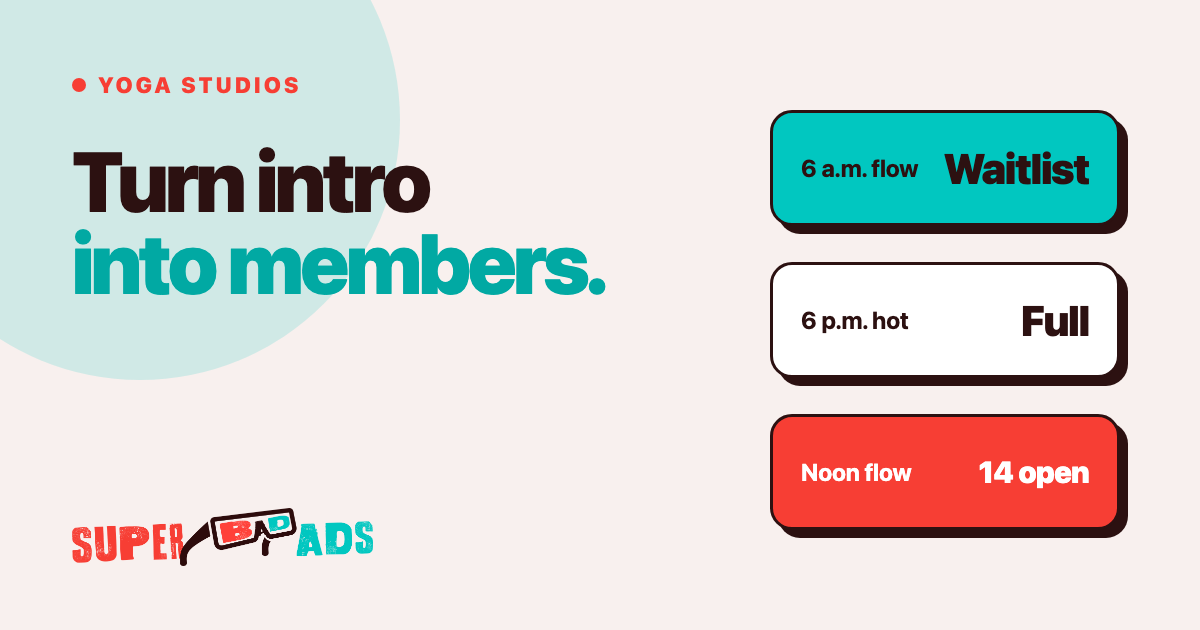
Yoga studio marketing for a brand with several studios works best as a new-student system rather than a list of tactics. Each studio sells one intro offer, follows a written journey from the first yoga class to a class pack or membership, puts teachers at the center of its social media marketing, and spends paid media on the time slots that still have open spots. Every studio is then judged on two numbers from the booking system: first-time students per week and the share of intro students who become members.
Most advice on how to market a yoga studio is written for a single location with one schedule and an owner at the front desk. An owner with 6 or 15 studios faces a different problem, because the early and evening classes at one studio carry a waitlist while the midday classes at another sit half empty, and the current reports can't say which studio the ads helped. Each section below can go to studio managers unedited.
What makes yoga studio marketing different from other fitness marketing?
Yoga studio marketing differs from general fitness marketing in three ways: demand concentrates in a few peak time slots, the teachers are a large part of what students buy, and many students stay on class packs for months before they commit to a membership. A yoga studio sells a fixed number of mats in a fixed number of classes each week, so its class schedules limit what any campaign can place.
The audience is large. The Health & Fitness Association reports that "Yoga remained the most widely practiced activity at 17.7 million members" among members of fitness facilities (industry data). For most brands, the number of people who want to practice yoga isn't the constraint; the constraint is getting potential students into the right classes at each studio and keeping them long enough to join.
Our guide to fitness studio marketing covers the broader boutique plan, while this post covers the parts of a yoga marketing strategy that are specific to yoga.
How should a yoga brand design its intro offer and new-student journey?
A yoga brand should run one intro offer across every studio and write down the new-student journey that follows it, because the offer only starts the relationship and the journey decides whether that student becomes a member. Owners often worry that paid ads bring discount hunters who never return, which usually happens when the offer has no plan behind it.
A simple journey has four steps, and the studio manager owns all of them:
- First class: the teacher learns the new student's name, explains the format and suggests the next class that suits their level, so the second visit is booked before the student leaves.
- Follow-up: the front desk contacts every intro buyer who hasn't booked a second class, and our guide on speed to lead explains why the speed of that first response matters so much.
- Conversion moment: before the intro period ends, a teacher or manager offers the membership in person, with a clear comparison against class packs.
- Fallback: students who don't join receive a class pack option and stay on the email list, so the studio can invite them back for a workshop or a new format.
How do you map class capacity by studio and time slot?
Each studio should map its class capacity by time slot before the brand sets any budget, because a studio that looks full on a weekly average can still have empty mats every weekday at noon. Last month's attendance in Mindbody, Mariana Tek or other yoga studio software is enough to sort every class into four groups.
| Slot type | What it looks like | Marketing job | Budget rule |
|---|---|---|---|
| Waitlist slot | Early morning or evening classes that fill every week | Protect the experience for current members | No paid media; move waitlisted students to nearby classes |
| Full slot | Classes that fill most weeks without a waitlist | Hold steady | Lowest priority for new spend |
| Open slot | Midday, weekend afternoon or newer formats with steady gaps | Bring in first-time students | Funded first, with ads that name the class and time |
| New class or new teacher | A format or teacher still building a following | Build a base of regulars | Short launch budget, then judged like any open slot |
The owner and each studio manager should review the map every month, because a new teacher or a schedule change can move a class from one group to another. Used this way, the table becomes a marketing tool that explains why one studio receives more yoga studio advertising than another.
What content should yoga teachers make?
Yoga teachers should make short, honest content about their own classes, recorded on a phone, because students choose a class partly for the teacher who leads it. A polished studio shoot rarely beats a teacher explaining what a beginner will feel in a slow flow class.
The most useful social media posts include a teacher introducing the week's theme, a walk-through of a first class and a workshop notice, and each should name the studio and class time so content on every social media platform supports the capacity map.
Many yoga studio marketing ideas fail because nobody owns them, so each studio manager should keep a weekly content schedule while the central team funds what books first-time students. Our list of fitness marketing ideas covers further yoga marketing ideas and options that each studio can run.
How do you move students from class packs to memberships?
Students move from class packs to memberships when the studio becomes part of their week, so community and retention belong in the marketing efforts of the brand rather than only in studio operations.
Workshops, beginner series, teacher training programs and events with the local community give students reasons to visit more often and to meet people. Each event should be recorded in the booking system so the studio can see who attended and offer the membership at the right time, and each studio should track the share of class pack buyers who move to a membership. Our guide on how to get more gym members explains how follow-up and retention support each other.
How should paid social and local search follow open class spots?
Paid social and local search should follow the open spots on the capacity map rather than an even split across studios. Marketing for yoga studios works best when Meta ads target the neighborhood around each studio, name the class and time that have room, and carry the brand's intro offer, while ads for waitlist classes stay paused until spots open.
Local search works at the studio level, because people use a search engine to look for a class near where they live or work. Google says that "Distance refers to how far each business is from the customer who’s searching," and that "More reviews and positive ratings can help your business’s local ranking." A complete Google Business Profile with the current schedule helps each studio appear in local search results, and the front desk should ask satisfied students for a review after a few classes.
How do you measure yoga studio marketing per studio?
Yoga studio marketing is measured with two numbers per studio per week, counted in the booking system: first-time students and the share of intro students who become members. Spend comes from the ad platforms, but results come from the booking system, because platforms usually count more conversions than the studio recorded.
The scoreboard should also carry cost per first-time student and cost per new member for each studio, with open spots by time slot next to them, so that next week's budget decision sits on the same page. Because the booking system updates attendance in real time, managers can see whether attracting new clients into open slots is working. This scoreboard is stricter than the platform numbers, and anyone in the business can check it.
For an 8-location California fitness operator, locations with per-location attribution went from 0 of 8 to 8 of 8, and cost per lead fell 25% by month 3.
Where to start
Super Bad Ads is the paid media partner for multi-location operators, including yoga and boutique fitness brands. We run Meta and Google for every studio and report first-time students and new members per studio every week, counted in your booking system, not in the ad platform. See how we work as a gym marketing agency for fitness and yoga brands, and as a paid media agency for operators with several locations.
We test cheap, representative creative made by your own teachers, and you own every ad account and pixel. The first useful step for most brands is to map open class spots by studio and time slot, write down the new-student journey, and set up one weekly scoreboard for each studio.
FAQ
What is the best intro offer for a yoga studio?
The best intro offer for a yoga studio is one simple offer used at every studio, sold for a short period and paired with a written new-student journey. The offer matters less than what follows it: a booked second class, quick front desk follow-up and an in-person membership conversation before the intro period ends.
How should a yoga studio brand split its ad budget across studios?
A yoga studio brand should split its ad budget by open class spots rather than evenly across studios. The brand maps every class by studio and time slot, funds the open slots and new teachers first, holds spend on full classes and pauses ads for waitlist classes until spots open, then reviews the split each week.
What content should a yoga studio post on social media?
A yoga studio should post short, teacher-led content that names the studio and the class time, such as a teacher introducing a class, a first-class walk-through or a workshop notice. Phone video from real teachers usually performs better than polished shoots, because new students want to know who will lead their first class.
How do you measure yoga studio marketing results?
Yoga studio marketing results are measured per studio per week in the booking system: first-time students, the share of intro students who become members, cost per first-time student and cost per new member. These numbers are stricter than ad platform reports and show which studio and time slot should receive next week's budget.
One system for every studio
Yoga studio marketing for a brand with several studios comes down to one intro offer, a written journey to membership, teacher-led content, budget that follows open class spots and one weekly scoreboard per studio. For help running paid media for every studio, with results counted in your booking system, Get Started.
Find out what your ad spend actually books.
We instrument the whole funnel — lead to booked to showed to revenue — and buy media against the number that matters. No calendar invites, no sales-call bait. Just the build.
Get Started →