
Review Generation Across Every Location, Week by Week
Review generation for a brand with many locations works as a weekly habit: one ask at checkout from the front desk, a post-visit message from the booking system, a review count per location next to new clients, and written reply rules that stay inside Google's and the FTC's lines.
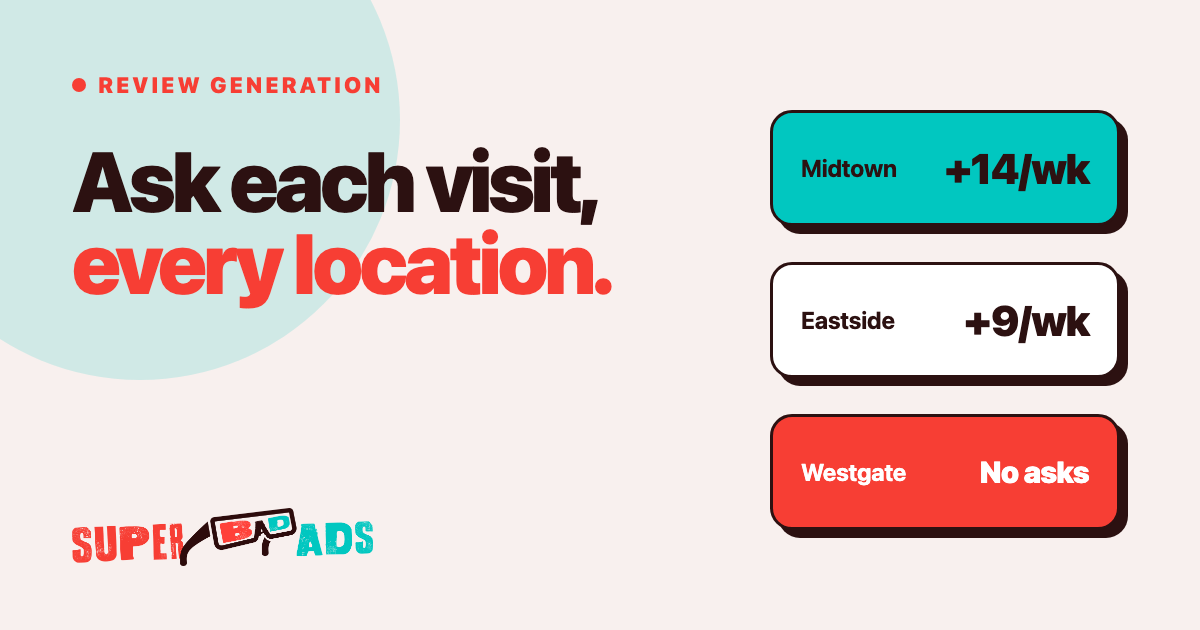
Review generation for a brand with many locations works best as a weekly operating habit rather than a software purchase or a one-off campaign. Each location asks every client once at checkout, the booking system sends a post-visit message with a direct link to that location's own Google Business Profile, the central team counts new reviews per location every week next to new clients, and a written reply rule tells each manager how to answer within the lines that Google and the FTC have drawn.
The gap between locations is rarely about demand, since one front desk asks every client while another location two miles away hasn't asked anyone in months, and nobody notices until the CEO compares the two reviews pages in Maps. This guide is written for the marketing lead at a grooming, fitness or wellness brand who has to make that ask happen everywhere and report the review volume each week.
What does review generation look like when you run many locations?
At a single shop, review generation is a habit of the owner, who asks regulars to leave a review and answers each one personally. At a brand with twenty locations, review generation depends on dozens of front desk staff, several managers and a booking system that sends the right link to the right client, so it works only when the central team writes it down and checks it weekly.
Good multi location review management splits the work of managing reviews between the center and the locations, so the central team owns the ask script, the links, the reply rules, the escalation path and the weekly count, while each location owns the conversation at the desk and the replies to its own reviews. Our guide to local seo for multiple locations covers the profile setup, location pages and citations that the reviews support.
When and how should each location ask for a review?
The best moment to ask is at checkout, when the client has finished the haircut, the class or the treatment and the customer experience is still fresh. The ask should be one brand-wide sentence, such as "If you had a good visit today, a Google review for this location helps us a lot," followed by a card or a QR code at the desk that opens the review form for that location only.
The booking system then sends the follow-up. Most systems that grooming, fitness and wellness brands use can send a post-visit text or email, which automates review requests without new software, and the message should carry a direct link to the review form of the location the client visited, because a link to the wrong profile gives the credit in local search to another address.
The ask has to be the same for every client. Google's policy for contributed content prohibits any business practice that is meant to "discourage or prohibit negative reviews, or selectively solicit positive reviews from customers," which rules out review gating, where a survey sends happy clients to Google and unhappy ones to a private form. The same policy says "merchants should not require or pressure users to leave ratings or write reviews while on the premises," so the front desk asks once, politely, and leaves the decision to the client.
How many reviews should each location aim for each week?
No universal number exists, because a busy downtown barbershop and a quiet suburban studio see different visit counts. Each location's weekly target should come from its own visit volume and its recent review pace, and each location should be judged against its own target rather than against the others. The table below is the full program for one location, written to forward to the CEO and every location manager unedited.
| Program element | Who owns it | Weekly check | The rule |
|---|---|---|---|
| The ask at checkout | Front desk, coached by the location manager | Reviews this week against the location's target | One sentence, every client, no pressure and no incentive |
| The post-visit message | Central marketing team, in the booking system | The link opens this location's review form | One direct link per location, sent to every client |
| The desk card or QR code | Location manager | The card is at the desk and the code works | Same design brand-wide, location-specific link |
| Replies to reviews | Location manager, under the brand's tone guide | Unanswered reviews older than the brand's reply window | Reply to every review, positive and negative |
| Escalation | Central team or owner | Escalated reviews still open | Safety, billing and legal issues go up before any public reply |
| The scoreboard | Central marketing team | New reviews and new clients per location, side by side | A location below target gets a coaching call, not more ad spend |
When a location's review pace drops while its new clients hold steady, the front desk has usually stopped asking, and a coaching call fixes more than a new review generation tool would.
How should managers respond to reviews?
A reply rule removes the guesswork for managers, who otherwise ignore online reviews or answer angry ones in the heat of the moment, and it turns customer feedback into a record the central team can act on. Google's own guidance for business owners notes that "when you reply to customer reviews, it shows that you value their feedback," so the rule should be to reply to every review, positive or negative, within a window the brand sets, with the response rate per location checked in the weekly count. Replies also build trust with potential customers who read them before they book.
A simple rule by rating covers most cases:
- Five-star and four-star reviews: the manager thanks the client by first name, mentions the product or service they named, and invites them back.
- Three-star reviews: the manager thanks them, acknowledges the point they raised, and says what the location will change.
- One-star and two-star reviews: the manager apologizes once, avoids debating the details in public, and gives a name and a direct way to reach them.
For brands with franchisees, the split between brand standards and local replies is set out in our guide to local seo for franchises.
What do Google and the FTC prohibit?
Every location manager should know the lines before the program starts. Google prohibits "reviews or ratings that have been paid for, directly or in kind," which covers discounts, complimentary add-ons and gift cards offered for a review; staff reviews of their own location are a conflict of interest under the same policy.
The FTC's rule on fake reviews applies on every review site and review platform, not only Google. According to the FTC's announcement of the final rule, it bans "providing compensation or other incentives conditioned on the writing of consumer reviews expressing a particular sentiment, either positive or negative," and it also covers certain reviews written by company insiders that don't disclose the connection to the business. The brand should check with its counsel before it changes how any location asks for reviews, and every incentive idea from a manager should go to the central team as a question.
A clean review generation strategy needs none of these shortcuts.
How do reviews affect local ranking and paid media per location?
For local businesses, reviews feed local search directly. Google's guidance on local ranking states that prominence is based in part on "how many reviews you have," and that "more reviews and positive ratings can help your business's local ranking." For a brand asking how to get more google reviews across every address, each location competes in its own neighborhood with its own count, which is why the scoreboard tracks google reviews for multiple locations separately rather than as one brand total. Our guide to the google business profile explains how to measure what each profile books.
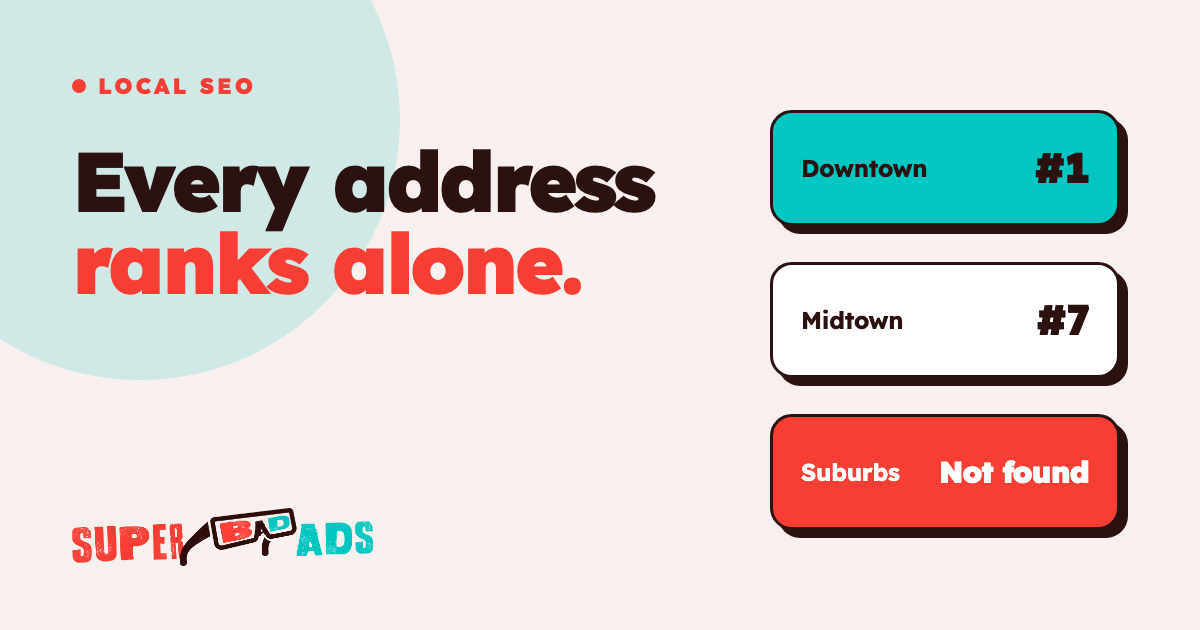
Review generation also affects paid media. A prospect who clicks a paid search or paid social ad often checks the location's reviews before booking, so the same spend tends to convert worse at a location with a thin or stale profile. The review count at a weak location should be fixed before any new budget goes there, and every location should be judged on new clients counted in the booking system; our guide on why your booking system and ad platform disagree explains the gap.
Where to start
Super Bad Ads is the paid media partner for multi-location operators, including grooming, fitness and wellness brands. We run Meta and Google for every location and report new clients per location every week, counted in your booking or membership system, which is stricter than the platform numbers. See how we work as a multi-location marketing agency and as a paid media agency.
We build the same per-location scoreboard for paid media that this post recommends for reviews. For a multi-location barbershop, cost per booking fell 56%. The first steps for your brand this week are to write the one-sentence ask, check every location's review link in the booking system and add a weekly review count next to new clients per location.
FAQ
Is it against Google's rules to offer a discount for a review?
Offering a discount for a review is against Google's rules, because Google prohibits reviews or ratings paid for directly or in kind. The FTC's rule on fake reviews also bans incentives tied to a positive or negative review. Every client should be asked the same way, with no reward, and any change should be checked with counsel.
Should a multi-location brand use review management software?
A multi-location brand should use review management software only when the weekly count shows a gap its booking system can't close. Most booking systems already send a post-visit message, so the first step is one direct link per location and a weekly count, with software added only if replies or reporting fall behind.
How many Google reviews does each location need?
The number of Google reviews each location needs depends on its visit volume and its local competitors, so there is no universal target. Each location's weekly goal should come from its own visit count and recent review pace, and each location should be compared against its own goal rather than against the brand's busiest address.
Who should reply to reviews at a multi-location brand?
At a multi-location brand, the location manager should reply to reviews for their own location, using the brand's tone guide and reply window. Safety concerns, billing disputes and legal threats should go to the central team or owner first, so no manager handles a serious complaint in public alone.
One ask, every location, every week
Review generation across many locations comes down to one honest ask at checkout, one direct link per location, written reply rules and a weekly review count next to new clients per location. For help running paid media for every location with results counted in your booking system, Get Started.
Find out what your ad spend actually books.
We instrument the whole funnel — lead to booked to showed to revenue — and buy media against the number that matters. No calendar invites, no sales-call bait. Just the build.
Get Started →